

Internal Control · 2025
In this section8 topics
- Internal Control — Board Opinion1 item
- Adequacy & Appropriateness of the Internal Control System1 item
- Internal Control Deficiencies2 items
- Audit Committee & Auditor Observations2 items
- Opinion on the Head of Internal Audit2 items
- Appointment, Discharge & Transfer of the Head of Internal Audit2 items
- Related Party Transactions1 item
- Counterparties & Transactions3 items
Internal Control — Board Opinion
Summary of the Board's Opinion on Internal Control
Opinion of the Board of Directors regarding the Internal Control System
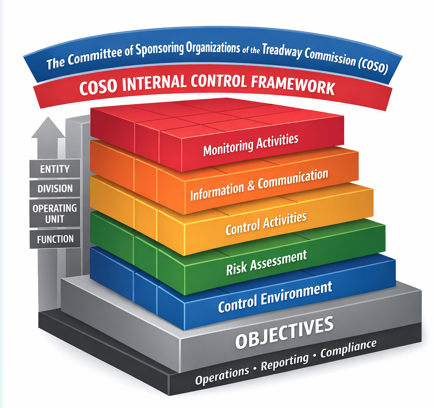
The Board of Directors has assessed the adequacy of the Company's internal control system using the internal control adequacy assessment form prescribed by the Securities and Exchange Commission, in conjunction with the internal control framework of The Committee of Sponsoring Organizations of the Treadway Commission, which covers five key components: Control Environment, Risk Assessment, Control Activities, Information and Communication, and Monitoring Activities.
From the aforementioned assessment, the Board of Directors is of the opinion that the Company has an internal control system that is adequate, appropriate, and effective, consistent with the size, nature, and complexity of its business operations. This system can support operations in achieving objectives related to operational efficiency, reliability of financial reporting, compliance with relevant laws and regulations, as well as preventing and mitigating risks from significant fraud or errors.
In summary, the opinions on each component of the internal control system are as follows:
1) Control Environment
The Company has clearly defined its organizational structure, roles, responsibilities, and reporting lines. It has established good corporate governance policies, a business code of conduct, and operational guidelines to foster an organizational culture committed to integrity, transparency, and accountability.
2) Risk Assessment
The Company identifies and assesses significant risks at both the organizational and departmental levels, considering the likelihood and impact of risks. It also establishes appropriate risk management measures and regularly reviews them to align with the changing business environment.
3) Control Activities
The Company has established appropriate policies, regulations, and operational procedures covering key business processes, including proper segregation of duties and adequate approval and verification systems to prevent errors and fraud.
4) Information & Communication System
The Company has information systems that support operations and the preparation of accurate, complete, and timely financial reports. It also has effective internal communication channels and transparently discloses information to stakeholders in accordance with regulations.
5) Monitoring Activities System
The Company continuously monitors and evaluates its internal control system, with the internal audit function responsible for auditing and reporting results to the Audit Committee, as well as implementing recommendations to further enhance the efficiency of the internal control system.
Issues for Improvement
Although the Company has an appropriate and adequate internal control system, the Board of Directors has recommendations for continuous development, which include:
-
Increasing the stringency of monitoring and reviewing the operations of branches/sub-units
-
Development of employee knowledge and awareness in internal control and risk management
-
Strengthening information technology control systems to accommodate evolving risks
Summary of Opinions
The Board of Directors is of the opinion that the Company's current internal control system is adequate, appropriate, and effective, capable of supporting business operations and appropriately controlling significant risks. Nevertheless, the Company will continue to develop and improve its internal control system to align with changes in the business environment and international standards.
The Company has conducted an assessment of its internal control system, referencing the framework of The Committee of Sponsoring Organizations of the Treadway Commission, which covers five key components: Control Environment, Risk Assessment, Control Activities, Information and Communication, and Monitoring Activities.
To ensure a systematic assessment, the Company has prepared the following summary table of assessment results (Internal Control Checklist):
1) Internal Control Checklist (based on COSO)
|
COSO Components |
Issues Assessed |
Company Practices |
Assessment Results |
|
Control Environment |
Organizational Structure / Ethics |
Clearly defined and has a Code of Conduct |
Appropriate |
|
Risk Assessment |
Risk Identification and Assessment |
Utilize Risk Matrix and Risk Register |
Appropriate |
|
Control Activities |
Work Control / Approval |
Has SOPs and Segregation of Duties |
Appropriate |
|
Information & Communication |
Data / Reporting System |
Financial Reporting and Disclosure Systems |
Appropriate |
|
Monitoring |
Review / Monitoring |
Has Internal Audit and reports to the Audit Committee |
Appropriate |
2) Internal Control – Risk – Action Plan
|
Risks |
Existing Controls |
Gap |
Improvement Plan (Action Plan) |
Responsible Party |
|
Inventory Planning System |
Monitoring is not yet Real-time |
Develop a stock reporting system |
Product Department |
|
|
Accounting Errors |
Approval System |
Lack of re-verification in some steps |
Add Manager-level Review |
Accounting Department |
|
IT Risk |
System Backup |
No DR Site yet |
Develop a Disaster Recovery Plan |
IT |
|
Compliance |
Internal Audit |
Training is not yet comprehensive |
Provide additional Compliance training |
HR |
Adequacy & Appropriateness of the Internal Control System
Internal Control Framework Used
| Framework | Other — Please Specify | Detail |
|---|---|---|
| Other | The Board of Directors places importance on internal control systems concerning financial operations, operational activities, and governance, with the Internal Audit Department responsible for effectively auditing the performance of these systems in accordance with established guidelines. | 9.1.1 The Board of Directors' opinion on the company's internal control system. The Board of Directors places importance on the internal control system for financial operations, operational performance, and governance. The internal audit unit is responsible for auditing the operations of these systems, including computer systems, and providing recommendations to ensure effective implementation of established guidelines. It operates independently and can fully perform its audit and balance functions. Currently, the Head of Internal Audit is Ms. Sam-Ang Chantrima, in the position of Accounting Manager, appointed in 2003. She possesses knowledge and experience working with the company for 32 years, understands the business and internal systems very well, and is suitable for performing these duties. The appointment, transfer, or termination of the Head of Internal Audit must be approved by the Audit Committee, which is also responsible for overseeing compliance with regulations from various regulatory bodies, including the Securities and Exchange Commission, the Stock Exchange of Thailand, and other government agencies as per the law. Qualification details are provided in Attachment 3. At the 1st Audit Committee Meeting/2025, held on February 21, 2025, with all three independent directors and audit committee members in attendance, the Committee utilized the internal control system adequacy assessment form provided by the Office. Based on the assessment results report from the Audit Committee, it is concluded that, from the evaluation of the company's internal control system in various aspects, the company continues to maintain effective and sufficiently appropriate internal controls for its status in managing and preventing potential risks. This is presented in the Audit Committee's report, which, according to the assessment form, consists of 5 components and 17 principles as follows: 1. The organization demonstrates a commitment to the values of integrity and ethics. 2. The Board of Directors is independent of management and performs oversight and development functions for internal control operations. 3. Management has established an appropriate reporting structure, defined authority for directives, and responsibilities to enable the organization to achieve its objectives under the oversight of the Board of Directors. 4. The organization demonstrates a commitment to attracting, developing, and retaining competent personnel. 5. The organization assigns personnel duties and responsibilities for internal control to achieve organizational objectives. 6. The organization clearly defines objectives sufficiently to enable the identification and assessment of various risks related to achieving organizational objectives. 7. The organization identifies and analyzes all types of risks that may affect the achievement of objectives comprehensively throughout the organization. 8. The organization has considered the potential for fraud in assessing risks to achieving organizational objectives. 9. The organization can identify and assess changes that may affect the internal control system. 10. The organization has control measures that help reduce the risk of not achieving organizational objectives to an acceptable level. 11. The organization selects and develops general control activities with technology systems to support the achievement of objectives. 12. The organization establishes control activities through policies that define expectations and operating procedures to ensure policies that are established can be put into practice. 13. The organization provides relevant and quality information to support the internal controls to operate as specified. 14. The organization communicates internal information, including objectives and responsibilities for internal control, which are necessary for supporting the internal controls to operate as planned. 15. The organization communicates with external parties regarding issues that may affect internal controls. 16. The organization monitors and evaluates the results of internal controls to ensure that internal controls are still fully and appropriately implemented. 17. The organization evaluates and communicates internal control deficiencies in a timely manner to responsible individuals, including senior management and the Board of Directors, as appropriate. The company has reviewed the internal control system adequacy assessment form to manage various risks that may arise each year to prevent future risks. |
Internal Control Deficiencies
Introduction
The Audit Committee has considered the assessment of the adequacy of the internal control system, deeming it sufficient and appropriate, and confirmed that risk management adheres to the internal control framework, with no differing opinion from that of the Board of Directors.
Guidelines for audit operations: if operational errors are identified, such deficiencies are presented and rectified by enhancing internal control processes, for instance, by regularly organizing training for internal control personnel and reviewing financial data audit processes, among other measures.
Number of Deficiencies
| Metric | Current Year | Previous Year | Two Years Ago |
|---|---|---|---|
| Total number of internal control system deficiencies (cases) | 0 | 0 | 0 |
Audit Committee & Auditor Observations
Audit Committee's Opinion Differs from the Board's
No
Auditor Has Observations on Internal Control
No
Opinion on the Head of Internal Audit
Head of Internal Audit
3159
Audit Committee's Opinion on the Head of Internal Audit
The Audit Committee approved the appointment in 2002 of Miss Sam-ang Chantrima, Accounting Manager, to serve as Secretary to the Audit Committee. She possesses sufficient experience in internal audit operations and in managing the internal audit unit. Therefore, the Audit Committee deems her suitable to perform the duties. Details regarding the training history and experience of the Head of the Internal Audit Unit are disclosed in Attachment 3.
Appointment, Discharge & Transfer of the Head of Internal Audit
Requires Audit Committee Approval
Yes
Description
The Company stipulates that the consideration and approval for the appointment, removal, or transfer of the Head of the Company's Internal Audit Unit shall be subject to the approval or consent of the Audit Committee.
Related Party Transactions
Has Related Party Transactions
Yes
Counterparties & Transactions
Monetary Unit
1
Counterparties with Potential Conflicts
| Name | Person / Juristic Person | Type of Business | Nature of Relationship | As of Date (YYYY-MM-DD) |
|---|---|---|---|---|
| Boonwattana Chok Company Limited | Juristic Person | Distributes hosiery | are major shareholders and have common directors | 2025-12-31T00:00 |
| New Plus Knitting Public Company Limited and its subsidiaries | Juristic Person | Hosiery manufacturing, Socks, Garment manufacturing, Underwear | is an associated company and has common directors. | 2025-12-31T00:00 |
| Saha Pathanapibul Company Limited | Juristic Person | Distribution of consumer goods | There are common directors | 2025-12-31T00:00 |
| IT City Public Company Limited | Juristic Person | Retailer of smartphones, computers, and peripherals | There are joint directors | 2025-12-31T00:00 |
| Saha Pathana Inter-Holding Public Company Limited | Juristic Person | Leasing and services for securities investment business | There are joint directors | 2025-12-31T00:00 |
| Advance Agrotech Co., Ltd. | Juristic Person | Cultivation | There are common directors | 2025-12-31T00:00 |
| American Food Co., Ltd. | Juristic Person | Manufacture and distribute ice cream, ice cream cakes, and frozen yogurt. | Subsidiary of Saha Pathana Inter-Holding Public Company Limited | 2025-12-31T00:00 |
| Tiger Distribution and Logistics Company Limited | Juristic Person | Warehouse management, warehouse rental, and other services | There are common major shareholders. | 2025-12-31T00:00 |
Transactions by Counterparty
| Transactions |
|---|
| 3097.04 · Necessity: Intercompany revenue collection by the company is conducted under general commercial terms, with fair pricing that is consistent with the nature of the transactions, without providing undue advantage to related parties, and without resulting in an improper transfer of benefits. · Description: Outstanding debt by aging, not yet due · As of yesteryear: 2820.19 · Nature of transaction: Accounts Receivable · Audit committee opinion: Consider the appropriateness of intercompany transactions in the form of cost sharing incurred between the company and related entities. It is observed that such cost sharing aims to allocate costs arising from the shared use of resources or services, such as administrative expenses, information technology expenses, facility expenses, and other supporting expenses, to the relevant entities appropriately. · As of year before yesteryear: 3121.99 · 36819.06 · Necessity: The company is required to collect utility expenses, such as electricity, water, and waste disposal fees, from each company within the same project. Expenses are allocated based on each company's actual consumption to ensure fair distribution of costs and adherence to the principle of shared resource responsibility. This practice is reasonable and appropriate for managing the project's resources and expenses. · Description: Electricity cost, water cost, and waste disposal fee · As of yesteryear: 37947.55 · Nature of transaction: Other income · Audit committee opinion: The collection of utility expenses, including electricity, water, and waste disposal fees, allocated according to the actual consumption of each company within the same project, is an appropriate and reasonable practice. Such allocation ensures that each company is responsible for its actual share of expenses, promotes transparency, and aligns with good corporate governance principles. · As of year before yesteryear: 39435.03 |
| 424074.95 · Necessity: The company is required to collect commission fees for international shipments. However, it is still awaiting the fulfillment of contractual payment conditions. The collection of commission fees prior to the fulfillment of these conditions is an appropriate and reasonable practice in order to ensure that the management of expenses and revenues aligns with sound accounting principles and good corporate governance. · Description: This is 4% commission income from the export of goods to foreign countries. · As of yesteryear: 313269.03 · Nature of transaction: Accounts Receivable · Audit committee opinion: The collection of commission fees from international shipments, even if the payment conditions under the contract have not yet been met, is an appropriate and reasonable practice, as it enables the company to systematically manage its revenues and expenses, in accordance with accounting principles and good corporate governance principles. · As of year before yesteryear: 176851.6 · 52963228.25 · Necessity: The company is required to conduct intercompany purchases within the group, with payment terms set at 90 days. The establishment of such terms is considered a reasonable and appropriate practice, as it facilitates efficient liquidity management for each company and aligns with accounting principles and corporate governance principles. · Description: The company's trade payables are liabilities arising from the purchase of goods or receipt of services from counterparties, with payment terms within 90 days after the receipt of goods or services. Furthermore, payments must strictly adhere to the agreements and terms agreed upon between the buyer and the seller. Adherence to these conditions is a reasonable and appropriate approach to ensure that liquidity management and accounting records are accurate and transparent. · As of yesteryear: 47468698.51 · Nature of transaction: Trade Creditors · Audit committee opinion: Details of trade creditors with payment terms within 90 days constitute an appropriate and reasonable practice, as it aligns with the agreement between the buyer and seller. This facilitates the company's liquidity management, accounting, and internal controls to operate systematically, transparently, and in accordance with good corporate governance principles. · As of year before yesteryear: 43730624.14 · 264044801.17 · Necessity: The company's procurement of goods is essential to maintain sufficient inventory to continuously meet market and customer demands. Procurement must be conducted judiciously, considering demand volume, price, and product quality, to ensure cost-effectiveness and efficiently support the company's profitability. · Description: The company places orders for goods from manufacturers or factories, clearly specifying various conditions such as quantity, price, quality, and delivery time. Adherence to these conditions aims to ensure that goods are delivered precisely according to the company's requirements, enabling appropriate inventory management, and allowing for resale in line with the business plan. This results in efficient and transparent operations and continuously supports the company's profitability. · As of yesteryear: 206377123.3 · Nature of transaction: Purchase of goods · Audit committee opinion: The Audit Committee is of the opinion that the company's procurement process is systematic, with clear conditions defined for quantity, price, quality, and delivery time. Adherence to this process is a reasonable and appropriate practice, which ensures that goods are delivered according to the company's requirements, enables efficient inventory management, and aligns with good corporate governance principles. · As of year before yesteryear: 216708423.94 · 2123161.99 · Necessity: The collection of commission fees arising from the company's export of goods for sale abroad, where such commission fees are remuneration for marketing services, coordination, and operations related to the export of goods to international markets, is necessary for the company to appropriately manage costs and expenses associated with exports and to reflect the actual costs incurred from international business operations. Furthermore, the collection of such commission fees is considered a reasonable practice, as it enables the company to control costs, create transparency in financial management, and supports efficient business operations in accordance with accounting principles and good corporate governance principles. · Description: The company earns income from commissions on goods exported for sale abroad, at a rate of 4% of the sales value. This commission serves as compensation for coordinating marketing, sales, and operational activities related to exporting goods to international markets. The collection of such commissions is an appropriate and reasonable practice, as it reflects actual costs and services incurred, supports transparency in revenue management, and aligns with accounting principles and good corporate governance practices. · As of yesteryear: 1298279.43 · Nature of transaction: Commission income · Audit committee opinion: The collection of commission revenue from exporting goods at a rate of 4% of the sales value is a reasonable and appropriate practice, as it reflects the actual costs and service fees incurred from international marketing and sales operations. Such a practice enables the company to manage revenue transparently, efficiently, and in accordance with accounting principles and good corporate governance principles. · As of year before yesteryear: 408345.87 · 180000.0 · Necessity: The company's building rental is necessary for the company to have a suitable place to store documents and conduct related activities. The determination of building rental is based on location, building size, and local market conditions to ensure that expenses align with the company's revenue and usage. This practice is considered reasonable and appropriate, contributing to efficient and transparent resource management for the company, and in compliance with accounting principles and good corporate governance. · Description: The company leases a building for document storage and related activities, with the following details: Rental rate: 60 Baht per square meter; Leased area: 250 square meters; Total rent: 15,000 Baht per month; Lease term: 1 year, from January 1, 2025 to December 31, 2025. · As of yesteryear: 180000.0 · Nature of transaction: Building Rent · Audit committee opinion: The company's rental of a building to be used as a facility for document storage and related activities is a reasonable and appropriate practice. The rental rate, leased area, and contract duration have been carefully considered based on the location, building size, and local market conditions. Such operations enable the company to manage expenses and resources efficiently, transparently, and in accordance with accounting principles and good corporate governance principles. · As of year before yesteryear: 180000.0 |
| 103537720.0 · Necessity: The company has invested in shares of Saha Pathanapibul PCL, an affiliated company, to create investment opportunities and enhance long-term financial value. Such investment is necessary to support the company's business strategy and strengthen its financial position. The investment in these shares is considered a reasonable practice, as the company considers investment choices based on its business strategy and acceptable risk levels. This action enables the company to generate long-term returns, enhance financial stability, and align with good corporate governance principles. · Description: The company's equity holdings in the stock market are considered investment assets, with the objective of generating long-term financial returns. It does not anticipate short-term capital turnover. Such investments align with the company's business strategy and carefully consider acceptable risks, aiming to enhance financial value and support the company's sustainable financial stability. · As of yesteryear: 104888212.0 · Nature of transaction: Non-current financial assets · Audit committee opinion: The Audit Committee is of the opinion that the company's long-term investment in listed securities is a reasonable and appropriate practice, as the company has carefully selected investments based on its business strategy and acceptable risk levels. Such operations help increase financial value, support the company's long-term financial stability, and align with good corporate governance principles. · As of year before yesteryear: 111190508.0 · 4321574.4 · Necessity: To generate returns from the company's available capital and to create supplementary income from long-term investments. This investment is considered an integral part of the business strategy aimed at enhancing financial value and diversifying the company's risks. Such operations represent a prudent practice, as the company evaluates investments based on acceptable risk levels, anticipated returns, and alignment with the company's financial strategic plan. This approach enables the company to manage its assets and foster sustainable financial stability while adhering to accounting principles and good corporate governance practices. · Description: The Company received dividends from its shareholding in Saha Pathanapibul Public Company Limited as follows: 1st Payment: Dividend rate of 1.60 Baht per share; 2nd Payment: Dividend rate of 0.80 Baht per share. The receipt of these dividends represents a return on investment in the shares of an affiliated company, contributing to supplementary income and enhancing the Company's long-term financial returns. This action is considered a reasonable practice and aligns with the Company's investment strategy. · As of yesteryear: 3961443.2 · Nature of transaction: Dividend Income · Audit committee opinion: The receipt of dividends from holding shares in Saha Pathanapibul Public Company Limited on two occasions, at a rate of 1.60 Baht per share for the first occasion and 0.80 Baht per share for the second occasion, is a reasonable and appropriate practice. This is because the receipt of such dividends enhances the company's financial value, supports supplementary income, and strengthens the company's long-term financial position. Furthermore, this action aligns with the company's investment strategy and adheres to good corporate governance principles. · As of year before yesteryear: 2881049.6 · 2079008.0 · Necessity: To serve as a headquarters with a convenient location, appropriate size, and costs within its means, enabling the company to operate efficiently and sustainably. · Description: The company leases a building to serve as its head office for document management, internal coordination, and communication with clients and counterparties. Details are as follows: Rental Rate: Baht 172,800 per month Lease Term: 1 year Contract Period: From January 1, 2025, to December 31, 2025 Rental Conditions: The rental price is in accordance with the agreement between the company and the lessor. The aforementioned lease agreement was prepared in accordance with reasonable practices, considering the location, building size, and market conditions in the area. This ensures that expenses are consistent with the company's revenue and operational needs, supporting efficient and transparent operations, and adhering to accounting principles and good corporate governance. · As of yesteryear: 2073600.0 · Nature of transaction: Office Rental Expenses The company requires office rental to serve as its primary operational location, including for document management, internal coordination, and communication with clients and partners. Office rental is a reasonable practice, considering factors such as location, building size, and local market conditions, to ensure that expenses align with the company's revenue and operational needs. Drinking Water Expenses for Meetings and Guest Hospitality Drinking water for meetings and guest hospitality is essential to facilitate and maintain professionalism in business operations. Providing drinking water is considered a reasonable and appropriate practice, which supports a positive corporate image and enhances the efficiency of meeting and business communication activities. · Audit committee opinion: Renting the company's head office is a reasonable and appropriate practice, as it supports the company's core operations, and the rental rate, terms, and lease period are consistent with market conditions and actual usage. · As of year before yesteryear: 1843200.0 |
| 12181091.6 · Necessity: The company invests in IT securities listed on the stock exchange to create investment opportunities and enhance long-term financial value. Such investments are essential to support the company's business strategy and strengthen its financial position. Investing in these securities is considered a reasonable practice, as the company has evaluated the investments based on its business strategy, acceptable risk levels, and expected returns. This approach enables the company to generate long-term returns, increase financial value, and align with good corporate governance principles. · Description: The company has invested in ordinary shares of a company in the IT group, with the following details:Number of shares: 3,541,015Value per share: 1 BahtTotal value at cost: 3,541,015 BahtThe aforementioned investment in shares is in line with the company's investment strategy to create investment opportunities and enhance long-term financial value. This operation is considered a reasonable practice, consistent with the company's risk appetite, and supports long-term financial stability. · As of yesteryear: 15792926.9 · Nature of transaction: Non-current financial assets · Audit committee opinion: Investment in 3,541,015 ordinary shares, at a par value of 1 Baht per share, totaling 3,541,015 Baht, is a reasonable and appropriate practice. This investment aligns with the company's business strategy, aiming to create investment opportunities and enhance long-term financial value. The company has carefully considered the risks and expected returns. This action strengthens financial stability and complies with good corporate governance principles. · As of year before yesteryear: 10623045.0 · 956074.05 · Necessity: To generate returns from the company's capital and serve as an additional source of income from long-term investments. Such operations are part of the investment management strategy to enhance financial value and diversify the company's risks. The investments have been carefully considered, taking into account factors such as expected returns, acceptable risk levels, and alignment with the company's investment policy. Therefore, these operations are considered reasonable and appropriate practices, consistent with accounting principles and good corporate governance. · Description: The company received dividends from investments in securities on two occasions, with the following details: 1st occasion: Dividend rate of 0.19 Baht per share; 2nd occasion: Dividend rate of 0.08 Baht per share. The receipt of these dividends represents a return on the company's investments, which helps generate supplementary income and enhance long-term financial returns. This action aligns with the company's investment policy and good corporate governance principles. · As of yesteryear: 601972.55 · Nature of transaction: Dividend Income · Audit committee opinion: Receiving dividends from the company's investments twice, at a rate of 0.19 Baht per share for the first instance and 0.08 Baht per share for the second instance, is a reasonable and appropriate practice. This is because it represents a return on investment that contributes to increasing the company's revenue and strengthening its financial position. Furthermore, this action aligns with the investment policy and adheres to the principles of good corporate governance. · As of year before yesteryear: 0.0 · 42428.97 · Necessity: Computers are essential equipment for the company's operations, as they enhance efficiency in work performance, data management, and internal communication, ensuring they are fast and accurate. In cases where existing computer equipment is deteriorating in performance, operating slowly, or unable to support new systems and technologies, upgrading, enhancing, or procuring new equipment is an appropriate and reasonable practice. This is to ensure that the company's operations are continuous, efficient, and aligned with evolving business requirements. Such actions also improve work efficiency, reduce risks from system delays or errors, and comply with accounting principles and good corporate governance practices. · Description: Computer and Equipment · As of yesteryear: 57584.08 · Nature of transaction: Office supplies and computer equipment are essential resources for the company's operations, supporting efficient administrative tasks, data storage, communication, and information technology operations. The procurement of such office supplies and computer equipment is based on the necessity of use, price suitability, quality, and equipment performance, to align with usage requirements and the company's budget. This practice is considered reasonable, helps enhance operational efficiency, and complies with accounting principles and good corporate governance principles. · Audit committee opinion: The procurement or upgrade of computer equipment is a reasonable and appropriate practice, as it enhances operational efficiency and supports the evolving needs of the company. · As of year before yesteryear: 50871.03 |
| 25185600.0 · Necessity: The investment in such shares is necessary to create investment opportunities and enhance the company's financial value in the long term, as part of the investment management strategy to achieve appropriate returns. In this regard, the company has carefully considered the investment, taking into account its alignment with business strategy, the acceptable risk level, as well as the expected returns. Such action is therefore considered a reasonable practice, which helps diversify investment risks, enhance financial stability, and align with good corporate governance principles. · Description: The Company has invested in ordinary shares of Saha Pathana Inter-Holding Public Company Limited, which is a company within the Saha Group, with the following details: The Company purchased 422,400 ordinary shares at a total cost of Baht 4,795,400. Subsequently, the Company received 211,200 stock dividends. As a result, the Company holds a total of 633,600 shares, while the total cost of the investment remains unchanged at Baht 4,795,400. This investment aligns with the Company's investment strategy to create opportunities for long-term returns and strengthen its financial position. Investing in a company within the same group also supports business relationships and enhances the Company's long-term operational stability. · As of yesteryear: 26188800.0 · Nature of transaction: Non-current financial assets · Audit committee opinion: The investment in such shares is a reasonable and appropriate practice, as it aligns with the company's business strategy, with careful consideration of the risks and expected returns. This action helps increase opportunities for long-term financial value creation, strengthens financial stability, and complies with good corporate governance principles. · As of year before yesteryear: 29356800.0 · 211200.0 · Necessity: To generate returns from the company's investments, particularly in the form of dividends, which serve as a supplementary income source that enhances cash flow and strengthens the company's financial position in the long term. In this regard, the company has considered investments by taking into account the suitability of returns, acceptable risk, and alignment with the company's investment policies and strategies. Such operations are therefore considered a reasonable practice, contributing to increased financial value and consistent with good corporate governance principles. · Description: The company received dividends from investments in securities on two occasions, with the following details: First occasion: Dividend rate of 0.20 Baht per share. Second occasion: Dividend rate of 0.20 Baht per share. The receipt of these dividends represents a return on the company's investments, which helps generate supplementary income and increases the company's cash flow. Furthermore, this action is consistent with the company's investment policy and supports the company's long-term financial stability. · As of yesteryear: 337920.0 · Nature of transaction: Dividend Income · Audit committee opinion: The receipt of dividends from the company's investments on two occasions, at a rate of 0.20 Baht per share, is a reasonable and appropriate practice. This is because it represents a return on investment that contributes to supplementary income and enhances the company's cash flow. Furthermore, this action aligns with the investment policy, demonstrates transparency, is auditable, and adheres to the principles of good corporate governance. · As of year before yesteryear: 337920.0 · 720000.0 · Necessity: Participating in off-site sales events with Saha Group companies is essential to promote product sales, expand the customer base, and enhance widespread brand awareness for the company. Such activities are annual events that have been continuously conducted and are a customary practice within the group of affiliated companies. They help strengthen business cooperation and effectively increase market opportunities. Furthermore, such operations are considered a reasonable practice as they align with the company's marketing and sales strategies, support long-term revenue growth, and conform to good corporate governance principles. · Description: The company incurs expenses for renting venues for off-site sales activities. These expenses cover venue rental fees, related utility costs, and necessary facilities for conducting the activities. The service rates are determined by agreement with the venue provider, considering the size of the area, duration of use, location, and market conditions at that time. This ensures that the expenses are appropriate, align with the benefits received by the company, and support the efficient execution of marketing activities. · As of yesteryear: 800000.0 · Nature of transaction: Selling Expenses · Audit committee opinion: The expense for renting venues for the company's off-site sales activities is a reasonable and appropriate practice, as it is a necessary expense to support marketing and sales activities. The service rates are in accordance with agreements and market conditions, including the benefits the company receives from such activities. Furthermore, the operations are conducted transparently and in accordance with good corporate governance principles. · As of year before yesteryear: 960000.0 |
| 1310612.62 · Necessity: To create investment opportunities and enhance long-term financial value, equity investments should be justifiable in accordance with business strategies and acceptable risk. · Description: Ordinary shares are securities not subject to market demand, with fair value recorded at book value. · As of yesteryear: 1313912.4 · Nature of transaction: Other non-current financial assets · Audit committee opinion: Unlisted investment companies that are not generating investment returns should consider increasing their avenues for generating returns or adjusting their investment strategies. · As of year before yesteryear: 1310612.62 |
| 0.0 · Necessity: To create investment opportunities and enhance long-term financial value, equity investments should be justifiable in accordance with business strategies and acceptable risk. · Description: Common shares that are not in market demand · As of yesteryear: 0.0 · Nature of transaction: Non-current financial assets · Audit committee opinion: Unlisted investment companies that are not generating investment returns should consider increasing their avenues for generating returns or adjusting their investment strategies. · As of year before yesteryear: 0.0 |
| 145763.0 · Necessity: The engagement of delivery service providers is necessary to support the distribution of goods to department stores in Bangkok and other provinces, as the company's vehicles are insufficient for the volume of work and the extensive service area. This operation is considered a reasonable practice, as it ensures efficient, prompt, and timely delivery of goods. Furthermore, it helps reduce the burden of asset investment and logistics management costs for the company. The determination of service fees is based on market conditions and the nature of the service area, which aligns with the benefits received by the company and adheres to good corporate governance principles. · Description: The company has engaged Tiger Distribution and Logistics Co., Ltd. to provide product delivery services to customers, with service rates determined by area as follows: Bangkok Metropolitan Area: Service rate of 50 Baht per box. Other provinces: Service rate of 75 Baht per box. The aforementioned service rates are in accordance with the agreement between the company and the service provider, considering distance, service area, and market conditions, to ensure that costs are appropriate and commensurate with the volume of work and the benefits received by the company. Furthermore, this operation supports efficient and timely product distribution. · As of yesteryear: 162679.0 · Nature of transaction: Selling Expenses · Audit committee opinion: The Internal Audit Committee is of the opinion that the engagement of a delivery service provider is a reasonable and appropriate practice, as it effectively supports the distribution of goods to department stores in Bangkok and other provinces, given the company's vehicle limitations. Furthermore, the service rates and engagement terms are in accordance with agreements and market conditions, enabling the company to control costs and manage logistics efficiently, transparently, and in line with good corporate governance principles. · As of year before yesteryear: 311741.0 |