

Sustainability · 2025
In this section49 topics
- Sustainability Policy2 items
- Sustainability Goals & UN SDGs3 items
- Policy Review2 items
- Business Value Chain1 item
- Stakeholder Analysis2 items
- Environmental Sustainability — Overview2 items
- Environmental Policy & Guidelines4 items
- Environmental Policy Review3 items
- Energy — Plan & Guidelines2 items
- Energy — Electricity Consumption1 item
- Energy — Fuel Consumption1 item
- Energy — Targets2 items
- Energy — Performance & Outcomes2 items
- Water — Plan & Guidelines2 items
- Water — Withdrawal, Discharge & Consumption1 item
- Water — Targets2 items
- Water — Performance & Outcomes2 items
- Waste — Plan & Guidelines2 items
- Waste — Generation, Disposal & Recycling1 item
- Waste — Targets2 items
- Waste — Performance & Outcomes1 item
- GHG — Plan & Guidelines2 items
- GHG — Emissions1 item
- GHG — Emissions Verification1 item
- GHG — Targets1 item
- GHG Targets — Other Targets1 item
- GHG — Performance & Outcomes2 items
- Environmental Legal Incidents1 item
- Social Sustainability — Overview1 item
- Social Policy & Guidelines3 items
- Social Policy Review1 item
- Human Rights Due Diligence1 item
- Employees — Plan & Guidelines3 items
- Employees — Workforce1 item
- Employees — Remuneration & Provident Fund1 item
- Employees — Training & Development1 item
- Employees — Occupational Health & Safety1 item
- Employees — Labour Relations1 item
- Employees — Employee Representation1 item
- Employees — Targets1 item
- Employees — Performance & Outcomes2 items
- Customers — Plan & Guidelines3 items
- Customers — Satisfaction Results2 items
- Customers — Targets1 item
- Customers — Performance & Outcomes2 items
- Community & Social — Plan & Guidelines3 items
- Community & Social — Targets1 item
- Community & Social — Performance & Outcomes2 items
- Law Violation Incidents1 item
Sustainability Policy
Has a Sustainability Policy
Yes
Policy Description
Overview of Sustainability Policy
The company conducts its business adhering to the principles of Good Corporate Governance, good governance, and operational ethics, which are fundamental to building credibility, transparency, and trust from all stakeholders.
As a textile product distribution business, the company recognizes the importance of sustainable business operations, focusing on balancing economic growth, environmental care, and social responsibility to create long-term value for the organization and its stakeholders.
The company has established a sustainability policy and operational guidelines covering three main dimensions: Environmental, Social, and Governance (ESG), which align with the practices and reporting criteria for sustainability for listed companies of the Stock Exchange of Thailand.
In terms of environment, the company focuses on efficient resource utilization, reducing environmental impact from operational processes, promoting the use of environmentally friendly raw materials, and developing products consistent with the Circular Economy concept.
In the social dimension, the company emphasizes fair employee treatment, personnel potential development, labor rights protection, and fostering good relationships with customers, partners, and communities, focusing on socially responsible business operations.
In terms of corporate governance, the company operates under principles of transparency, accountability, and verifiability, with appropriate internal control policies and processes to prevent conflicts of interest and promote fair business operations.
The company is committed to integrating sustainability principles into operations at all organizational levels, setting clear targets and KPIs to continuously monitor and evaluate performance.
These operations aim to create positive outcomes for the environment, society, and economy, alongside fostering the company's stable and sustainable long-term growth, as follows:
1. Environmental Policy
The company's policy emphasizes conducting business with consideration for environmental conservation and sustainable resource utilization. It aims to reduce environmental impacts from operations throughout the value chain, both within the company and its manufacturing affiliates, to support sustainable growth. The operational guidelines are as follows:
1.1 Reducing Environmental Impact Throughout the Production Process
The company is committed to reducing environmental impact at every stage of its business operations, from raw material selection and procurement, production, and transportation, to product distribution. This is done in collaboration with its affiliated manufacturing plants to ensure textile production processes adhere to appropriate environmental standards and minimize environmental pollution.
1.2 Efficient Use of Technology and Resources
The company promotes the adoption of environmentally friendly technologies in its production processes and operations to enhance the efficiency of natural resource utilization and reduce environmental impact. This includes focusing on the use of recycled materials, renewable energy, and reducing water consumption in production processes, as well as improving work processes for optimal and efficient resource use.
1.3 Promoting Sustainable Raw Material Usage
The company prioritizes the selection of environmentally friendly raw materials, promoting the use of textiles made from natural fibers or materials that can be reused or recycled, to reduce the consumption of non-renewable resources and support the development of environmentally friendly products.
1.4 Efficient Waste and Wastewater Management
The company prioritizes the management of waste and wastewater from production processes by establishing measures and guidelines to control, prevent, and reduce environmental impacts in accordance with relevant laws and standards, as well as promoting waste utilization and appropriate wastewater treatment before discharge into the environment.
Target
Environmental Targets
To support sustainable business operations and reduce environmental impact, the company has set clear environmental targets covering resource reduction, greenhouse gas emission reduction, and improved material efficiency, as follows:
-
Greenhouse Gas Emission Reduction:
The company aims to reduce carbon dioxide (CO 2 ) per production unit by 10% within 5 years, focusing on improving energy efficiency, utilizing renewable energy, and developing environmentally friendly production processes. -
Energy and Water Reduction:
The company aims to reduce energy and water consumption in production processes by 5% within 3 years through improving production technology, increasing machine efficiency, and promoting cost-effective resource utilization. -
Increasing the proportion of recyclable raw materials:
The company aims to increase the proportion of recyclable raw materials used by 50% within 5 years to support the concept of a Circular Economy and reduce the consumption of non-renewable resources. -
Waste Reduction from Production Processes:
The company aims to reduce waste from production processes to no more than 5% of total production volume within 3 years, focusing on increasing production efficiency, quality control, and waste utilization.
2. Social Policy )
The company prioritizes conducting business with social responsibility, aiming to create shared value with all stakeholders, including employees, customers, partners, and communities, to support sustainable growth alongside social development. The operational guidelines are as follows:
2.1 Respect for Human Rights and Fair Employment
The company conducts business adhering to universal human rights principles, respecting and protecting the rights of employees and all stakeholder groups equally, without discrimination based on gender, age, race, religion, or social opinion.
The company promotes fair employment by establishing labor policies consistent with relevant laws and standards, including preventing child labor and forced labor, to create an equitable and fair working environment.
2.2 Creating a Safe and Healthy Working Environment
The company prioritizes the safety, occupational health, and well-being of its employees by implementing appropriate workplace safety measures and providing a working environment conducive to employee health and welfare.
Furthermore, the company promotes knowledge of safety and accident prevention in the workplace to enable employees to work safely and efficiently.
2.3 Employee Potential and Skill Development
The company continuously focuses on developing personnel potential by supporting training, learning, and the development of essential operational skills, including management and analytical thinking skills.
These operations aim to enhance employee capabilities, create career growth opportunities, and support the long-term strengthening of the organization.
2.4 Community Engagement and Responsibility
The company prioritizes community and social development engagement by supporting activities that benefit communities and society, such as promoting quality of life, education, and the environment.
The company is committed to conducting business while fostering good relationships with communities, considering potential impacts, and contributing to sustainable social development.
Target
To support socially responsible business operations and create shared value with stakeholders, the company has set clear social targets covering human resource development, workplace safety, equality, and community engagement, as follows:
-
Employee Potential Development:
The company aims for all employees to receive continuous training and skill development, with a 100% training participation rate within 3 years, to enhance personnel capabilities and support organizational growth. -
Promoting Gender Equality and Diversity:
The company aims to promote equality in employment and career development, setting a target to increase the proportion of female employees in management positions by 30% within 5 years to foster diversity and balance within the organization. -
Workplace Safety:
The company prioritizes reducing work-related accidents, aiming to decrease the accident rate in its establishments by 98% within 1 year through strict and continuous safety measures. -
Community and Social Development Engagement:
The company aims to regularly participate in social activities, such as supporting education and local community development, by conducting at least 5 social activities per year.
3. Good Corporate Governance Policy
The company prioritizes good corporate governance, adhering to principles of transparency, fairness, accountability, and verifiability, to build confidence among shareholders, investors, and all stakeholders, as well as to support sustainable business operations. The operational guidelines are as follows:
3.1 Transparent and Verifiable Business Operations
The company conducts business under principles of transparent, fair, and verifiable management, with clear policies, procedures, and operational processes to ensure efficient operations in line with good governance principles.
3.2 Board of Directors' Oversight
3.3 Transparent Information Disclosure
The company prioritizes the accurate, complete, and timely disclosure of information, especially regarding operational performance and sustainability initiatives, to enable shareholders, investors, and stakeholders to access information and make informed decisions.
3.4 Anti-Corruption and Business Ethics
The company promotes business operations with integrity and adheres to business ethics, having an anti-corruption policy in all forms, along with establishing guidelines and control measures to prevent inappropriate actions.
Governance Targets
To ensure efficient and measurable corporate governance operations, the company has set the following targets:
-
Development of Internal Control and Risk Management Systems:
The company aims to develop an efficient internal audit system and risk control system within 2 years to support transparent operations and reduce business risks. -
Transparent Disclosure of Sustainability Information:
The company is committed to fully and transparently disclosing its sustainability performance through annual reports and relevant channels on a regular basis to build confidence among stakeholders. -
Development of Ethical Knowledge and Anti-Corruption:
The company aims for all employees to receive comprehensive training in business ethics and anti-corruption within 2 years to foster an organizational culture committed to transparency and integrity. -
Enhancing Compliance with Laws and Standards:
The company focuses on ensuring the highest level of compliance with laws, regulations, and corporate governance principles, continuously monitoring, reviewing, and improving operational processes.
4. Transparency and Monitoring
The company prioritizes transparency in information disclosure and continuous monitoring and evaluation of sustainability performance to build stakeholder confidence and support sustainable organizational development. The operational guidelines are as follows:
Policy
4.1 Disclosure of Sustainability Information
The company has a policy to disclose accurate, complete, and timely sustainability information through appropriate channels, such as annual reports (56-1 One Report) and the company's website, to enable shareholders, investors, and stakeholders to access information and make transparent decisions.
4.2 Performance Monitoring and Evaluation
The company regularly monitors and evaluates its sustainability performance annually, collecting, analyzing, and reviewing data in each area to inform the appropriate adjustment and development of policies, operational guidelines, and targets in response to changing circumstances.
Targets
-
Preparation of Comprehensive and Verifiable Sustainability Reports:
The company aims to prepare annual sustainability reports with comprehensive, complete, and verifiable data to reflect its performance transparently and systematically. -
Development of Data Collection and Monitoring Systems:
The company aims to develop more efficient environmental and social data collection systems within 3 years to accurately and continuously monitor and evaluate operational performance. -
Stakeholder Engagement:
The company prioritizes listening to the opinions, suggestions, and expectations of all stakeholder groups, using this information to continuously analyze and improve practices to ensure business operations align with the needs of stakeholders and society as a whole.
ESG + Risk-KPI-Strategy Table for Water and Energy Management Plan to be included in 56-1 file
|
ESG Category |
Main Topic |
Risk |
Strategy |
Key Performance Indicator (KPI) |
Targets/Standards |
|
E – Environmental |
Electricity Saving |
Excessive electricity consumption / Damaged equipment |
Set on/off times for lights and air conditioners, adjust air conditioner temperature, clean air conditioners twice a year. |
% electricity consumption compared to previous year |
Reduce electricity by ≥ 5% per year |
|
E – Environmental |
Clean Energy Use (Solar Power) |
Reliance on unsustainable electricity sources |
Install solar cells in collaboration with local companies |
% electricity from solar |
≥ 10% of total energy consumption |
|
E – Environmental |
Water Management |
Excessive water usage / Lack of monitoring |
Record daily water usage, analyze data, report to management |
% reduction in water consumption per month |
Reduce water consumption per unit by ≥ 5% per year |
|
S – Social |
Raising awareness of energy and water conservation |
Employees use excessive energy/water |
Organize activities and public relations media |
% employees participating in activities |
100% of employees |
|
G – Governance |
Reporting and Verification |
Incomplete or inaccurate reports |
Prepare monthly reports and internal audits |
Audited report |
Audited by the Stock Exchange |
Sustainability Goals & UN SDGs
Has Sustainability Goals
Yes
Goals Description
Sustainability Indicators (ESG KPI) Table
1. Environmental (Environmental KPI)
|
Indicator (KPI) |
Unit |
Baseline |
Target |
Performance (2025) |
Responsible department |
|---|---|---|---|---|---|
|
2 per unit of production |
% |
Base year 2024 |
Reduced by 10% within 5 years |
Production / Factory Department |
|
|
% |
Base year 2024 |
Slight decrease |
Production Department |
||
|
Water consumption in production process |
% |
Base year 2024 |
Production Department |
||
|
% |
10% |
Increase to 50% within 5 years |
20% |
Purchasing / Production Department |
|
|
Production waste volume |
% |
8% |
6.5% |
Production Department |
|
Indicator (KPI) |
Unit |
Baseline |
Target |
Performance (2025) |
Responsible department |
|---|---|---|---|---|---|
|
Employee training rate |
% |
70% |
85% |
HR Department |
|
|
Accident rate |
Times/year |
10 |
2 |
Safety Department |
|
|
% |
20% |
Increase by 30% in 5 years |
<2ShoTr9EIb6P> |
HR Department |
|
|
Social activities |
Times/year |
2 |
≥ 5 times/year |
||
|
% |
75% |
≥ 85% |
82% |
HR Department |
3. Governance (Governance KPI)
|
Indicator (KPI) |
Unit |
Baseline |
Target |
Performance (2025) |
Responsible department |
|---|---|---|---|---|---|
|
Level |
Internal Audit Department |
||||
|
Level |
According to minimum criteria |
Complete |
Investor Relations |
||
|
Ethics training rate |
% |
60% |
100% within 2 years |
90% |
HR Department |
|
Fraud complaints |
Topic |
0 |
0 |
0 |
<1fCkg6GCueCX> |
|
Legal compliance |
% |
100% |
100% |
Legal Department |
4. Information Disclosure and Monitoring (Monitoring KPI)
|
Indicator (KPI) |
Unit |
Goal |
Performance (2025) |
Responsible department |
|
|---|---|---|---|---|---|
|
Preparation of sustainability report |
Times/year |
0 |
Once a year |
<3xW4Oi5EDzn5> |
Investor Relations |
|
Level |
Fully developed in 3 years |
IT / Sustainability |
|||
|
Stakeholder engagement |
Times/year |
1 |
≥ 3 |
3 |
Management Department |
|
Times/year |
1 |
1 |
Sustainability management goals aligned with business strategy
As a distributor of textile products, the company prioritizes conducting business alongside sustainability management, focusing on balancing business growth, reducing environmental impact, and creating value for stakeholders in the long term.
The company has set sustainability goals aligned with its business strategy for both short-term and long-term, under the Environmental, Social, and Governance (ESG) framework, with key operational guidelines as follows:
1. Greenhouse Gas Emissions Reduction
1.1 Improving transportation processes
The company aims to improve the efficiency of its transportation processes to reduce energy consumption and carbon dioxide (CO) emissions. 2 ) with key measures as follows:
The company plans product delivery appropriately, focusing on reducing unnecessary trips and maximizing load utilization per trip before delivery. This reduces fuel consumption and logistics costs.
1.1.2 Application of technology in transportation route planning
These actions reduce transportation distances, eliminate unnecessary trips, and enhance resource efficiency, such as time, energy, and operational costs. They also reduce greenhouse gas emissions and support sustainable business operations in the long term.
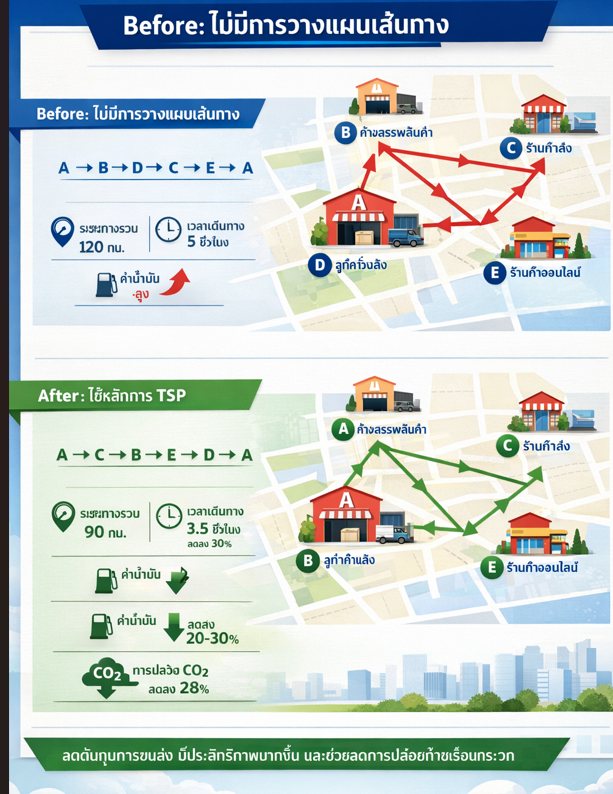
-
Point C (Wholesale store)
-
<7LbOc2qghzae>
-
Point E (Online customers)
Drivers may choose routes based on familiarity, such as:
A ---- B ---- D --- C --- E---- A
-
Fuel cost: High
Using TSP (After TSP implementation)
The system calculates the optimal route, such as:
-
Total distance: 90 kilometers
-
Reduce fuel costs: Approximately 20–30%
-
Reduce transportation distance
-
Reduce unnecessary trips
-
Reduce carbon dioxide emissions (CO 2
Improve on-time delivery efficiency
The company sets a target to control transportation costs at no more than 0.7% of sales revenue (Transportation Cost to Revenue ≤ 0.7%).
Calculated using the formula:
Transportation Cost to Revenue = Transportation Cost / Revenue x 100
1.1.4 Load Utilization Management
The company sets a target for load utilization rate of not less than 90-95% per trip to maximize transportation efficiency, reduce the number of trips, and lower transportation-related costs.
The company has applied TSP principles to manage external service providers' transportation routes, resulting in reduced outsourced transportation costs.
Percentage 2.14 which helps improve cost efficiency and reduce environmental impact.
1.1.6 Vehicle Fleet Management
The company prioritizes efficient vehicle fleet management to support logistics operations, reduce costs, and minimize environmental impact. Operational guidelines cover energy selection, preventive maintenance, and promoting appropriate driving behavior, as follows:
The company uses biodiesel fuel for its vehicles to help reduce greenhouse gas emissions and support the use of environmentally friendly alternative energy.
(2) Preventive Maintenance
The company has a systematic vehicle maintenance plan to ensure vehicles are ready for use, reduce breakdown risks, and help reduce unnecessary energy consumption. Key approaches include:
-
Change air filter every 15,000–30,000 kilometers
-
Change engine oil filter every 6,000–10,000 kilometers, depending on engine oil type.
-
Inspect exhaust system every 20,000–24,000 kilometers
-
Change tires according to appropriate lifespan to improve grip efficiency and reduce energy consumption.
(3) Promoting eco-driving behavior
The company encourages drivers to practice eco-driving principles by maintaining speeds between 90–110 km/h, avoiding sudden acceleration or braking, and reducing unnecessary idling. This helps reduce fuel consumption and carbon dioxide (CO) emissions. 2
(4) Vehicle fleet management performance
In 2025, the company's vehicle maintenance costs were 200,171.91 Baht, a 12% decrease from the previous year, reflecting improved vehicle management efficiency and effective preventive maintenance measures.
1.2 Implementing Energy Conservation Projects
The company prioritizes conservation and efficient energy use, focusing on valuable resource utilization while reducing environmental impact. This is achieved through policy setting, control measures, and raising employee awareness about energy use within the organization.
1.2.1 Electricity saving measures
-
Set appropriate on/off times for lights and air conditioners in the office
-
Set air conditioner temperature at 25 degrees Celsius to balance comfort and energy saving.
-
Perform air conditioner maintenance, cleaning at least twice a year, to ensure efficient operation.
Long-term energy and greenhouse gas reduction goals
The company has set long-term goals for energy conservation and greenhouse gas emission reduction, considering the suitability for its business nature and international sustainability trends, as follows:
-
Aiming for Net Zero Emissions
-
such as solar energy, in the company's operations continuously, with the goal of significantly increasing the proportion of renewable energy use within 10–15 years.
-
Promote the use of environmentally friendly vehicles
-
<7t32qDgKdtGN> <3n1lfCE6WANW_space>
-
Support environmental activities such as tree planting or carbon offset activities, to help mitigate the impact of greenhouse gas emissions in the long term.
Key Performance Indicators (KPIs)
The company sets energy and environmental indicators to continuously monitor and evaluate performance, as follows:
-
Carbon dioxide emission reduction rate (CO 2 ) per unit activity, e.g., kg/transport unit
-
Proportion of energy from renewable sources (% of total energy consumption)
-
<3UnptjfCflB3>
<9TCjoW4fFhep>
The key operational guidelines include:
-
Support reuse and recycling of materials
-
Control resource use, such as water and energy, for maximum efficiency.
|
Risk issues |
Risk details |
Goal |
Indicators (KPIs) |
|
|---|---|---|---|---|
|
The company implements supplier development programs, especially for high-risk or non-ESG compliant groups, to help them improve their operations to meet specified standards through in-depth consultation, Corrective Action Plan (CAP) development, and continuous monitoring. |
2 |
Use LED, control AC, use TSP, Eco-driving |
Net Zero 2050 |
2 |
|
Inefficient resource utilization |
Excessive use of electricity, water, and materials |
Control resource use, monitor usage |
Reduce energy/water |
Energy per revenue |
|
Waste management |
Waste from packaging and operations |
Waste segregation, recycling, waste reduction |
Reduce waste to ≤5% |
|
|
Non-compliance with environmental laws |
Risk of fines/reputational damage |
2. Social (Social: S)
|
Risk issues |
Risk details |
Goal |
Indicators (KPIs) |
|
|---|---|---|---|---|
|
Fair HR policies, non-discrimination |
Organizational equality |
% Diversity |
||
|
Workplace safety |
Reduce accidents to near zero |
Accident rate |
||
|
Customer satisfaction |
<8URHTBQUWhzY> |
Increase satisfaction |
Customer Satisfaction |
|
|
Impact on community |
CSR, reduce environmental impact |
Conduct CSR ≥ 5 times/year |
3. Governance (Governance: G)
|
Risk issues |
Risk details |
Goal |
Indicators (KPIs) |
|
|---|---|---|---|---|
|
Non-compliance with laws |
Risk of fines/litigation |
Compliance monitoring |
100% compliance |
Number of cases/fines |
|
Fraud |
Anti-corruption, Whistleblowing |
Zero fraud |
Number of fraud cases |
|
|
Incomplete/non-transparent data |
Annual report, ESG report |
Fully disclosed |
Disclosure level |
|
|
Efficient system |
Audit results |
Table of ESG and Business Strategy Linkage Overview
|
Business results |
||
|---|---|---|
|
Environment |
Reduce costs, increase profits |
|
|
Increase sales, satisfaction |
||
Environmental and sustainable resource management goals
The company is committed to conducting business while reducing the impact of climate change by setting concrete long-term goals for greenhouse gas emission reduction, as follows:
-
Aiming for Net Zero Emissions by 2050
The company aims to reduce greenhouse gas emissions from all business activities, focusing on improving energy efficiency, using renewable energy, and developing carbon offset approaches, such as supporting carbon sequestration projects. -
The company supports the use of clean energy, such as solar energy and other alternative energy sources, to reduce reliance on fossil fuels. -
Promote the use of environmentally friendly vehicles
The company plans to support the use of electric vehicles (EVs) and improve transportation system efficiency to reduce greenhouse gas emissions from logistics activities. -
Support natural resource restoration and carbon sequestration
The company promotes environmental activities such as tree planting and ecosystem restoration to help absorb carbon in the long term. -
Develop a greenhouse gas (GHG) monitoring and reporting system
The company plans to develop a system for collecting and analyzing greenhouse gas emissions to use as data for continuous operational planning and improvement.
Key Performance Indicators (KPIs)
-
Carbon dioxide emission reduction rate (CO 2 ) per unit activity
-
Proportion of renewable energy use (% of total energy)
-
Energy consumption per unit of revenue or operational unit
The company is committed to developing environmentally friendly products, prioritizing the selection of sustainable and safe raw materials for consumers, while reducing environmental impact at every stage of the value chain.
2.1.1 Selection of environmentally friendly materials
The company prioritizes selecting raw materials with low environmental impact, focusing on natural fibers such as cotton and rayon, which are renewable. This also includes developing and selecting easily biodegradable synthetic fibers to reduce waste and environmental impact in the long term.
2.1.2 Production adhering to environmental standards
<24ocvlsRSudF>
The company develops products considering the product life cycle, designing them to be durable, long-lasting, and recyclable or biodegradable at the end of their useful life. This helps reduce waste and the use of new resources.
-
Development of ECOWEAR product group
The company has developed an innerwear product group that is consumer- and environmentally friendly, using natural raw materials: 50% cotton fiber mixed with 50% rayon fiber, which are easily biodegradable. Environmentally friendly synthetic fibers are also selected, and the production process follows ISO 14001 standards, avoiding hazardous chemicals. This results in products that are safe for consumers, soft, comfortable, and breathable. -
-
Development of innovative environmentally friendly products
The company has developed "ECO BRA," an innerwear product made from recycled fibers, designed with Seamless technology and Jacquard embossed patterns to enhance breathability and comfort. It also considers reducing environmental impact throughout the product life cycle. -
Application of environmentally friendly production technology
The company has adopted Seamless Bonding technology and recycled nylon fibers in product manufacturing, using heat bonding instead of sewing. This reduces the use of auxiliary materials and production waste, while also making the fabric smooth, firm, and highly flexible, adapting well to the wearer's body for enhanced comfort.
2.1.5 Raising consumer awareness
The company aims to promote knowledge and understanding about selecting environmentally friendly products through marketing communications and various channels to encourage consumers to participate in natural resource and environmental conservation.
Sustainability Target Mapping Table
|
Goal |
Indicators (KPIs) |
Responsible department |
Duration |
Note |
|---|---|---|---|---|
|
Aiming for Net Zero Emissions |
2 |
Logistics Department / Operations Department |
By 2050 |
|
|
Increase renewable energy by 50% |
<5djrmLQWW5Mf> |
e.g., Solar Rooftop |
||
|
Reduce energy consumption |
Energy per revenue |
Continuous (Annually) |
Compare YoY |
|
|
Reduce transportation costs |
Transportation Cost to Revenue |
<7hoAQmDBggBg> |
Continuous |
Target ≤ 0.7% |
|
% Load utilization ≥ 75% |
Continuous |
Reduce trips |
||
|
% Operational waste |
Within 3 years |
|||
|
Increase recycled materials |
Purchasing / Product Department |
Within 5 years |
Focus on Eco products |
|
|
GHG reporting system in place |
IT / Accounting Department |
Within 1–2 years |
Support ESG Report |
2. Social (Social: S)
|
Goal |
Indicators (KPIs) |
Responsible department |
Duration |
Note |
|---|---|---|---|---|
|
% Employees trained |
HR Department |
Within 3 years |
||
|
% Women in management |
HR Department |
Within 5 years |
Promote Diversity |
|
|
Reduce workplace accidents |
Accident rate |
Safety Department |
Near zero |
|
|
<2AvraQ1ogxwF> |
Sales Department |
Continuous |
Annual survey |
|
|
Number of activities per year |
<0Hwd8fvL1dR0> |
Annually |
Focus on community |
3. Governance (Governance: G)
|
Goal |
Indicators (KPIs) |
Responsible department |
Duration |
Note |
|---|---|---|---|---|
|
Develop internal control system |
Internal Audit Department |
<84Ch3zZfNL6r> |
Reduce risk |
|
|
Zero Fraud |
Continuous |
Must be zero |
||
|
% Employees trained |
HR Department |
<84Ch3zZfNL6r> |
||
|
Transparent information disclosure |
<39sE8oMgQQeQ> |
Accounting / IR Department |
Annually |
According to SET criteria |
|
Number of cases/fines |
Legal Department |
Continuous |
Must be zero |
2.2 Operational Waste Reduction Management
The company recognizes the importance of reducing operational waste and is committed to efficient resource utilization to support environmental conservation and minimize ecological impact. The company has established a systematic waste management approach, covering waste reduction, reuse, and recycling, to ensure valuable and sustainable resource use.
The company focuses on creating an environmentally friendly organizational culture by encouraging employees to have knowledge, understanding, and participation in valuable resource use, as well as adhering to concrete waste reduction guidelines.
-
Implementation of electronic document system (Paperless Organization)
From 2021 to the present, the company has transitioned its financial document management system from paper-based to an electronic tax invoice and e-receipt system. This involves using modern technology for document management, enhancing convenience, speed, and accuracy in operations.
-
Waste management and systematic segregation
Between 2022–2025, the company effectively managed waste by establishing clear segregation points within the organization and defining appropriate waste sorting guidelines by type, enabling employees to comply correctly and consistently.
-
Recyclable waste (e.g., paper, plastic, glass bottles, cans, and aluminum)
-
General waste
Long-term goals (3–5 years)
Sustainable Natural Resource and Material Management
The company is committed to conducting business with efficient and optimal use of natural resources while reducing environmental impact. It has set long-term goals for 3–5 years to enhance resource management and support the Circular Economy approach, as follows:
-
The company aims to develop and improve operational processes to efficiently utilize natural resources by reducing the use of limited resources and promoting the use of alternative or recycled materials in production and operations. This reduces reliance on new resources and minimizes long-term environmental impact. -
Enhancing recycling efficiency and circular material use
The company promotes the development of internal segregation and recycling systems, and supports the reuse and recycling of used materials to increase the proportion of circular materials and reduce the amount of waste requiring disposal. -
Application of technology in resource management
The company uses modern technology for resource management, such as energy and material monitoring systems and data analytics systems, to enhance resource efficiency, reduce waste, and support strategic environmental decision-making. -
Promoting environmental conservation
The company prioritizes environmental conservation, collaborating with government agencies, private sectors, and communities on beneficial activities such as tree planting, reducing fossil fuel consumption, and promoting renewable energy to balance business operations and environmental care. -
-
Monitoring and evaluation of resource use
Key Performance Indicators (KPIs)
To achieve the set goals, the company has established key indicators as follows:
-
Recycling rate of materials (%)
Measure the proportion of materials that can be reused or recycled compared to the total amount of materials used in the organization. -
Measure the volume of waste that needs to be disposed of and cannot be reused or recycled, with the goal of continuous reduction through process improvement and the use of alternative materials.3. Sustainable Supplier Management
<2jKvd4NvFHsl>
raw materials (Suppliers) to ensure that the procurement process complies with environmental, social, and governance (ESG) standards.
-
The company sets criteria for selecting reliable suppliers, considering product quality, production capacity, legal compliance, and environmental and labor standards, to ensure a socially responsible supply chain. -
Supplier evaluation and monitoring
<56T4aabQQI9b> -
Promoting sustainable operations in the supply chain
The company encourages suppliers to improve production processes to be environmentally friendly, such as reducing the use of hazardous chemicals, efficient energy use, and appropriate waste management. -
Building long-term relationships
The company aims to build good and sustainable relationships with suppliers through transparent communication, clear information provision, and fair business practices to enhance trust and long-term cooperation.1. KPI and Target Table (Sustainability KPI & Target)
Resource and waste management
Indicator (KPI)
Duration
Responsible department
Recycling rate of materials (%)
Proportion of recycled materials
≥ 50%
Within 5 years
Operations / Warehouse Department
Volume of non-recyclable waste
Waste for disposal
Within 3 years
Paper reduction
Reduced by ≥ 30%
Within 3 years
Accounting / IT Department
Use of recycled materials
Recycled material proportion
≥ 40%
Within 5 years
Purchasing Department
Energy consumption per unit of revenue
Energy Intensity
Reduced by ≥ 10%
Within 3 years
<6PPxDJfb9RzP>
Supplier (Supply Chain)
Indicator (KPI)
Duration
Responsible department
Suppliers meeting ESG criteria
% Suppliers passed assessment
≥ 80%
Within 3 years
Purchasing Department
Supplier Audit
Number of audits
Continuous
Purchasing Department
On-time delivery
On-time Delivery
≥ 95%
Continuous
Purchasing Department
Use of Eco materials from suppliers
≥ 50%
Within 5 years
Purchasing Department
-
Strictly comply with environmental laws
-
Appropriate waste and chemical management systems in place
<4ZzshehlF6tR>
-
No child or forced labor
-
Treat employees fairly
-
Combat corruption in all forms
-
Comply with relevant laws and regulations
3. ESG Risk Mapping (Supplier Risk)
Risk type
Risk details
Impact
Management measures
Supplier non-compliance with environmental standards
Select suppliers with ISO / Audit
Social Risk
Unfair labor practices
Reputational damage
Audit and evaluate suppliers
Supply Chain Risk
Compliance Risk
Non-compliance with laws
<16J0eHheOrOd>
-
-
The company sets long-term goals for natural resource and environmental management to support sustainable business operations, focusing on efficient resource use, reducing environmental impact, and creating value for all stakeholders, as follows:
1. Efficient use of natural resources
The company has a policy to develop and implement strategies for efficient and sustainable use of natural resources, aiming to reduce the use of limited resources and promote the use of alternative and recycled materials in production processes to enhance resource efficiency throughout the value chain.
-
Increase the proportion of recycled materials in the production process to at least 30%.
The company promotes the development of efficient recycling systems and supports the concept of a Circular Economy, focusing on reducing waste from production processes and maximizing the proportion of recycled materials.
-
Reduce landfill waste by at least 40%
3. Use of technology in resource management
The company prioritizes using modern technology for resource management, such as energy-saving technology, resource monitoring and analysis systems, and production process efficiency enhancement systems, to support appropriate resource use and reduce waste.
-
Reduce energy consumption per unit of production by at least 10–15%.
-
Install a resource monitoring system (Digital Monitoring) covering 100% of key processes.
4. Promoting environmental conservation
The company aims to foster cooperation with government agencies, private sectors, and communities in environmental activities such as tree planting, reducing greenhouse gas emissions, reducing fossil fuel consumption, and promoting renewable energy to jointly maintain ecological balance.
-
Reduce greenhouse gas emissions (Scope 1 and 2) by at least 20%.
-
Organize at least 2–3 environmental activities with the community per year
5. Building a sustainable organizational culture
The company promotes an organizational culture that recognizes the importance of sustainable resource use by providing employee training, internal campaigns, and clear environmental goals to foster participation at all organizational levels.
-
100% of employees participate in environmental training
-
At least 3 environmental campaigns within the organization per year
The company develops a system for continuously monitoring and evaluating the use of natural resources and materials, setting clear indicators to measure performance, analyze trends, and improve strategies for efficiency and alignment with sustainability goals.
-
Report environmental performance quarterly
-
Review and update plans at least once a year
Key Performance Indicators (KPIs)
To achieve the set goals, the company has established key indicators as follows:
-
Measured as a percentage of recycled materials compared to the total materials used in the production process. The company aims to continuously increase the recycling rate to a high level. -
Volume of non-recyclable waste
-
Key Performance Indicators (KPIs)
<2rwVMcM6zUMT>
<7gOly4rc0fup>
-
Recycled material utilization rate (%)
Goal: -
Goal: Reduced by ≥ 15%
2. Waste and recycling
-
Recycling rate of materials (%)
Goal: ≥ 75–85% -
Volume of non-recyclable waste (kg/month)
Goal:
<7yl1l2izXe9Q>
-
Energy consumption per unit of production
Goal: Reduced by ≥ 10–15% -
2
Goal: Reduced by ≥ 20%
-
|
Strategic goal |
Indicators (KPIs) |
Duration |
Responsible department |
||
|---|---|---|---|---|---|
|
<7WrfJJcr0RrL> |
Reduce new raw material use and increase recycled materials |
Proportion of recycled materials (%) |
≥ 30% |
3–5 years |
Production / Purchasing Department |
|
<08rr65TqMsMJ> |
|||||
|
Waste management |
Reduce waste and increase circularity |
≥ 75–85% |
3–5 years |
Factory / Environment Department |
|
|
Reduce ≥ 30–40% |
|||||
|
<0tV3rFiCPhcE> |
Energy consumption per unit of production |
Reduce ≥ 10–15% |
3–5 years |
Engineering / Factory |
|
|
Reduce environmental impact |
GHG emissions (tCO 2 |
Reduce ≥ 20% |
3–5 years |
Environment / Management |
|
|
Technology |
Increase efficiency with digital systems |
Installation of resource monitoring system |
100% coverage |
3–5 years |
IT / Factory |
|
Organizational culture |
Percentage of employees trained |
100% |
Continuous |
||
|
≥ 3 projects/year |
|||||
|
Community and society |
Participate in conservation |
Community projects |
≥ 2–3 projects/year |
Continuous |
CSR |
|
Year |
|
|---|---|
|
Establish resource usage database system / Initiate waste reduction project / Employee training |
|
|
<2p5ge9bZIZ22> |
Start using recycled materials in production / Install energy monitoring system |
|
Year 3 |
Expand renewable energy use / Improve recycling efficiency |
|
Year 4 |
|
|
Year 5 |
ESG and SDGs Linkage Table
|
Efficient resource utilization |
E |
SDG 12 |
|
Waste reduction |
E |
SDG 12 |
|
E |
||
|
Clean energy use |
E |
<2TFTu2Pnib64> |
|
<2SeAphaB5FKD> |
S |
SDG 8 |
|
Community engagement |
S |
SDG 11 |
|
Governance and reporting |
Measures 2. Building sustainable relationships with raw material suppliers
Short-term goals (1–3 years)
The company prioritizes sustainable supply chain management by selecting and developing raw material suppliers to operate according to Environmental, Social, and Governance (ESG) principles. This aims to elevate operational standards throughout the value chain, reduce environmental and social risks, and build stakeholder confidence.
3.1.1 Defining clear selection criteria
The company systematically establishes ESG criteria and standards for supplier selection, covering three main dimensions:
-
Environmental:
Energy and resource management, greenhouse gas emission reduction, waste management, and compliance with environmental laws. -
Social:
Respect for human rights, fair treatment of labor, workplace safety, and non-use of child or forced labor. -
Governance:
Transparency in business operations, anti-corruption, appropriate internal control systems, and compliance with relevant laws.
3.1.2 Assessment of ESG standard compliance
-
Self-Assessment Questionnaire (SAQ)
-
On-site Audit for high-risk suppliers
<9We1n5KX7SNZ>
3.1.3 Providing advice and support
-
Prepare with suppliers
-
Set improvement timelines and continuously monitor progress
3.1.4 Building cooperation with suppliers
The company promotes collaboration with suppliers to elevate ESG standards by
-
Organize training/seminars on ESG and related laws
-
Support the exchange of knowledge and best practices
-
<2QUesl896uO4>
To strengthen the supply chain in the long term
3.2 Assessment of ESG compliance
3.2.1 Defining ESG assessment criteria
The company clearly defines evaluation criteria for supplier performance in each area, as follows:
-
Environmental:
-
Energy and resource consumption
-
Waste and wastewater management
-
Compliance with environmental regulations
-
Social:
-
Protection of labor rights and welfare
-
-
Governance:
-
Transparency in business operations
-
Having an internal control and risk management system
-
3.2.2 Monitoring and reporting
The company regularly monitors and reports on suppliers' ESG assessment results by
-
Review assessment results at least once a year
-
Use assessment results as part of the selection and contract renewal process.
Key Performance Indicators (KPIs)
-
Percentage of suppliers passing ESG assessment
Goal: ≥ 80% -
Percentage of suppliers covered by ESG assessment
Goal: ≥ 100% of key suppliers -
Number of suppliers required to develop a Corrective Action Plan (CAP)
Goal: <1nsEnBUWTRVi_space> -
Number of ESG supplier development activities
Goal: <0prFKNuJBsdA_space>
Measures
Short-term goals (1–3 years)
3.1.1 Defining clear selection criteria
The company has established policies and criteria for supplier selection by systematically integrating ESG principles into the procurement process, covering three main dimensions:
-
Environmental:
-
Social:
Consider fair treatment of labor, respect for human rights, non-use of child or forced labor, occupational health and safety, and promotion of equality and non-discrimination. -
Governance:
<4G4X0VM2ARdr>
The company requires suppliers to acknowledge and comply with the "Supplier Code of Conduct," which sets minimum requirements for doing business with the company.
3.1.2 Assessment of ESG standard compliance
<4NX9Vml0RCJi>
-
Self-assessment through questionnaires (SAQ)
-
Review of relevant documents, such as licenses, environmental reports, and labor policies.
-
On-site Audit for high-risk or significant suppliers.
The company conducts supplier risk classification to determine the frequency and intensity of assessments, and uses assessment results as input for decisions on selection, contract renewal, or business expansion.
3.1.3 Providing advice and support
-
Develop a Corrective Action Plan (CAP) with suppliers
-
<6KQmJgRp2Ouc>
-
Set timelines and closely monitor improvement progress
If a supplier cannot implement improvements within the specified timeframe, the company may consider reviewing or terminating the business relationship to manage organizational risks.
3.1.4 Building cooperation with suppliers
To this end, the company has established operational guidelines to promote cooperation with suppliers, as follows:
-
Organizing ESG training, seminars, and workshops
<41p1m1MBdEJu> -
Promoting the exchange of knowledge and best practices
The company encourages the exchange of experiences, effective operational guidelines, and successful case studies among suppliers to enable them to apply and develop their own operational processes appropriately. -
-
Implementation of environmental and social cooperation projects
The company encourages suppliers to participate in environmental projects, such as waste reduction in production processes, efficient energy use, and greenhouse gas emission reduction, as well as social projects, such as community development and fair labor practices. -
Building continuous communication and engagement systems
The company provides appropriate communication channels, such as joint meetings, performance reporting, and listening to supplier feedback, to foster transparency, mutual understanding, and sustainable long-term relationships.
Key Performance Indicators (KPIs)
-
Goal: at least 1–2 times per year -
Goal: -
Number of suppliers developed and improved according to the CAP
Goal: continuously increasing3.2 Assessment of ESG compliance
The company mandates a systematic and continuous ESG performance evaluation system for suppliers to ensure that suppliers operate in accordance with company standards and effectively manage environmental, social, and governance risks.
3.2.1 Defining ESG assessment criteria
The company sets criteria and indicators for evaluating suppliers across three main dimensions:
-
Environmental:
Consider environmental impact management, such as reducing greenhouse gas emissions, efficient energy and resource use, waste and wastewater management, and compliance with relevant environmental laws and regulations. -
Social:
Consider employee and stakeholder welfare, such as protecting labor rights, providing appropriate benefits, workplace safety and health, non-use of child or forced labor, and promoting diversity and equality. -
Governance:
Consider transparency in business operations, legal compliance, anti-corruption, effective internal control systems, and appropriate risk management.
The company may establish a scoring system and supplier risk levels to aid in supplier selection and business relationship management.
<8vMGTg9T0lr9>
The company designs a systematic monitoring and evaluation process, covering both initial assessment and continuous follow-up, through various tools and methods, including:
-
Supplier Self-Assessment Questionnaire (SAQ)
-
<7bDBlv75AQlV>
-
On-site Audit for high-risk suppliers
-
Use of external auditors or specialized experts (Third-party Audit)
3.2.3 Evaluation period
-
Key suppliers (Critical Suppliers): Assess at least Once a year
-
High-risk suppliers: May be monitored quarterly
3.2.4 Communication of assessment results and recommendations
The company transparently communicates assessment results to suppliers and provides recommendations for improvement in case of deficiencies, with the following approaches:
-
Jointly define Corrective Action Plan (CAP)
-
Monitor improvement progress within the specified timeframe
<56ACJPW87mqF>
3.2.5 Reporting and system improvement
Key Performance Indicators (KPIs)
-
Percentage of suppliers covered by ESG assessment
Goal: ≥ 100% of key suppliers -
Goal: ≥ 80% -
Goal: -
Number of high-risk suppliers
Goal: <1nsEnBUWTRVi_space>
-
Long-term goals (3–5 years)
1. Developing long-term cooperation
The company aims to build strong relationships with potential and high-standard suppliers by
-
Establish clear conditions for product quality, production standards, delivery times, and fair pricing.
-
Develop a supplier evaluation and segmentation system to manage relationships appropriately.
<7KA5huPeLzNd>
The company promotes collaboration with suppliers in developing innovative products and production processes by
-
Jointly develop new quality and environmentally friendly raw materials or products
3. Increasing transparency and communication efficiency
The company aims to create an efficient and transparent communication system with suppliers by
-
Develop official communication channels, such as digital systems or supplier management platforms.
-
Regular joint meetings and performance monitoring
4. Promoting social and environmental responsibility
The company encourages suppliers to operate responsibly towards society and the environment by
-
Promote compliance with ESG standards and partner code of conduct
-
Support reducing environmental impact, such as greenhouse gas emission reduction and waste management.
-
Promote fair and safe labor practices
To elevate supply chain standards in line with sustainable development guidelines
-
Build cooperation to expand new business opportunities
-
Mutual support in development and problem-solving
-
Enhance trust and strategic relationships
Key Performance Indicators (KPIs)
The company sets indicators to evaluate the success of its operations as follows:
-
Number and proportion of suppliers assessed for ESG
Goal: Cover ≥ 100% of key suppliers within 3 years -
-
-
Number of suppliers with long-term contracts
<3Op7C0mSP3gS> -
Number of joint development projects with suppliers
Goal: At least 2 projects per year
4. Community engagement and social support
Short-term goals (1–3 years)
The company prioritizes conducting business while creating value for society, focusing on community development and improving people's quality of life through continuous social projects under the Corporate Social Responsibility (CSR) framework.
4.1 Investment in social projects
The company aims to support and invest in projects that create long-term benefits for the community, covering key issues such as:
The company promotes educational opportunities by supporting scholarships, learning equipment, and skill-building activities for youth to develop their potential and build a strong foundation for national development in the future.
4.1.2 Supporting community health projects
4.1.3 Community infrastructure development
The company participates in supporting and improving essential infrastructure for community living, such as providing equipment or facilities that enhance the quality of life and well-being of the people.
4.2 Building social responsibility within the organization
The company encourages employees to participate in creating a better society by instilling a sense of social responsibility at all organizational levels.
4.2.2 Community activities
The company continuously organizes social activities, such as donating essential items, assisting disaster victims, and supporting community activities, to build good relationships between the organization and society.
The company donated 10,000 face masks and 600 pieces of men's underwear, totaling 379,325 Baht, to support the duties of military personnel in the Thai-Cambodian border area at the 2nd Army Area Command in Nakhon Ratchasima Province, to enhance hygiene and operational readiness in high-risk areas.
2. Nursing student support project
<7XaiQswPaCo8>
3. Scholarship and skill development support project
The company collaborated with King Mongkut's University of Technology Thonburi to organize content creation skill development activities and awarded scholarships totaling 10,000 Baht to students to support their potential development and prepare them for future careers.
Key Performance Indicators (KPIs)
-
Goal: ≥ 2–3 projects per year -
Value of social activity support
Goal: continuously increasing -
Percentage of employees participating in CSR activities
Goal: -
Community satisfaction level with company activities
Goal: is at a good to excellent level.
Long-term goals for community and social engagement (3–5 years)
The company aims to develop and maintain good and sustainable relationships with the community by
-
<6i9Q0FvRoWpW>
To build trust and mutually beneficial coexistence in the long term
2. Promoting social projects with long-term impact
-
Education, such as skill development and learning opportunities
-
Health, such as promoting hygiene and access to basic services
-
Environmental, such as natural resource conservation
To foster continuous and sustainable development at the community and societal levels
3. Promoting Corporate Social Responsibility (CSR)
The company plans to systematically expand and develop CSR projects by
-
Aim to improve community quality of life
-
Promote education and human resource development
-
Support environmental conservation
To create shared value between the organization and society
4. Cooperation with government and private organizations
The company promotes cooperation with government agencies, private sectors, and various organizations by
-
<33oe40jOb6bj>
-
Jointly develop projects that create widespread impact
-
Use assessment results to improve and develop projects suitable for the community context.
To ensure that operations genuinely create sustainable benefits
Key Performance Indicators (KPIs)
-
Number of community projects implemented
Goal: ≥ 3–5 projects per year -
Goal: continuously increasing -
Results of social impact assessment
Goal: is at a good to excellent level. -
Goal: ≥ 80%
Short-term goals (1–3 years)
5.1 ESG performance reporting
The company prioritizes transparent, complete, and verifiable disclosure of Environmental, Social, and Governance (ESG) information. It aims to develop a reporting system that aligns with international standards to build confidence among investors and stakeholders.
-
Prepare initial ESG report within 3–6 months
This report will serve as a starting point for systematic reporting development in the next phase.
5.1.2 Increasing reporting transparency
-
Disclose ESG information at least once a year through the annual report (56-1 One Report) or sustainability report.
-
Reference internationally recognized reporting standards, such as
-
Global Reporting Initiative (GRI)
-
-
Improve data quality to be accurate, complete, and traceable
To enable investors and stakeholders to use information for appropriate decision-making
5.1.3 Developing communication channels
The company aims to develop efficient and accessible ESG communication channels by
-
Disseminate ESG information through the company's website
-
Include ESG data in annual reports and investor documents
-
Use other communication channels, such as shareholder meetings or investor presentations.
5.1.4 Internal employee training
The company prioritizes developing employees' knowledge and understanding of ESG by
-
Promote understanding of reporting standards and related practices
5.1.5 Stakeholder feedback
-
Open channels for feedback, such as surveys, meetings, or online platforms.
-
Analyze and incorporate feedback to improve ESG reporting processes
Key Performance Indicators (KPIs)
-
Initial ESG report completed within the specified timeframe
Goal: within 3–6 months -
Frequency of ESG information disclosure
Goal: at least once a year -
Percentage of departments that can provide complete ESG data
Goal: ≥ 90–100% -
Percentage of relevant employees trained in ESG
Goal: ≥ 100% -
Stakeholder satisfaction level with information disclosure
Goal: is at a good to excellent level.
5.2 Improving internal audit processes
The company is committed to continuously developing and improving its internal audit processes to adapt to changing risks, enhance internal control efficiency, and build stakeholder confidence.
5.2.1 Assessment of current internal audit processes
The company assesses its current internal audit system by
-
Review the structure, duties, and responsibilities of the internal audit unit
-
Analyze internal control processes in each department
-
Identify strengths, weaknesses, and gaps in the internal control system
with the goal of completion within 3–6 months, to be used as baseline data for system improvement.
5.2.2 Development and improvement of processes based on good corporate governance principles
The company improves its internal audit processes to align with good governance principles and international standards by
-
Implement Best Practices in system development
-
Improve internal control processes to cover significant risks
-
Establish clear policies and operating procedures
with the goal of completion within 6 months.
5.2.3 Training internal audit team
-
Provide training to the internal audit team and relevant personnel
-
Enhance knowledge in internal control, risk management, and corporate governance
-
Develop skills in analytical auditing and reporting
To enable efficient and professional operations
The company promotes the use of technology in internal audits to enhance efficiency and data accuracy by
-
Implement software or digital tools for auditing (Audit Tools)
-
Support automation in the audit process
<0QhPgBwWK88x>
The company systematically reports audit results and process improvements by
-
Prepare internal audit reports for management and the audit committee
-
Follow up on corrective actions (Follow-up)
-
Evaluate improvement results and measure the effectiveness of internal controls
To transparently communicate performance and lead to continuous development
Key Performance Indicators (KPIs)
-
Goal: within 3–6 months -
Percentage of defects resolved
Goal: ≥ 90% -
Goal: ≥ 100% -
Average time to close audit issues
Goal: within 60–90 days
Long-term goals (3–5 years)
Internal audit and corporate governance
The company aims to develop a robust, transparent internal audit system that aligns with international standards to support good corporate governance and enhance long-term risk management efficiency.
-
<36qkxoQsx0gp>
-
Create an efficient and auditable internal control system
2. Application of technology in internal auditing
<3UtFSmQKJ7RR>
-
Implement automation in the audit process
-
Study and develop the use of Artificial Intelligence (AI) technology for inspection
To increase speed, accuracy, and reduce operational errors
3. Enhancing transparency and compliance with international standards
<4SAAtNwOXkMK>
-
Develop work systems to comply with relevant standards, such as ISO
-
Promote transparency in reporting and information disclosure
To build confidence among shareholders, investors, and stakeholders
4. Developing and enhancing the capacity of the internal audit team
The company prioritizes employee development by
-
Develop a continuous skill and knowledge development plan for the audit team
-
Support relevant training and professional certifications
-
Enhance knowledge in technology, risk management, and ESG
To enable the team to operate efficiently and adapt to changes
5. Continuous monitoring and process improvement
<7e48DcYNLGds>
-
Analyze audit results and improve processes
Key Performance Indicators (KPIs)
-
ESG information disclosure rate
Goal: ≥ 90–100% of significant data -
External corporate governance assessment score
Goal: is consistently at a "good" to "excellent" level. -
Percentage of defects resolved within the specified timeframe
Goal: ≥ 90% -
Internal audit coverage
Goal:
UN Sustainable Development Goals
| SDG Goal |
|---|
| Goal 5 Gender Equality |
| Goal 5 Gender Equality |
Policy Review
Policy Reviewed This Year
No
Policy Changed This Year
No
Business Value Chain
Value Chain Description
Overview of activities in the business value chain.
The company operates as a distributor of apparel and cosmetic products under its own trademarks, with distribution channels covering both domestic and international markets through department stores, modern trade, supermarkets, convenience stores, traditional trade stores, company shops, and online channels.
The company emphasizes comprehensive management of the business value chain, from upstream, midstream, to downstream, to create added value for products and services and effectively meet stakeholder expectations.
Upstream Management
Sourcing production sites and raw materials.
The company prioritizes the selection of quality raw materials and production sources, alongside considering environmental impacts, with the following guidelines:
-
Select environmentally friendly raw materials and utilize recycled materials in certain product categories.
-
Establish environmental and energy policies for manufacturers.
-
Conduct analysis and measurements according to government agency standards, particularly the criteria of the Ministry of Industry.
In product development, the company collaborates with its affiliated manufacturing plant, New Plus Knitting Public Company Limited (NPK), to control product quality and production standards in line with the company's policies.
Midstream Production Process Management
Although the company primarily operates as a distributor, it plays a significant role in overseeing the production process through its business partners, with the following guidelines:
-
Support factory operations in compliance with labor laws and social standards.
-
Oversee that the production process adheres to the analysis and quality control plan.
-
Wastewater quality and greenhouse gas emissions are monitored by assigned external agencies, with inspection results meeting the standards of the Ministry of Industry.
The company prioritizes reducing environmental impact and conducting business with social responsibility.
Downstream Management
The company focuses on efficiently managing product distribution and customer access by
-
Develop distribution channels to cover all customer segments.
-
Manage logistics and warehouse systems to ensure fast and efficient product delivery.
-
Build strong relationships with customers and partners to enhance trust and satisfaction.
Primary Activities in the Value Chain
1. Inbound Logistics
The company has an affiliated company, New Plus Knitting Public Company Limited, which manufactures products under the same brand, responsible for producing and delivering hosiery, socks, underwear, sleepwear, and clothing to the company.
The said manufacturing plant is ISO 9001 certified, reflecting an efficient quality management system.
In 2025, the company purchased products from the said factory amounting to 264.22 million Baht, representing 70.36%. of total procurement. Meanwhile, some underwear and clothing products are procured by the company from external suppliers, amounting to 26.86 million Baht, or 7.15%.
The company has meticulous criteria for supplier selection, considering key factors such as:
-
Quality of products and services.
-
Price and competitiveness.
-
Product delivery capability
-
Operational flexibility.
-
After-sales service and support.
-
Compliance with relevant laws and regulations.
-
Innovation and product development capabilities.
To ensure supply chain stability and foster long-term business relationships.
2. Marketing & Sales
The company prioritizes the development of comprehensive marketing and sales strategies to support sales growth and build brand awareness, focusing on effectively reaching target customer groups through diverse channels that align with consumer behavior.
Key operational guidelines include:
-
Advertising & Promotion
The company conducts marketing communications through various channels such as television, radio, online media, social media, and websites, including the use of Influencers or Key Opinion Leaders (KOLs) to enhance effectiveness in reaching target customer groups. -
Marketing Activities
The company continuously organizes sales promotion activities such as trade shows, new product launches, and seminars to create customer engagement and stimulate purchasing decisions. -
Transparent product information presentation (Product Communication)
The company emphasizes presenting complete and accurate product information, utilizing real user reviews, and organizing product trial campaigns to build consumer confidence. -
Product Assurance
The company has a product quality warranty policy and provides after-sales service to build customer confidence and satisfaction. -
Sales Promotion
The company organizes special promotions such as seasonal discounts, loyalty programs, and various benefits to stimulate sales and build brand loyalty.3. Outbound Logistics
The company efficiently manages its product delivery system by adopting concepts for optimizing transportation routes, such as applying the Traveling Salesman Problem (TSP) principle, to help reduce costs and enhance delivery efficiency.
Key operational guidelines include:
-
Control the transportation cost to revenue ratio to be lower than 0.7%
-
The company directly delivers products to department stores and shops in Bangkok and its vicinity.
-
For product delivery to other provinces, the company selects external transportation service providers with high standards and reliability.
-
Develop a delivery system for online channels, setting a delivery time of no more than 24 hours after receiving an order.
To ensure customers receive products quickly, accurately, and with maximum satisfaction.
4. After-Sales Service
The company prioritizes after-sales service as a crucial factor in building customer satisfaction and long-term relationships, with the following service guidelines:
-
Product warranty within 1–2 years.
-
Product Exchange within the specified period.
-
Return Policy to facilitate customers.
-
Customer Support via phone, email, live chat, and social media.
-
Follow-up to assess customer satisfaction.
-
Systematic and prompt complaint handling.
-
Providing product usage recommendations to enhance operational efficiency.
-
Promotions and special privileges for existing customers.
-
Order Tracking System via website or application.
To enhance customer experience and promote long-term repeat purchases.
5. Building Business Partner Networks (Partnership)
The company emphasizes building and maintaining strong relationships with business partners, including both affiliated companies and external suppliers, focusing on long-term collaboration and mutual growth.
-
The company has one affiliated company, which is the main product manufacturer, with a continuous business relationship spanning over 61 years.
-
Close coordination and joint development in production, product quality, and innovation.
-
External suppliers maintain stable business relationships under fair and mutually beneficial trade terms.
This collaboration strengthens supply chain stability and supports long-term sustainable business operations.
-
Comprehensive activities in the business value chain.
The company systematically manages its business value chain, encompassing primary activities and support activities, to create added value for products and services, alongside conducting sustainable business operations in accordance with ESG principles.
1. Primary Activities
1.1 Inbound Logistics
The company procures products from affiliated companies and external suppliers, prioritizing quality, standards, and supply chain sustainability.
-
Select suppliers based on criteria such as quality, price, reliability, and legal compliance.
-
Regularly evaluate and monitor supplier performance.
Related ESG:
-
Environmental: Use of environmentally friendly materials.
-
Social: Consideration of labor rights in the supply chain.
-
Governance: Transparent supplier selection.
1.2 Warehouse and Distribution Management (Operations & Logistics)
The company efficiently manages its warehouse and logistics system to accommodate product volume and market demand.
-
Control appropriate inventory levels to reduce excess stock.
-
Systematically plan inventory storage and distribution.
-
Develop logistics systems to reduce time and costs.
Related ESG:
-
Environmental: Reduce energy consumption and emissions from transportation.
-
Governance: Internal control system for inventory.
1.3 Outbound Logistics
The company has diverse distribution channels, covering both offline and online platforms.
-
Department stores, modern trade, supermarkets, convenience stores.
-
Wholesale stores and company-owned stores.
-
Online channels (E-commerce and Marketplace).
The company aims to improve distribution efficiency to reach customers quickly and comprehensively.
Related ESG:
-
Social: Equal access to products.
-
Governance: Fair management of partners and distribution channels.
1.4 Marketing & Sales
The company conducts marketing activities focused on brand building and meeting customer needs.
-
Develop products that align with consumer behavior.
-
Utilize online channels and digital media for marketing communications.
-
Promote a socially responsible brand image.
Related ESG:
-
Social: Accurate product information communication.
-
Governance: Ethical marketing practices.
1.5 Customer Service
The company prioritizes building customer satisfaction and long-term relationships.
-
Provide after-sales service.
-
Receive complaints and suggestions from customers.
-
Continuously improve products and services.
Related ESG:
-
Social: Consumer rights protection.
-
Governance: Transparent complaint handling system.
2. Support Activities
2.1 Firm Infrastructure
The company has a clear corporate governance structure, along with effective internal control and risk management systems.
-
Board of Directors and Audit Committee.
-
Risk Management System.
-
Good Governance
2.2 Human Resource Management
The company prioritizes personnel development.
-
Training and skill development
-
Creating a good working environment.
-
Employee rights and welfare care.
2.3 Technology Development
The company applies technology to enhance operational efficiency.
-
Management Information Systems.
-
Online sales system.
-
Use of Data Analytics and Automation.
2.4 Procurement
The company has a transparent and efficient procurement system.
-
Establish clear supplier selection criteria.
-
Promote Sustainable Procurement.
-
Control costs and product quality.
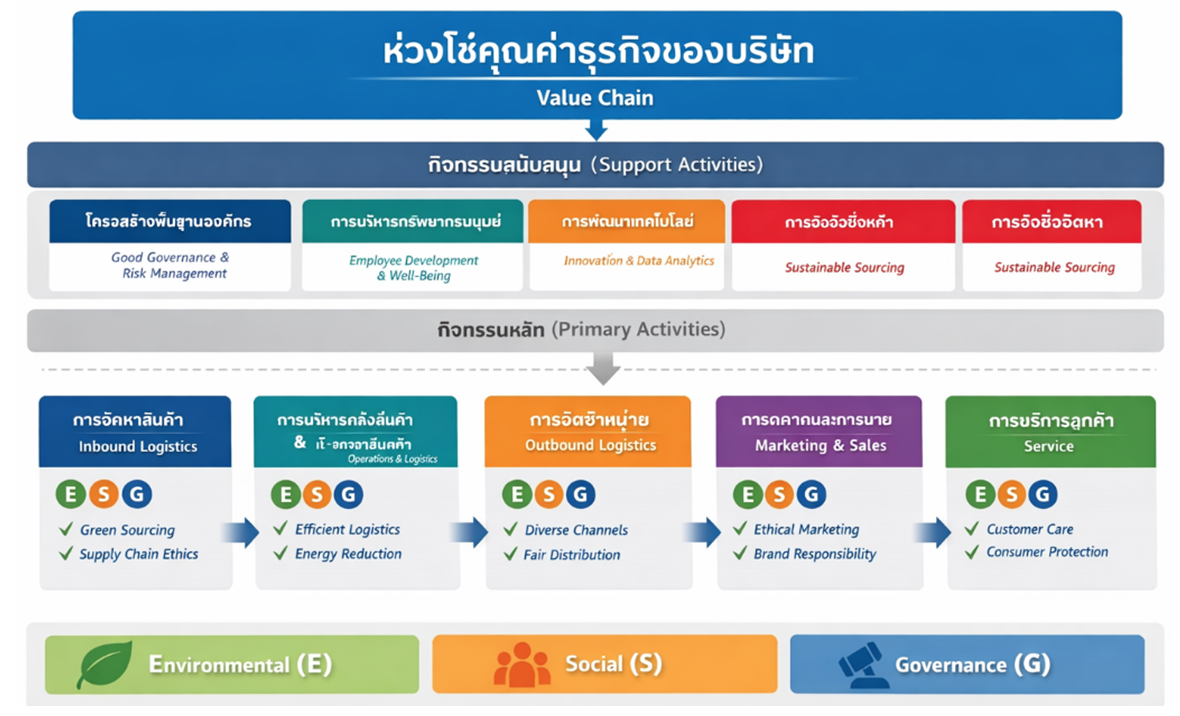
Overview of activities in the business value chain.
The company operates as a distributor of apparel and cosmetic products under its own trademarks, with distribution channels covering both domestic and international markets through department stores, modern trade, supermarkets, convenience stores, wholesale stores, company-owned stores, and online channels.
The company emphasizes comprehensive value chain management, from upstream, midstream, to downstream, to create added value for products and services, while integrating ESG principles to foster sustainable business growth.
1. Upstream Management
1.1 Procurement & Sourcing of Production Sites and Raw Materials
The company prioritizes the selection of quality production sources and raw materials, alongside considering environmental and social impacts, with the following guidelines:
-
Select suppliers based on criteria such as quality, price, reliability, and delivery capability.
-
Promote the use of environmentally friendly raw materials and recycled materials in certain product categories.
-
Establish environmental and energy policies for manufacturers.
-
Comply with government regulations, especially the standards of the Ministry of Industry.
The company has an affiliated company, New Plus Knitting Public Company Limited, which is the main product manufacturer, working closely together to control product quality.
2. Midstream Management
2.1 Manufacturing Oversight
Although the company operates as a distributor, it plays a role in overseeing production through its partners by
-
Support compliance with labor laws.
-
Control production quality standards.
-
Analyze wastewater quality and greenhouse gas emissions by external agencies.
-
Inspection results comply with government standards.
2.2 Warehouse and Logistics Management (Operations & Logistics)
-
Manage inventory appropriately to reduce excess stock.
-
Develop efficient warehouse systems.
-
Systematically plan product distribution.
3. Downstream Management
3.1 Marketing & Sales
The company implements a comprehensive marketing strategy by
-
Utilize various communication channels such as television, social media, websites, and influencers.
-
Organize marketing activities such as trade shows and product launches.
-
Present product information transparently and utilize real user reviews.
-
Organize promotions such as discounts and loyalty programs.
-
Guarantee product quality to build confidence.
3.2 Outbound Logistics
The company efficiently manages product delivery by
-
Utilize route planning principles (TSP) to reduce costs.
-
Control transportation costs to revenue < 0.7%.
-
Delivered in Bangkok and its vicinity using the company's system.
-
Utilize external transportation service providers for other provinces.
-
Online channels deliver within 24 hours.
3.3 After-Sales Service
The company prioritizes customer experience by
-
1–2 year product warranty.
-
Product exchange/return according to conditions.
-
Multiple customer support channels.
-
Order tracking system.
-
Efficient complaint management.
4. Building Partner Networks (Partnership)
-
Has an affiliated company as the main manufacturer, with a relationship spanning over 61 years.
-
Collaboration in quality and innovation.
-
Suppliers maintain stable and fair relationships.
5. ESG Integration in the Value Chain
The company applies ESG principles at every stage of the value chain as follows:
Environmental Aspect
-
Use environmentally friendly raw materials.
-
Control pollution emissions.
-
Reduce energy and waste.
Social Aspect
-
Consider labor rights.
-
Care for customers and communities.
-
Support social activities.
Governance
-
Possess internal control systems.
-
Transparent and auditable.
-
Systematically manage risks.
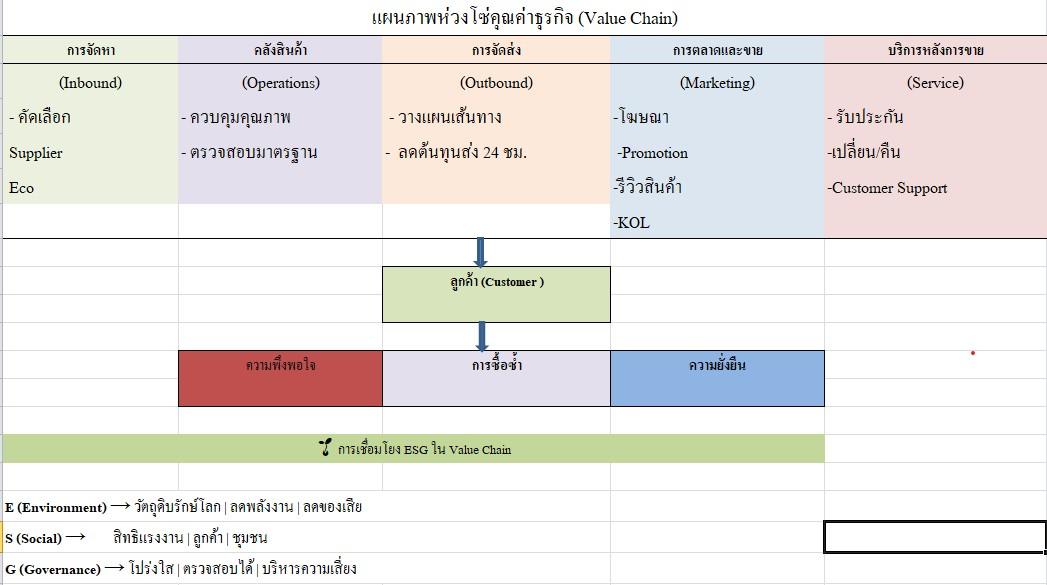
The company comprehensively manages its business value chain, from raw material procurement, warehouse management and product delivery, marketing and sales activities, to after-sales service, to deliver quality products and services to customers.
The company has integrated Environmental, Social, and Governance (ESG) principles into every stage of the value chain to enhance operational efficiency, reduce environmental impact, and build stakeholder confidence, leading to long-term sustainable growth.
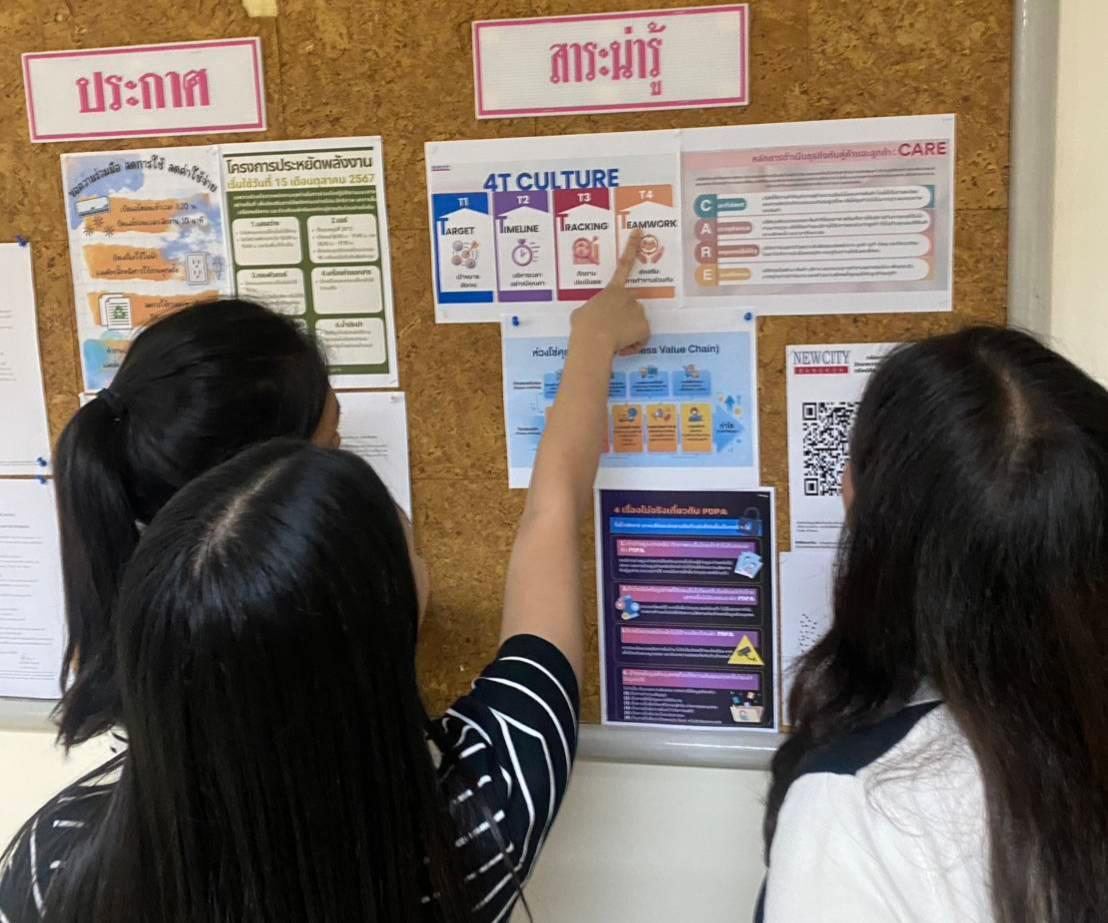
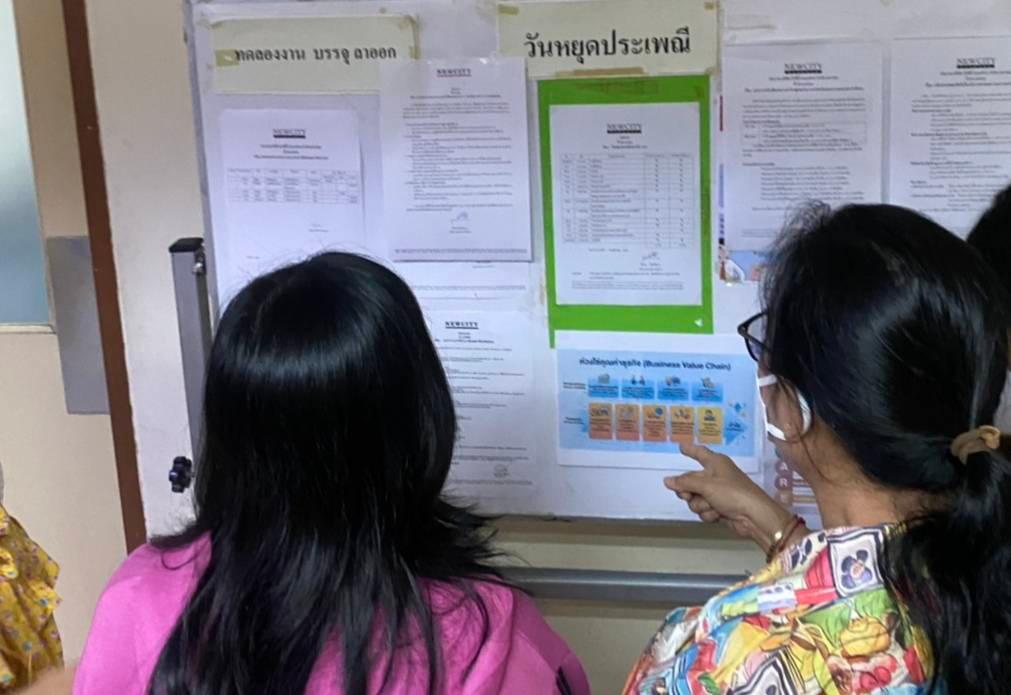
Stakeholder Analysis
Introduction
The company focuses on conducting business based on good corporate governance principles and ethical governance, taking into account important factors such as vision, mission, and business strategies to enable the company to operate towards business sustainability. Stakeholder groups have been divided to cover both internal and external parties, considering their participation, impact on operations, and the company's performance for the maximum benefit of all parties. Stakeholders are categorized into 7 groups to assess their level of importance and direct and indirect impacts on the company, and to establish guidelines for responding to expectations and fostering stakeholder engagement within each group, as detailed in the stakeholder analysis within the business value chain.
Summary table of sustainability issues (ESG)
Environmental aspect
|
Sustainability issues |
Relevant stakeholders |
|
Management of environmental impacts from business operations |
Community / Government |
|
Efficient use of energy, water, and resources |
Community / Government |
|
Pollution control and waste management |
Community / Government |
|
Environmental responsibility of business partners |
Business partners |
|
Prevention of business impacts on the community |
Community |
Social aspect
|
Sustainability issues |
Relevant stakeholders |
|
Fair compensation and benefits |
Employees |
|
Job security (including contract employees) |
Employees |
|
Skill and potential development |
Employees |
|
Career advancement |
Employees |
|
Safety and working environment |
Employees |
|
Product and service quality |
Customers |
|
Satisfaction and trust |
Customers |
|
Consumer protection |
Customers |
|
Complaint management |
Customers |
|
Accurate product information |
Customers |
|
Long-term trade relationships |
Business partners |
|
Responsible business operations |
Business partners |
|
Maintaining product and service quality |
Business partners |
|
Data protection |
Business partners |
|
Building community relationships |
Community |
|
CSR activities |
Community |
|
Quality of life development |
Community |
|
Complaint management |
Community |
Governance
|
Sustainability issues |
Relevant stakeholders |
|
Transparency and disclosure of information |
Shareholders |
|
Equal treatment of shareholders |
Shareholders |
|
Sustainable growth |
Shareholders |
|
Sustainability issues |
Relevant stakeholders |
|
Anti-corruption |
Business partners / Government |
|
Fair competition |
Business partners |
|
Adherence to ethics |
Business partners / Government |
|
Timely debt repayment |
Creditors |
|
Contract compliance |
Creditors |
|
Financial credibility |
Creditors |
|
Legal compliance |
Government agencies |
|
Correct tax payment |
Government agencies |
|
Good corporate governance |
Government agencies |
Stakeholder Analysis
| Stakeholder Type | Stakeholders | Stakeholder Expectations | Response to Expectations | Communication Activities |
|---|---|---|---|---|
| External stakeholders | 2913 · Description: Shareholders | - Returns, including dividends - Continuous operational growth - Equal and fair treatment - Full disclosure of company information based on facts - Company Growth - Financial Stability | - Operating the business under good corporate governance principles- Protecting shareholders' interests- Achieving operational profits | 2940 · Description: Social Event · 2941 · Description: Online Communication · 2944 · Description: Annual General Meeting (AGM) · 2945 · Description: Complaint Reception · 2949 · Other name: Investor Relations in Saha Group / Website / Form 56-1 One Report · Description: Others |
| Internal stakeholders | 2921 · Description: Employees | Compensation and Benefits Enhancement of Learning and Skill Development Promotion of Career Advancement and Stability Positive Work Environment | -Establish operational procedures within the legal framework -Conduct employee training -Annual employee performance evaluation (KPI) | 2941 · Description: Online Communication · 2942 · Description: Internal Meeting · 2945 · Description: Complaint Reception · 2947 · Description: Satisfaction Survey · 2948 · Description: Training / Seminar · 2949 · Other name: Activity/E-mail/Telephone · Description: Others |
| External stakeholders | 2923 · Description: Customers | Product Quality and Pricing Customer Satisfaction Respect for Consumer Rights Building Sustainable Business Partnerships Responsiveness to Issues Credibility and Trust | Timely delivery of high-quality products; Provision of after-sales service; Preparation of product information in accordance with legal standards; Offering promotions or special privileges; Post-sales follow-up; Friendly and attentive service | 2941 · Description: Online Communication · 2945 · Description: Complaint Reception · 2947 · Description: Satisfaction Survey · 2949 · Other name: Salesperson / Website / Social Network / Gmail / Telephone / FAX / Mail · Description: Others |
| External stakeholders | 2899 · Description: Suppliers | - Adherence to trade agreements - Building long-term trade relationships - Procurement and services that are socially and environmentally responsible - Timely administration and payment | Adherence to agreements and business ethics against corruption; Fair and transparent competition; Meeting and consulting to align with mutually agreed policies; Joint marketing plan development; Customer data retention; Quality maintenance | 2941 · Description: Online Communication · 2949 · Other name: Web Site/Email/Telephone/Fax/Staff · Description: Others |
| External stakeholders | 2894 · Description: Creditor | -Adherence to contractual terms and conditions -Punctuality in delivery -Quality and safety of goods -Full and timely payment -Maintenance of business relationships | Meetings to comply with agreed contracts and conditions, Timely debt repayment, Full and timely debt repayment and maintenance of collateral quality, Negotiation | 2941 · Description: Online Communication · 2943 · Description: External Meeting · 2949 · Other name: Web Site/Email/Telephone/Fax/Staff · Description: Others |
| External stakeholders | 2902 · Description: Community | Foster good relationships between the company, community, and society, Be responsible towards society and the environment, Implementation of CSR with the community, Prevention of impacts from business operations, Fair handling of complaints, Safety, Education and training | Employment of persons with disabilities; Support activities for improving quality of life for society and the environment; Coordinate consistent cooperation to meet community needs | 2940 · Description: Social Event · 2941 · Description: Online Communication · 2949 · Other name: Form 56-1 One Report, Social Media, www.newcity, Telephone, Fax, E-mail · Description: Others |
| External stakeholders | 2931 · Description: Government agencies and Regulators | Comply with laws, regulations, and established rules, and promote good corporate governance principles; Anti-bribery and corruption; Sustainable development; Social responsibility (CSR); Fair tax payment. | Conducting business under good corporate governance and governance principles. | 2940 · Description: Social Event · 2941 · Description: Online Communication · 2949 · Other name: Website/Email/Telephone/Fax /56-1 One Report · Description: Others |
| Internal stakeholders | 2936 · Other name: Contract Employee · Description: Others | - Job Security- Compensation and Benefits- Development Opportunities | Ensuring clarity in contracts; Fair management of compensation and benefits; Providing opportunities for development | 2942 · Description: Internal Meeting · 2948 · Description: Training / Seminar · 2949 · Other name: Web Site/Email/Telephone/Fax · Description: Others |
Environmental Sustainability — Overview
Introduction
Environmental Dimension of Sustainability Management
The company operates as a distributor of textile and apparel products. Recognizing the importance of environmental management alongside business operations to achieve sustainable growth, the company has established systematic environmental operational guidelines covering efficient resource utilization, reduction of environmental impact, and fostering awareness among personnel, as follows:
1. Sustainable Materials Usage
The company prioritizes the selection of environmentally friendly materials, with the following approaches:
-
Promote the use of natural raw materials and recycled materials in product manufacturing processes.
-
Consider selecting suppliers with appropriate environmental practices.
-
Support the development of products that reduce environmental impact throughout their lifecycle.
2. Water Resource Management
The company has established guidelines for efficient water usage to reduce unnecessary water consumption, as follows:
-
Establish water-saving measures in the premises.
-
Promote immediate shutdown of water-using equipment after use.
-
Regularly inspect, repair, and maintain water systems to reduce loss.
-
Organize training and raise employee awareness regarding efficient water usage.
3. Greenhouse Gas Reduction
The company aims to reduce climate impact by implementing control and reduction measures for greenhouse gas emissions in business-related activities, including:
-
Plan and manage product transportation routes to reduce energy consumption.
-
Control and maintain vehicles in ready-to-use condition to reduce pollution emissions.
-
Promote efficient energy use in logistics activities.
4. Waste Management
The company prioritizes waste reduction and proper waste management, with the following approaches:
-
Provide waste sorting points by type, such as general waste, recyclable waste, and hazardous waste.
-
Promote material reuse and recycling.
-
Campaign for employee participation in reducing waste generation within the organization.
-
Dispose of waste according to academic principles and relevant legal requirements.
1. Environmental Operational Guidelines
1.1 Sustainable Materials Usage
-
Promote the use of natural raw materials and recycled materials.
-
Select suppliers with environmental standards.
-
Develop products that reduce environmental impact throughout their lifecycle.
1.2 Water Resource Management
-
Establish water-saving measures.
-
Regularly inspect and repair equipment.
-
Promote appropriate water usage behavior among employees.
1.3 Greenhouse Gas (GHG) Reduction
-
Plan transportation routes to reduce energy consumption.
-
Maintain vehicles to reduce pollution emissions.
-
Increase energy efficiency in logistics systems.
1.4 Waste Management
-
Establish a waste sorting system by type.
-
Promote Reuse and Recycle.
-
Reduce the volume of waste requiring disposal.
-
Strictly comply with environmental laws.
2. Environmental Goals
Short-term (1 year)
-
Reduce general waste by no less than 5%.
-
Increase the proportion of correctly sorted waste by no less than 80%.
-
Reduce water consumption within the organization by no less than 3%.
Long-term (3–5 years)
-
Increase the proportion of recycled materials in products.
-
Continuously reduce greenhouse gas emissions from logistics activities.
-
Develop environmental management systems to international standards.
3. Key Performance Indicators (KPIs)
-
Water resource consumption (cubic meters/year)
-
Total waste volume (kg/year)
-
Waste recycling rate (%)
-
Greenhouse gas emissions (CO2e)
-
Proportion of environmentally friendly materials used (%)
4. Environmental Risks
The company recognizes potential risks arising from business operations that may impact the environment and operations. Key risks include:
-
Risk from inefficient resource utilization.
-
Risk from waste or pollution emissions exceeding standards.
-
Risk of non-compliance with environmental laws and regulations.
-
Risk from changes in government environmental policies.
Risk management approach
-
Clearly define policies and control measures.
-
Regularly monitor and evaluate results.
-
Raise employee awareness.
-
Continuously improve operational processes.
5. Linkage with ESG
-
Environmental (E): Reducing environmental impact and efficient resource utilization.
-
Social (S): Fostering employee awareness and participation.
-
Governance (G): Policy formulation and transparent operational control.
|
1. Environmental KPI Table (with figures to be filled) |
||||||
|
Indicators |
Unit |
Year 2023 |
Year 2024 |
Year 2025 |
Target 2026 |
Note |
|
Water consumption |
cubic meters/year |
3,498 |
3,026.00 |
2,858.00 |
Reduced by 3-5% |
Reduce water consumption. |
|
Total waste volume |
kg/year |
Reduced by 5% |
Reduce waste. |
|||
|
Recycling rate |
% |
≥ 80% |
Increase recycling |
|||
|
GHG emissions |
tCO2e |
Continuous reduction |
Transportation |
|||
|
Eco-friendly materials |
% |
0.05 |
1.00 |
2.00 |
Increased by 2.00 |
Eco product |
2. ESG Summary
Environmental
-
Use recycled and environmentally friendly materials.
-
Reduce water and energy consumption.
-
Control greenhouse gas emissions from transportation.
Social
-
Employee care and welfare
-
Create customer satisfaction.
-
Support community activities.
Governance
-
Have internal control systems.
-
Transparent and verifiable
-
Systematically manage risks.
3. Environmental Roadmap (Practical Carbon / Net Zero)
Short-term (1 year)
-
Begin collecting Carbon Footprint data.
-
Improve transportation efficiency.
-
Campaign to reduce waste within the organization.
Medium-term (2–3 years)
-
Reduce GHG emissions from logistics.
-
Increase the proportion of Eco Products.
-
Use recycled packaging.
Long-term (3–5 years)
-
Develop the organization into a Low Carbon Organization.
-
Set concrete carbon reduction targets.
-
Prepare for Net Zero
4. Risk + Mitigation
|
Risk |
Impact |
Management approach |
|---|
|
High resource consumption |
Increased costs |
Control usage |
|
Environmental laws |
Reputational damage/loss |
Comply |
|
High carbon |
Customers do not choose |
Reduce emissions. |
|
Unmanaged waste |
Impact on reputation |
Sort/Recycle |
Operating Results — Introduction
The Company, as a distributor of finished textile products, prioritizes environmental management in all business processes, particularly concerning the use of natural resources and the reduction of environmental impact throughout the business value chain, from production to product distribution, as follows:
1. Energy Management: LED light bulbs have been replaced for old, deteriorated light bulbs, reducing electricity consumption by 8.82% in the past period.
2. Water Management: Adjustable Flow Faucets have been installed to regulate water flow for various tasks such as handwashing or dishwashing, which has reduced water consumption by 5.55% over the past year.
3. Waste Management: The use of plastic bags has been reduced, with cloth bags being used as a substitute.
4. Pollution Reduction and Greenhouse Gas Management: The Company employs transportation processes based on the Travelling Salesman Problem (TSP) principle to enhance route efficiency and reduce transportation costs, with a target to keep the Transportation Cost to Revenue ratio below 0.7%.
Environmental Policy & Guidelines
Introduction
Environmental Policy and Guidelines
The company operates as a distributor of finished textile products, recognizing the importance of conducting business in conjunction with environmental preservation and striving to reduce environmental impacts throughout the value chain, from raw material sourcing and production to product distribution. Therefore, the company has established the following environmental policies and guidelines:
1. Efficient Natural Resource Utilization
The company focuses on maximizing the value and efficiency of natural resource utilization by
-
Promoting the selection of environmentally friendly raw materials, such as recycled materials, biodegradable materials, and raw materials from sustainable sources
-
Supporting the use of environmentally certified raw materials, such as organic cotton
-
Reducing the use of limited resources and increasing the proportion of alternative materials
2. Sustainable Energy Management
The company prioritizes efficient energy consumption by
-
Improving work processes and selecting energy-efficient machinery or equipment
-
Promoting the use of renewable energy, such as solar power
-
Campaigning and raising awareness among employees for efficient energy use
-
Regularly monitoring and analyzing energy consumption to improve efficiency
3. Water and Waste Management
The company systematically manages water and waste to reduce environmental impacts by
-
Controlling and reducing water usage in operational processes
-
Promoting water reuse and efficient water utilization
-
Establishing a waste sorting system by type and promoting recycling
-
Implementing waste disposal correctly according to technical principles and legal requirements
4. Pollution and Greenhouse Gas Reduction
The company aims to reduce environmental impacts from pollution by
-
Controlling and reducing greenhouse gas emissions from operational processes and transportation
-
Maintaining machinery and vehicles to reduce pollution
-
Monitoring and tracking air quality and emission levels to meet standards
-
Promoting approaches to reduce fossil fuel energy consumption
5. Promoting Circular Resource Use and Recycling
The company supports the concept of a Circular Economy by
-
Promoting the use of reusable or recyclable packaging
-
Reducing the use of non-biodegradable materials
-
Supporting the recycling of end-of-life products or materials
6. Employee and Stakeholder Engagement
The company emphasizes the participation of all sectors by
-
Providing training and raising environmental awareness among employees
-
Promoting environmentally friendly work practices
-
Communicating and fostering collaboration with partners, customers, and stakeholders in environmental operations
7. Monitoring, Evaluation, and Continuous Improvement
The company mandates regular monitoring and evaluation of environmental performance by
-
Monitoring resource consumption, greenhouse gas emissions, and waste management
-
Preparing performance reports for analysis and improvement
-
Reviewing policies and practices to align with current situations and defined goals
8. Compliance with Relevant Laws and Standards
The company is committed to strictly complying with relevant environmental laws, regulations, and standards by
-
Complying with government regulations and international standards
-
Updating policies and operational processes to keep pace with legal changes
-
Promoting operations in accordance with good corporate governance principles
1. Key Performance Indicators (KPIs) linked to environmental policy
|
Policy |
KPI |
Unit |
Goals |
|---|---|---|---|
|
Resource consumption |
Use of recycled materials |
% |
Continuously increasing |
|
Energy |
Total energy consumption |
kWh/year |
Reduced by 3–5% |
|
Water |
Water consumption volume |
Cubic meters/year |
Reduced by 3% |
|
Waste |
Recycling rate |
% |
≥ 80% |
|
Waste |
Waste volume |
kg/year |
Reduced by 5% |
|
GHG |
CO2e emissions |
tCO2e |
Continuously decreasing |
|
Compliance |
Legal compliance |
% |
100% |
2. ESG Checklist
Environmental (E)
-
Waste sorted ✔
-
Recycled materials used ✔
-
Energy consumption reduced ✔
-
Emissions controlled ✔
-
Environmental impact measured ✔
Social (S)
-
Employee training conducted ✔
-
Continuous CSR ✔
-
Customer care ✔
Governance (G)
-
Internal control system in place ✔
-
Information disclosed ✔
-
Verifiable ✔
3. Risks + Control Measures (Risk & Control)
|
Risks |
Impact |
Control measures |
|---|---|---|
|
High resource consumption |
<7s1wWmBlOuJ9> |
Define control KPIs |
|
Unmanaged waste |
Reputational damage |
Sorting system |
|
Environmental laws |
Fines |
100% Compliance |
|
High carbon |
Decreased customers |
Reduce logistics |
4. TCFD (Climate Change)
4.1 Risks
-
Strict carbon regulations
-
Increased energy costs
-
Increased consumer expectations
4.2 Opportunities
-
Eco-friendly products gaining popularity
-
Building a sustainable corporate image
4.3 Management
-
Improve transportation system
-
Reduce energy consumption
-
Increase recycled materials
5. Action Plan
Short-term (1 year)
-
Commence ESG data collection
-
Reduce water / Reduce waste
-
Employee training
Medium-term (2–3 years)
-
Increase Eco Products
-
Adjust logistics system
Long-term (3–5 years)
-
Becoming a Low Carbon organization
-
Utilizing renewable energy
-
Elevate to international standards
Has an Environmental Policy
Yes
Policy Description
Environmental Policy and Practices
The company operates a business in the sale of clothing and apparel. Although the nature of the business does not generate high greenhouse gas emissions like the manufacturing sector, the company is aware of the impacts of climate change and prioritizes environmentally friendly and sustainable business operations.
Therefore, the company has established an environmental policy focusing on efficient resource utilization, waste reduction, pollution reduction, and employee participation to minimize environmental impact throughout the value chain. The operational guidelines are as follows:
1. Energy Conservation and Efficient Energy Use
The company prioritizes reducing energy consumption in offices and logistics operations, with key measures including:
-
Replace deteriorated light bulbs with LED bulbs, aiming for completion within 3 years.
-
Replace low-efficiency air conditioners with energy-saving air conditioners, aiming for completion within 5 years.
-
Promote appropriate energy consumption behaviors, such as turning off electrical appliances when not in use and setting appropriate temperatures.
-
Regularly maintain electrical equipment to ensure energy efficiency.
2. Water Resource Management
The company efficiently manages water to reduce unnecessary water consumption, by
-
Install adjustable flow faucets to control water volume appropriate for use.
-
Promote water-saving behaviors within the organization.
-
Set a goal to achieve tangible results in water consumption reduction within 5 years.
3. Waste and Waste Management
The company prioritizes waste reduction and systematic waste management, with continuous operations from 2023 to the present, as follows:
-
Waste Reduction: Promote the use of cloth bags instead of plastic bags.
-
Waste Segregation: Separate waste into categories: recyclable waste, organic waste, hazardous waste, and general waste.
-
Recycling: Send reusable materials such as plastic, paper, and metal for appropriate recycling.
4. Pollution Reduction and Development of Environmentally Friendly Products
The company focuses on product development and selecting environmentally friendly materials to reduce impacts throughout the product life cycle, by
-
Use fibers from natural materials and easily biodegradable materials.
-
Develop ECOWEAR product group, such as
-
Innerwear products using natural cotton (50% Cotton) blended with rayon (50% Rayon), which offers good breathability and is environmentally friendly.
-
Production processes under ISO 14001 standards and avoidance of hazardous chemicals.
-
-
Projects Care for Fiber: Repurpose waste materials, such as plastic, into lace fabric through a recycling process, under the concept of “Made Earth Friendly for The Good of Tomorrow”.
-
CHERILON CALMY ECO BRA product: Uses recycled fibers and seamless weaving technology to reduce resource consumption and enhance breathability.
5. Greenhouse Gas Emission Reduction
The company aims to reduce greenhouse gas emissions from logistics and operational activities, by
-
Regularly maintain vehicles to reduce pollution emissions.
-
Plans to gradually transition vehicles to electric vehicles (EVs) within 5–10 years.
-
Apply the principles of transportation route planning (Travelling Salesman Problem: TSP) to enhance efficiency, reduce distances, and decrease fuel consumption.
-
Aim to control transportation cost to revenue at no more than 0.7%.
6. Monitoring, Evaluation, and Participation
The company continuously monitors and evaluates environmental performance, by
-
Establish environmental indicators such as energy consumption, water usage, and waste volume.
-
Report operational results to management.
-
Promote employee participation in environmental conservation.
-
Communicate and raise awareness among stakeholders.
Environmental Guidelines
| Guideline |
|---|
| Electricity Management |
| Waste Management |
| Greenhouse Gas and Climate Change Management |
Environmental Policy Review
Policy Reviewed This Year
No
Review Details
Waste and Refuse Management Policy
1. Policy (Policy)
The company is committed to effectively reducing, preventing, and managing waste and refuse to protect the environment and promote sustainable resource utilization, based on the following principles:
-
Reduce waste generation from production processes and operations (Waste Minimization)
-
Correctly segregate waste and refuse (Waste Segregation)
-
Reuse or recycle waste as much as possible (Reuse & Recycling)
-
Safely dispose of waste according to environmental standards (Safe Disposal)
-
Train employees and stakeholders to be aware of waste and refuse management (Awareness & Training)
ESG – Risk – Strategy – KPI Table
|
ESG Category |
Main Topic |
Risk (Risk) |
Strategy (Strategy) |
Key Performance Indicator (KPI) |
Target Level |
|---|
|
E – Environment |
Waste and Refuse Management |
Improper waste discharge / Environmental law violations |
1. Segregate waste in all departments
|
% Recycled waste / Reduced landfill waste |
Recycle ≥ 50% of all waste within 3 years |
|
E – Environment |
Reduce environmental impact |
Wastewater or waste impacting the community |
Inspect and control wastewater quality before discharge |
Number of legal violations |
0 incidents per year |
|
S – Social |
Employee safety |
Contamination or contact with hazardous waste |
Provide safety training and protective equipment |
% Employees trained |
100% by 2026 |
|
G – Governance |
Reporting and Auditing |
Lack of transparency in waste management |
Prepare annual waste and refuse report |
Report audited |
Full inspection passed |
Policies & Guidelines Changed
| Change |
|---|
| Waste Management |
Energy — Plan & Guidelines
Has an Energy Management Plan
Yes
Plan Description
Energy Conservation Projects
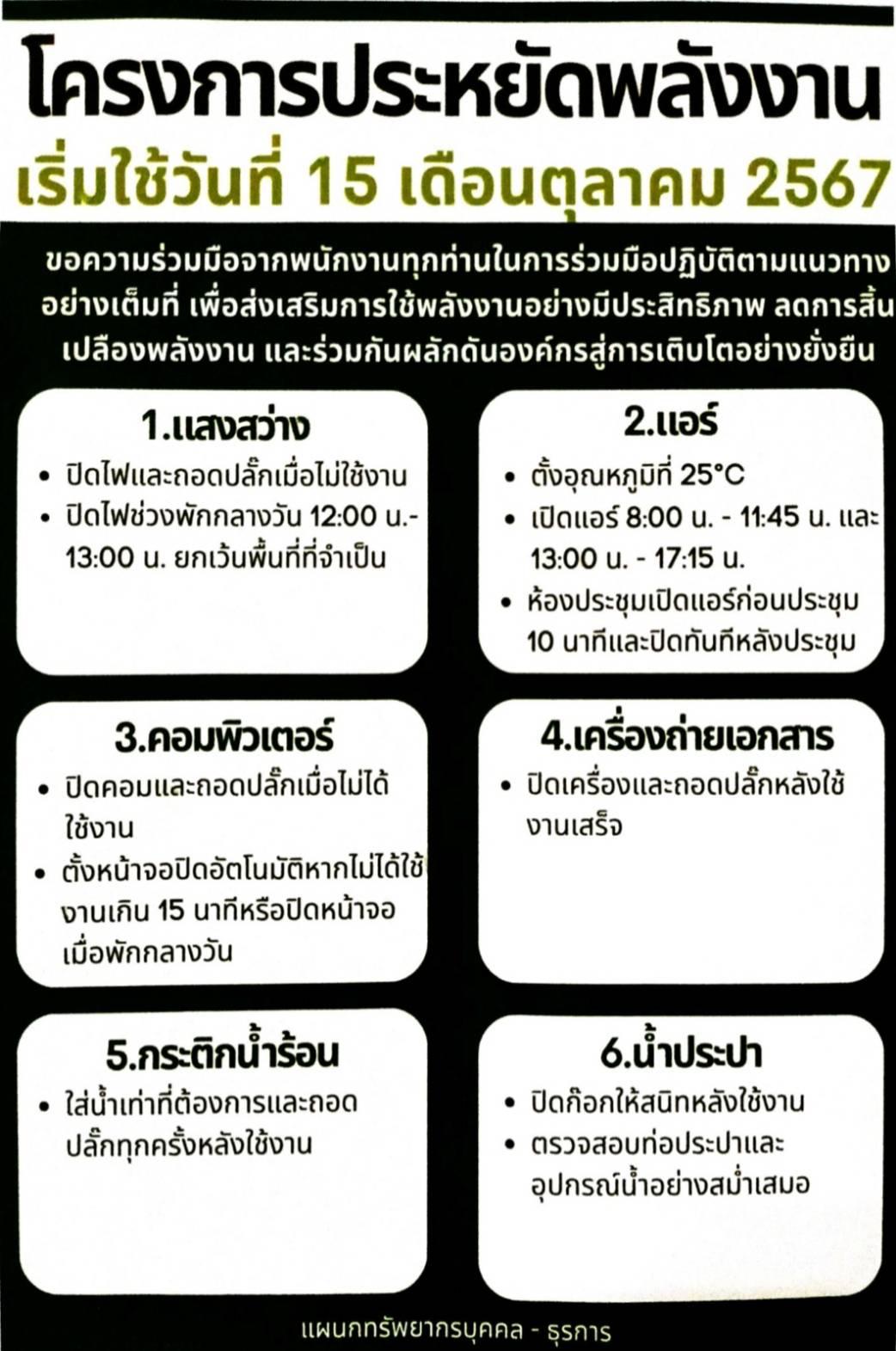
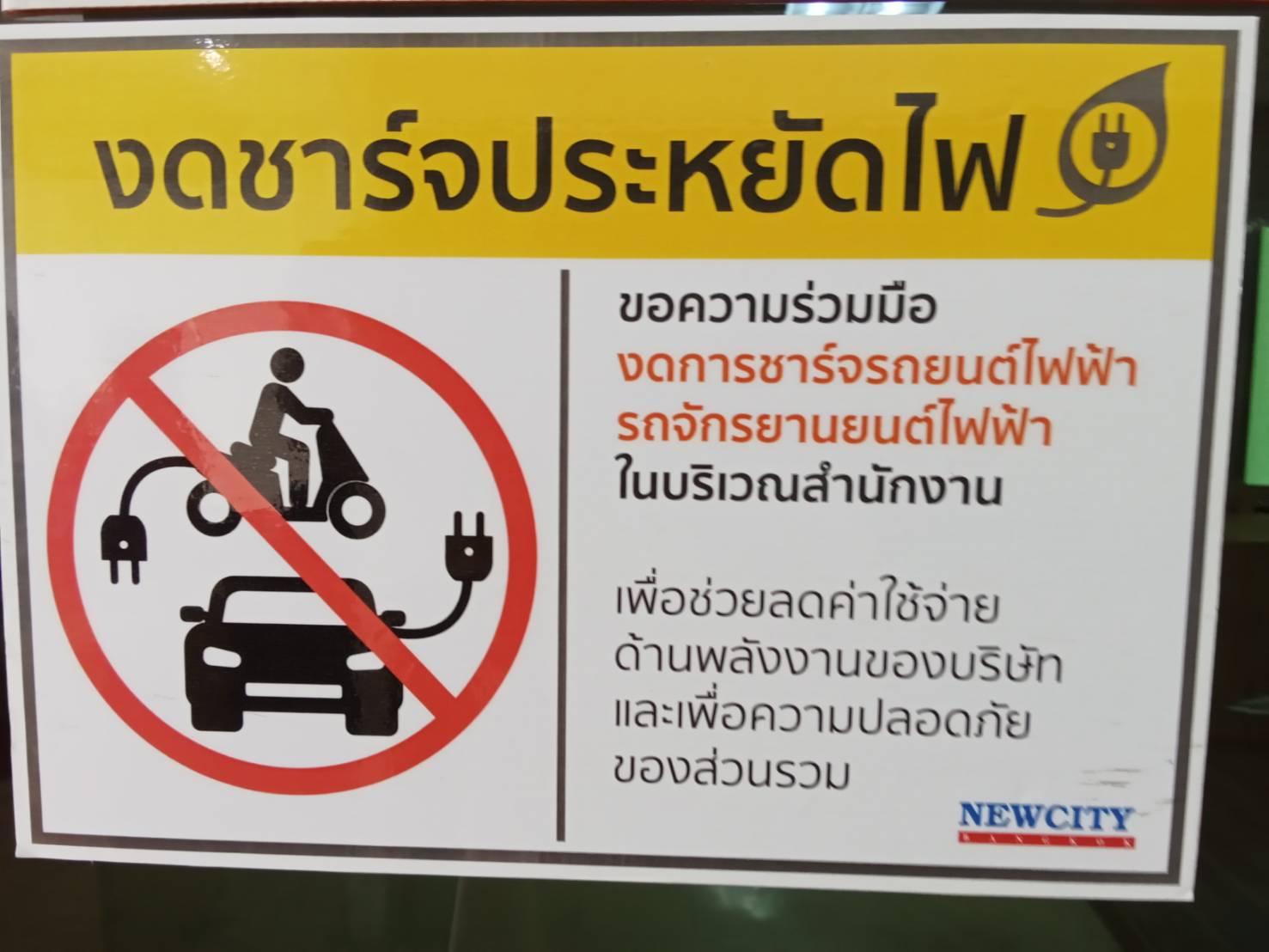
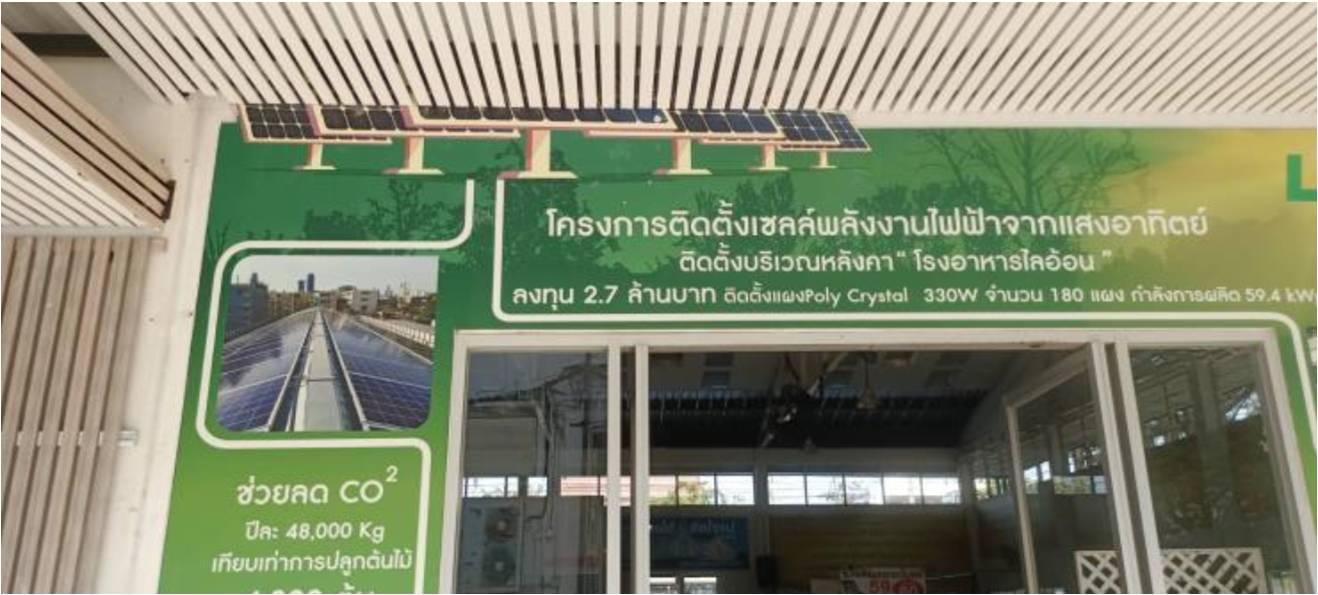
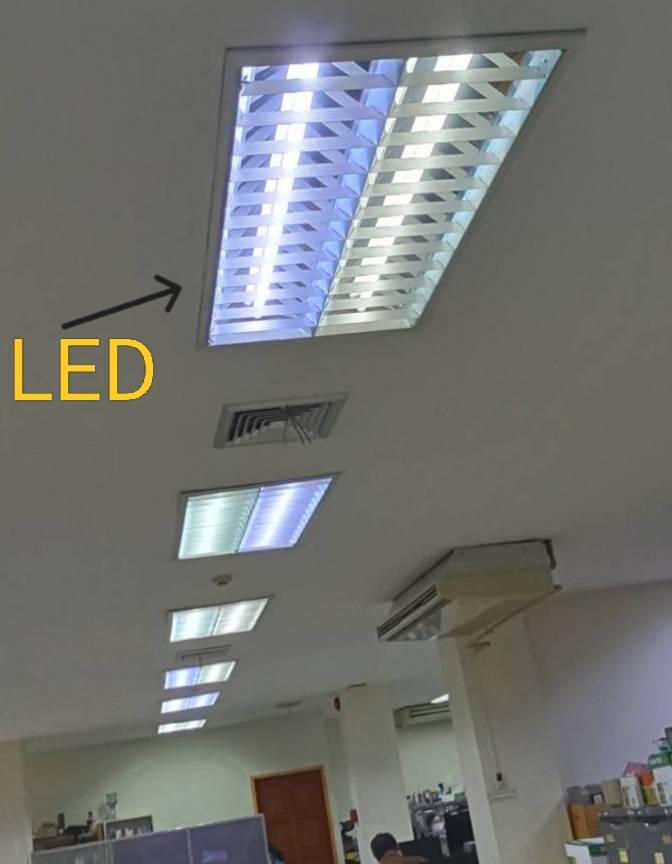
The company has a policy on energy conservation and saving, focusing on efficient and cost-effective energy use to reduce environmental impact, promote sustainability, and foster responsible energy consumption values. The company systematically plans and controls energy use, continuously monitoring and maintaining electrical appliances and water usage.
Energy conservation policies and practices include the following:
1. Electricity Conservation
The company has established electricity saving measures to maximize energy utilization and minimize waste, as follows:
1.1 Control of lighting and air conditioning on/off times
-
Set appropriate on/off times for lights and air conditioners in offices and operational areas according to actual usage times
1.2 Campaign to encourage employees to switch off electrical devices after use
-
Prepare public relations materials and campaign activities to encourage employees to switch off electrical devices such as computers, printers, and other office equipment after use
1.3 Adjusting Office Air Conditioner Temperature
-
Set air conditioner temperature at 25 degrees Celsius to ensure optimal performance and maintain consistent room cooling
1.4 Air Conditioner Maintenance
-
Clean air conditioners at least twice a year to reduce excessive energy consumption and extend equipment lifespan
1.5 Replacing light bulbs with LED
-
Replace light bulbs in offices and operational areas with LED bulbs to reduce electricity consumption and electricity costs
1.6 Solar Power Usage
-
Install solar cells for electricity generation from solar energy within the factory and in collaboration with other companies in the same area, to support clean energy use and reduce reliance on electricity from fossil fuel sources
2. Energy Consumption Monitoring & Evaluation (Monitoring & Evaluation)
The company operates Continuously monitor and track energy consumption Through:
-
Prepare monthly electricity and water consumption reports
-
Evaluate energy consumption of each department
-
Use data to reduce energy waste and improve the efficiency of measures
3. Expected Outcomes
-
Continuously reduce electricity consumption in offices and factories
-
Promote clean energy use and solar power generation
-
Instill values and awareness of energy saving among employees
-
Reduce energy costs and environmental impact
ESG + Risk-KPI-Strategy Table (Energy Section Example)
|
ESG Category |
Main Topic |
Risk |
Strategy |
Key Performance Indicator (KPI) |
Goals/Standards |
|---|---|---|---|---|---|
|
E – Environment |
Electricity Saving |
Excessive electricity use / Damaged equipment |
Set on/off times for lights and air conditioners, adjust air conditioner temperature, clean air conditioners twice a year |
% Electricity consumption compared to the previous year |
Reduce electricity by ≥ 6% per year |
|
E – Environment |
Clean Energy Use |
Reliance on electricity from unsustainable sources |
Install solar cells in collaboration with local companies |
% Electricity from solar |
≥ 10% of total energy consumption |
|
S – Social |
Energy Awareness Building |
Employees use excessive energy |
Campaigns and employee training |
% Employees participating in activities |
100% of employees |
|
G – Governance |
Energy Reporting |
Incomplete or inaccurate reports |
Prepare monthly energy reports |
Report reviewed |
Audited by the Stock Exchange |
Energy — Electricity Consumption
Electricity Consumption
| Metric | Current Year | Previous Year | Two Years Ago |
|---|---|---|---|
| Total electricity consumption within the organization (Kilowatt-Hours) | 333,680 | 365,971 | 370,277 |
| Electricity purchased for consumption from non-renewable energy sources (Kilowatt-Hours) | |||
| Electricity purchased or generated for consumption from renewable energy sources (Kilowatt-Hours) |
Energy — Fuel Consumption
Fuel Consumption
| Metric |
|---|
| Crude oil (Barrels) |
| Coal (Metric tonnes) |
| Jet fuel (Litres) |
| Diesel (Litres) |
| Gasoline (Litres) |
| Fuel oil (Litres) |
| Natural gas (Standard cubic feet) |
| LPG (Kilograms) |
| Steam (Metric tonnes) |
Energy — Targets
Has Set Targets
Yes
Targets
| Target | Base Year | Base Year Value | Target Year | Target Year Value | Target Change (%) | Unit | Unit — Please Specify |
|---|---|---|---|---|---|---|---|
| Reduction of electricity purchased and fuel consumption | 2,024 | 333,680 | 2,025 | 347,672.45 | 5 | Others | Kilowatt |
Energy — Performance & Outcomes
Has Performance Results
Yes
Performance Description
Energy Management Performance and Outcomes
Over the past year, the company has implemented energy conservation projects in accordance with established policies and measures, focusing on efficient energy use, waste reduction, and promoting sustainability. Key operational results and outcomes are as follows:
1. Energy Conservation Performance
-
Electricity Saving and Equipment Efficiency Improvement
-
Adjust office air conditioner temperature to 25 degrees Celsius and clean air conditioners twice a year.
-
Resulting in an approximate 6% reduction in electricity consumption in offices and factories combined, compared to the previous year.
-
Replace light bulbs in offices and operational areas with LED bulbs. Covering ≥80% of the area
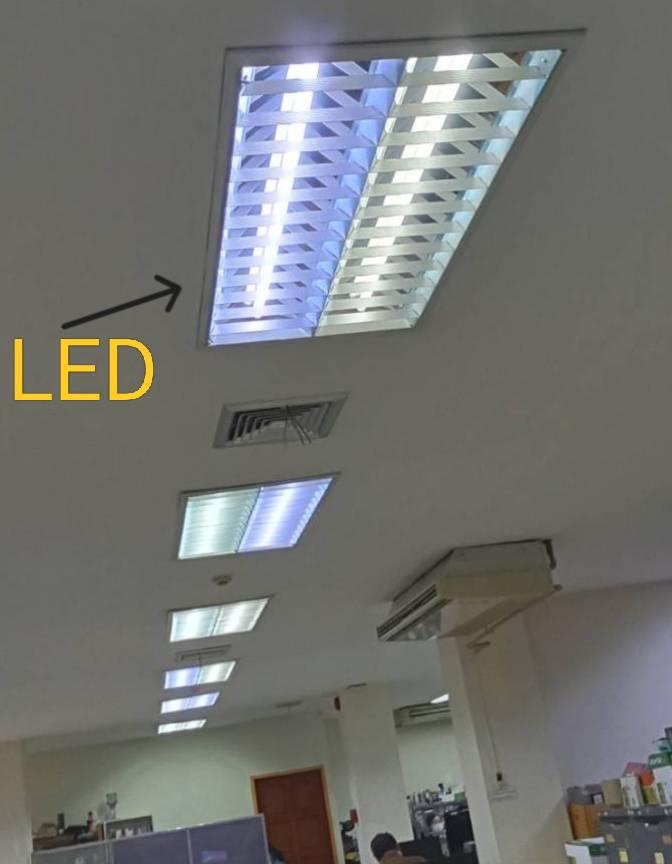
-
-
Clean Energy Project (Solar Power Project)
-
Install solar cells to generate electricity from sunlight within the factory and in collaboration with companies in the same area.
-
Able to generate electricity from solar power, accounting for 10% of the factory's total energy consumption.
-
Reduce reliance on electricity from fossil fuel sources and reduce greenhouse gas emissions.
-
-
Energy Campaign and Awareness Building
-
Organize activities and public relations media for employees to switch off electrical appliances after use.
-
Result: 100% employee participation in campaigns, promoting responsible energy consumption values.
-
|
Item |
2024 |
2025 |
Increase (Decrease) |
|
|
Quantity |
% |
|||
|
Electricity |
365,97 |
333,680 |
(32,291.00) |
(8.82) |
Water — Plan & Guidelines
Has a Water Management Plan
Yes
Plan Description
Water Management Plan
The company operates as a distributor of textile products and prioritizes the efficient use of resources, particularly energy and water, which are crucial for its operations. Therefore, the company has established a Water Management Plan to continuously control and reduce water resource consumption, with details as follows:
1. Policy & Key Practices
Monitoring and recording water usage by employees in all departments.
Ensure all employees consistently record daily water usage data.
Collect monthly water usage data for each department.
Data Analysis
Analyze the collected water usage data to identify usage trends, including increases or decreases.
Utilize comparative data between months and departments to assess water usage efficiency.
Reporting to Management
Summarize water usage results and trends for presentation at monthly or quarterly management meetings.
Utilize analysis results to jointly establish improvement measures and sustainable water resource usage guidelines.
Continuous Improvement
The company focuses on continuously improving water usage processes and control.
Promote responsible water usage awareness among all employees.
2. Monitoring & Evaluation
Data Recording and Collection. : All employees will report daily/weekly water usage.
Analysis and Comparison. : Compare water usage between months and years to identify trends and areas of excessive consumption.
Reporting to Management: Present water usage reports and improvement guidelines to enable the management team to make strategic decisions for reducing water resource consumption.
3. Expected Outcomes
Continuously reduce overall water consumption within the organization.
Increase water resource efficiency in each department.
Instill awareness and responsibility for water usage among employees.
Promote environmental sustainability and reduce community impact.
ESG + Risk-KPI-Strategy Table for Water and Energy Management Plan.
ESG Category | Main Topic | Risk | Strategy | Key Performance Indicator (KPI) | Goals/Standards |
|---|
E – Environment | Electricity Saving | Excessive electricity usage / Damaged equipment. | Set on/off times for lights and air conditioners, adjust air conditioner temperature, clean air conditioners twice a year. | % Electricity consumption compared to the previous year. | Reduce electricity by ≥ 5% per year. |
E – Environment | Use of Clean Energy (Solar Power) | Reliance on electricity from unsustainable sources. | Install solar cells in collaboration with local companies. | % Electricity from solar. | ≥ 10% of total energy consumption. |
E – Environment | Water Management | Excessive water usage / Lack of monitoring. | Record daily water usage, analyze data, report to management. | % Reduction in water usage per month. | Reduce water consumption per unit by ≥ 5% per year. |
S – Social | Raising awareness of energy and water. | Employees use excessive energy/water. | Organize activities and public relations media. | % Employees participating in activities. | 100% of employees. |
G – Governance | Reporting and Auditing. | Incomplete or incorrect reports. | Prepare monthly reports and internal audits. | Report audited. | Passed stock exchange audit. |
Water — Withdrawal, Discharge & Consumption
Water Withdrawal, Discharge & Consumption
| Metric | Current Year | Previous Year | Two Years Ago |
|---|---|---|---|
| Total water withdrawal (Cubic meters) | 2,858 | 3,026 | 3,498 |
| Total water withdrawal by third-party water (Cubic meters) | |||
| Total water withdrawal by surface water (Cubic meters) | |||
| Total water withdrawal by groundwater (Cubic meters) | |||
| Total water withdrawal by seawater (Cubic meters) | |||
| Total water withdrawal by produced water (Cubic meters) | |||
| Percentage of wastewater treated before discharge (%) | |||
| Total water discharge (Cubic meters) | |||
| Total water discharge to third-party water (Cubic meters) | |||
| Total water discharge to surface water (Cubic meters) | |||
| Total water discharge to groundwater (Cubic meters) | |||
| Total water discharge to seawater (Cubic meters) | |||
| Total water consumption (Cubic meters) | 2,858 | 3,026 | 3,498 |
| Recycled water (Cubic meters) |
Water — Targets
Has Set Targets
Yes
Targets
| Target | Base Year | Base Year Value | Target Year | Target Year Value | Target Change (%) | Unit |
|---|---|---|---|---|---|---|
| Reduction of water withdrawal | 2,024 | 3,026 | 2,025 | 2,874.7 | 5 | Cubic meters |
Water — Performance & Outcomes
Has Performance Results
Yes
Performance Description
Water Management Performance and Results
The company is a distributor of textile products, with energy and water consumption levels that do not significantly impact the environment. The company prioritizes the efficient use of water resources under strict management measures, continuously monitoring and controlling water usage by employees across all departments.
In the past year (2025), the company implemented improvements in monitoring and controlling employee water usage. The operational results met the set targets, successfully reducing total water consumption by 5.55% compared to the previous year.
Annual Water Consumption Summary
|
Item |
Year 2024 |
Year 2025 |
Increase/Decrease |
Change (%) |
|---|---|---|---|---|
|
Water Consumption Volume (cu.m.) |
3,026 |
2,858 |
(168) |
(5.55) |
Waste — Plan & Guidelines
Has a Waste Management Plan
No
Plan Description
Waste Management Plan
The company prioritizes conducting business in conjunction with environmental preservation, focusing on reducing waste generated from operations and maximizing resource utilization. Under the concept of sustainability, the company has established a systematic Waste Management Plan, covering reduction, segregation, reuse, and proper disposal.
1. Policy & Implementation Guidelines
1.1 Waste Reduction
The company has a policy to reduce the use of waste-generating materials, especially single-use plastics, by:
-
Promote the use of cloth bags instead of plastic bags for product packaging and internal operations.
-
Campaign for employees to reduce unnecessary packaging.
1.2 Systematic Waste Segregation
The company has systematically prepared waste segregation points within its premises, clearly defining waste types, including:
-
Plastic waste (e.g., plastic bags)
-
Glass waste (e.g., glass bottles)
-
Metal waste (e.g., aluminum cans)
-
Paper waste (e.g., cardboard boxes)
Furthermore, communication and education are provided to employees to ensure correct waste segregation.
1.3 Reuse & Recycling
-
Segregated waste will be sent for Process or transfer to relevant agencies for recycling.
-
Support the reuse of reusable materials in operational processes.
-
Reduce the amount of waste requiring final disposal (Landfill).
1.4 Environmental Awareness & Engagement
-
Organize campaigns and internal communications to raise awareness about waste management.
-
Encourage continuous participation of employees at all levels in waste reduction and segregation.
2. Monitoring & Evaluation
The company continuously monitors and evaluates waste management by:
-
Prepare monthly reports on waste volume by type.
-
Analyze waste generation trends and recycling rates.
-
Report operational results to management to determine continuous improvement and development guidelines.
3. Key Performance Indicators & Targets
-
Rate of plastic reduction within the organization.
-
Volume of waste reused or recycled (%).
-
Continuously decreasing amount of waste sent for final disposal.
-
Employee participation in waste segregation (percentage of employees).
4. Expected Outcomes
-
Reduce overall waste volume and single-use plastic consumption.
-
Increase the proportion of waste reuse and recycling.
-
Reduce environmental impact from business operations.
-
Foster an organizational culture of environmental responsibility.
-
Support the company's long-term sustainable development goals.
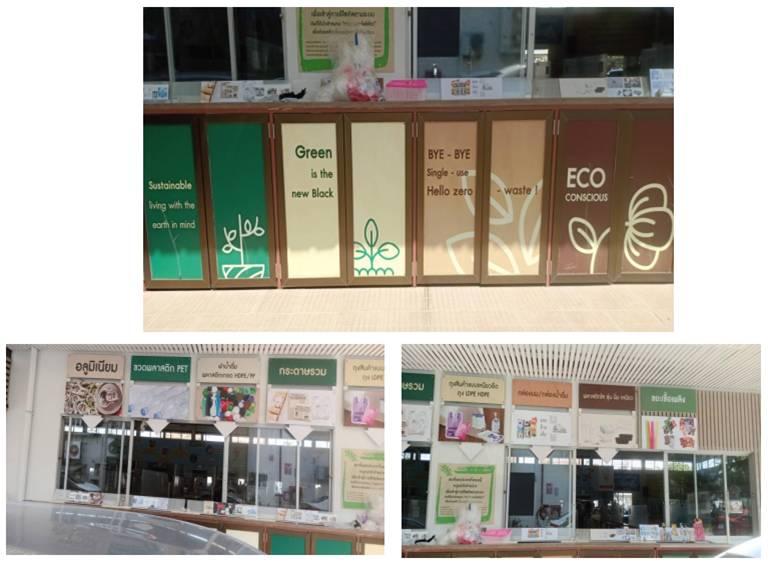
Waste — Generation, Disposal & Recycling
Waste Generation, Disposal & Recycling
| Metric | Current Year | Previous Year | Two Years Ago |
|---|---|---|---|
| Total waste generated (Kilograms) | 0 | 0 | 0 |
| Non-hazardous waste (Kilograms) | |||
| Non-hazardous waste - Landfilling (Kilograms) | |||
| Non-hazardous waste - Incineration (with energy recovery) (Kilograms) | |||
| Non-hazardous waste - Incineration (without energy recovery) (Kilograms) | |||
| Non-hazardous waste - Other disposal operations (Kilograms) | |||
| Hazardous waste (Kilograms) | |||
| Hazardous waste - Landfilling (Kilograms) | |||
| Hazardous waste - Incineration (with energy recovery) (Kilograms) | |||
| Hazardous waste - Incineration (without energy recovery) (Kilograms) | |||
| Hazardous waste - Other disposal operations (Kilograms) | |||
| Total reused/recycled waste (Kilograms) | |||
| Reused/Recycled non-hazardous waste (Kilograms) | |||
| Reused non-hazardous waste (Kilograms) | |||
| Recycled non-hazardous waste (Kilograms) | |||
| Reused/Recycled hazardous waste (Kilograms) | |||
| Reused hazardous waste (Kilograms) | |||
| Recycled hazardous waste (Kilograms) |
Waste — Targets
Introduction
Setting Waste Management Targets
The company prioritizes the systematic development of a waste management system to align with sustainable business practices and reduce long-term environmental impacts. Currently, the company is studying and developing its waste management system to enhance its efficiency.
1. Guidelines for Waste Management System Development
The company has begun laying the groundwork for future waste management target setting, with the following approaches:
-
Data Collection & Baseline Development
The company has begun systematically collecting data on the quantity and types of waste generated from operations in each department, to be used as baseline data for analysis and target setting in the next phase. -
Data Analysis for KPI Development
The collected data will be analyzed to define Environmental KPIs such as waste reduction rate, amount of recycled waste, and amount of waste for final disposal. -
Waste Management System Development
The company is currently developing standardized guidelines and processes for waste management across the entire organization to enhance efficiency in waste control and reduction.
2. Future Target Setting Plan
The company expects to be able to define Quantitative and qualitative targets in waste management clearly, after the database creation and data analysis are completed. These targets will cover:
-
Reducing total waste from operations
-
Increasing the proportion of waste reused or recycled
-
Reducing the amount of waste for final disposal
-
<28bhylp9wR4n>
The company plans to concretely disclose its targets, indicators, and performance results in the next annual report, enabling stakeholders to transparently monitor progress.
3. Initial Implementation
During system development, the company has already initiated preliminary measures to control and reduce waste within the organization, including:
-
Waste segregation by type to prepare for recycling and reduce the amount of waste for disposal.
-
Reducing the use of unnecessary materials
-
Raising employee awareness in proper waste reduction and segregation.
These measures represent a crucial starting point for developing an efficient long-term waste management system.
4. Summary of Development Guidelines
The company is in the initial phase of developing its waste management system, focusing on database creation, data analysis, and systematic management system implementation, alongside preliminary measures. This approach aims to enable clear, transparent, and verifiable target setting and performance disclosure in the future.
Has Set Targets
No
Waste — Performance & Outcomes
Has Performance Results
No
GHG — Plan & Guidelines
Has a GHG Management Plan
No
Plan Description
Greenhouse Gas Management Plan (Greenhouse Gas Management Plan)
The company prioritizes reducing greenhouse gas (GHG) emissions from its business operations, particularly from transportation and logistics activities, which are significant sources of indirect greenhouse gas emissions (Scope 3). Therefore, the company has established a systematic management plan to enhance energy efficiency, reduce costs, and mitigate long-term environmental impacts.
1. Policy and Implementation Guidelines (Policy & Implementation Guidelines)
1.1 Fleet Maintenance Management (Fleet Maintenance Management)
-
The company regularly inspects and maintains its vehicles to ensure optimal engine performance.
-
Proper maintenance helps reduce fuel consumption and greenhouse gas emissions from combustion.
1.2 Electric Vehicle Transition Plan (EV Transition Plan)
-
The company plans to gradually transition its transportation fleet from internal combustion engine systems to electric vehicles. (Electric Vehicle: EV)
-
Establish a 5–10 year timeframe to align with technological readiness and investment.
-
This transition will significantly reduce greenhouse gas emissions in the long term.
1.3 Transportation Optimization (Transportation Optimization)
-
The company applies the principles of Travelling Salesman Problem (TSP) <3b6zzgXMIhWi_space>
-
To enhance route planning efficiency, reduce redundant travel distances, and decrease transportation time.
-
This will lead to reduced fuel consumption and decreased greenhouse gas emissions from transportation activities.
2. Monitoring and Evaluation (Monitoring & Evaluation)
The company continuously monitors and evaluates its greenhouse gas management performance by:
-
Monitor vehicle fuel consumption data and transportation costs.
-
Analyze the efficiency of transportation routes after optimization with TSP.
-
Report operational performance to management for strategic decision-making.
3. Key Performance Indicators and Targets (KPI & Targets)
The company has established key performance indicators for evaluating operational results as follows:
-
Transportation Cost to Revenue Ratio (Transportation Cost to Revenue Ratio)
-
Target: Not exceeding 0.7%
-
-
Fuel consumption per unit of transportation.
-
Target: Continuous reduction.
-
-
Electric Vehicle Adoption Rate (EV Adoption Rate)
-
Target: Increase according to the 5–10 year plan.
-
-
Route Efficiency (Route Efficiency)
-
Target: Reduce total distance and transportation time.
-
4. Expected Outcomes (Expected Outcomes)
-
Continuously reduce greenhouse gas emissions from transportation activities.
-
Reduce logistics costs and improve operational efficiency.
-
Support the transition to clean energy use.
-
Enhance the organization's image regarding environmental responsibility.
GHG — Emissions
GHG Emissions
| Metric | Two Years Ago |
|---|---|
| Total GHG emissions (Metric tonnes of carbon dioxide equivalent) | 0 |
| Total greenhouse gas emissions 1 (Metric tonnes of carbon dioxide equivalent) | |
| Total greenhouse gas emissions 2 (Metric tonnes of carbon dioxide equivalent) | |
| Total greenhouse gas emissions 3 (Metric tonnes of carbon dioxide equivalent) |
GHG — Emissions Verification
Emissions Verified by a Third Party
No
GHG — Targets
Has Set GHG Targets
Yes
GHG Targets — Other Targets
Other GHG Targets
| Emission Scope | Base Year | Base Year Emissions | Near-term Target Year | Near-term Target Value | Near-term Target Change (%) | Long-term Target Year | Long-term Target Value | Long-term Target Change (%) | Target Year | Target Year Emissions | Target Change (%) | Unit |
|---|---|---|---|---|---|---|---|---|---|---|---|---|
| 2718 | 2,024 | 173.84 | 2,025 | 165.45 | 5 | 2,028 | 156.46 | 10 | 2,025 | 165.45 | 5 | Metric tonnes of carbon dioxide equivalent |
GHG — Performance & Outcomes
Has Performance Results
Yes
Performance Description
Performance and Results in Greenhouse Gas Management
The company prioritizes reducing greenhouse gas emissions from its operational activities, particularly in transportation, which is a significant source of fuel consumption. Therefore, the company has implemented a transportation efficiency improvement project by adopting the principle of Travelling Salesman Problem (TSP) applied in planning and optimizing goods transportation routes to ensure efficient resource utilization and minimize environmental impact.
1. Results of the Transportation Efficiency Improvement Project
The company has improved its transportation route planning process using the TSP principle, which helps reduce redundant travel distances and enhances the efficiency of delivery sequencing. This has led to a significant reduction in fuel consumption and transportation-related costs.
Furthermore, the company has established a key performance indicator: the Transportation Cost to Revenue Ratio, with a target to keep it below 0.7% to enhance cost efficiency while simultaneously reducing environmental impact.
2. Results in Energy and Cost Reduction
As a result of implementing this project in 2025, the company significantly reduced transportation-related costs compared to 2024, with details as follows:
|
List |
Year 2024 (Baht) |
Year 2025 (Baht) |
Increase (Decrease) |
Change (%) |
|---|---|---|---|---|
|
Vehicle fuel costs |
682,475.80 |
590,894.94 |
(91,580.86) |
(13.42) |
|
Transportation costs |
2,757,867.75 |
2,531,568.17 |
(226,299.58) |
(8.21) |
3. Performance Analysis
-
Applying the TSP principle to transportation route planning helps reduce total travel distance and redundant trips.
-
A 13.42% reduction in vehicle fuel costs reflects more efficient fuel consumption, which directly contributes to reducing greenhouse gas emissions.
-
A decrease in transportation costs of 8.21% indicates efficiency in logistics management and cost control.
-
These results support the achievement of the goal to control the Transportation Cost to Revenue Ratio at an appropriate level and align with the company's operational plan.
Greenhouse Gas Emissions Performance
The company prioritizes monitoring and managing greenhouse gas emissions from its operations, covering both electricity consumption (Scope 2) and fuel consumption for goods transport (Scope 1/Scope 3). This is done to assess environmental impact and continuously define approaches for reducing greenhouse gas emissions.
1. Greenhouse Gas Emissions from Electricity Consumption (Scope 2)
In 2025, the company continued to reduce greenhouse gas emissions from electricity consumption compared to 2024, with details as follows:
|
List |
Year 2024 (tCO2e) |
Year 2025 (tCO2e) |
Increase (Decrease) |
Change (%) |
|---|---|---|---|---|
|
Electricity consumption |
173.84 |
158.50 |
(15.34) |
(8.82) |
Performance Analysis
-
Greenhouse gas emissions decreased by 15.34 tCO2e or 8.82%
-
This is a result of energy-saving measures such as controlling electricity usage, upgrading equipment for efficiency, and optimizing energy consumption.
-
reflects the company's energy management efficiency.
2. Greenhouse Gas Emissions from Fuel Consumption for Transport (Scope 1/Scope 3)
The company has implemented a transportation efficiency improvement project using the principle of Travelling Salesman Problem (TSP) resulting in a significant reduction in fuel consumption and greenhouse gas emissions.
|
List |
Year 2024 (liters) |
Year 2024 (tCO2e) |
Year 2025 (liters) |
Year 2025 (tCO2e) |
Increase (Decrease) (tCO2e) |
Change (%) |
|---|---|---|---|---|---|---|
|
Fuel consumption for goods transport |
22,749 |
59.83 |
19,696 |
51.80 |
(8.03) |
(13.42) |
Performance Analysis
-
Fuel consumption decreased from 22,749 liters to 19,696 liters.
-
resulting in a reduction of greenhouse gas emissions by 8.03 tCO2e or 13.42%.
-
This is a result of optimizing transportation routes, reducing distances, and eliminating redundant trips.
3. Overall Results Summary
Through the implementation of energy and transportation measures, the company has continuously reduced greenhouse gas emissions, with key contributing factors including:
-
Control and reduce electricity consumption
-
Enhancing Transportation Efficiency with TSP Principle
-
Efficient resource management
4. Positive Impact on the Organization
-
Reduce environmental impact from greenhouse gas emissions
-
Enhance energy efficiency and reduce operating costs
-
Support the company's sustainability (ESG) goals
-
Strengthen stakeholder confidence
Environmental Legal Incidents
Legal Violation Incidents
| Metric | Current Year | Previous Year | Two Years Ago |
|---|---|---|---|
| Number of cases or incidents of legal violations or negative environmental impact (cases) | 0 | 0 | 0 |
Social Sustainability — Overview
Operating Results — Introduction
The company emphasizes its participation in sustainable social development under the principles of good corporate governance and ethics, conducting business in accordance with laws, business ethics, and regulations related to social management as follows:
Community and environmental co-development
The company has supported the Dr. Thiam Chokwatana Foundation, which aims to promote public benefit activities and national development in various fields, particularly those related to public health and the education of children and youth in remote areas. Currently, the foundation continuously carries out diverse activities, such as building schools, providing scholarships, and donating supplies to underprivileged rural schools, as well as donating money and consumer goods for public charity, the underprivileged, and disaster victims, along with activities that benefit society. New City (Bangkok) Public Company Limited has consistently been a part of the donors to this foundation. The company also assists in improving the quality of life for the underprivileged and disabled, such as donating supplies for the disabled, supporting the operations of the Prostheses Foundation, and participating in blood donation drives with the Red Cross.
Innovation and dissemination of innovations derived from operations with social, environmental, and stakeholder responsibility.
The company has a policy to improve its operational processes at every step, adhering to the principle of social responsibility, to bring about beneficial new changes that enhance the quality of products and services. This also includes improving internal work procedures for the cost-effective and optimal use of materials and equipment. Once beneficial new innovations with economic value are developed, they will be disseminated for the benefit of society.
Social and environmental responsibility outside the core business process (CSR after process)
The company and its Saha Group affiliates have jointly donated funds to the Dr. Thiam Chokwatana Foundation, which aims to promote public benefit activities and national development in various fields, particularly those related to public health and the education of children and youth in remote areas. Currently, the foundation continuously carries out diverse activities, such as building schools, providing scholarships, and donating supplies to underprivileged rural schools, as well as donating money and consumer goods for public charity, the underprivileged, and disaster victims, along with activities that benefit society, and supporting the operations of the Prostheses Foundation.
For the year 2025, the company has undertaken the following social activities:
-
New City joins in sending encouragement, supporting face masks and men's underwear for frontline personnel in high-risk areas of the Thai-Cambodian border.
New City (Bangkok) Public Company Limited, a manufacturer and distributor under the "Cherilon" and "Sanremo" brands, continues its mission of social responsibility (CSR) by delivering essential supplies to support frontline officers performing duties in high-risk areas of the Thai-Cambodian border dispute.
On this occasion, the company donated 10,000 face masks and 600 pieces of men's underwear (briefs), totaling 379,325 baht, to enhance hygiene readiness and comfort for personnel performing duties in challenging environments.
The handover ceremony was held on August 10, 2025, at the Headquarters of the 2nd Army Area, Suranaree Camp, Nakhon Ratchasima Province. Lieutenant General Boonsin Padklang, Commander of the 2nd Army Area, received the donation, accompanied by three executive representatives from the company:
Ms. Sam-ang Chantharima, Director/Accounting Manager
Ms. Nanthaporn Kettthai, Product Development Manager
Mr. Atipol Sathitnat, Marketing Department Manager
Over the years, New City Co., Ltd. has consistently engaged in social activities, including donating stockings for the production of prostheses for the disabled and supporting various projects that improve the quality of life for Thais, based on the belief that "true beauty arises when we create both external beauty and inner beauty simultaneously."
This support not only provides personnel with appropriate protective and hygiene equipment but also reaffirms the company's readiness to stand by Thai society in all situations.
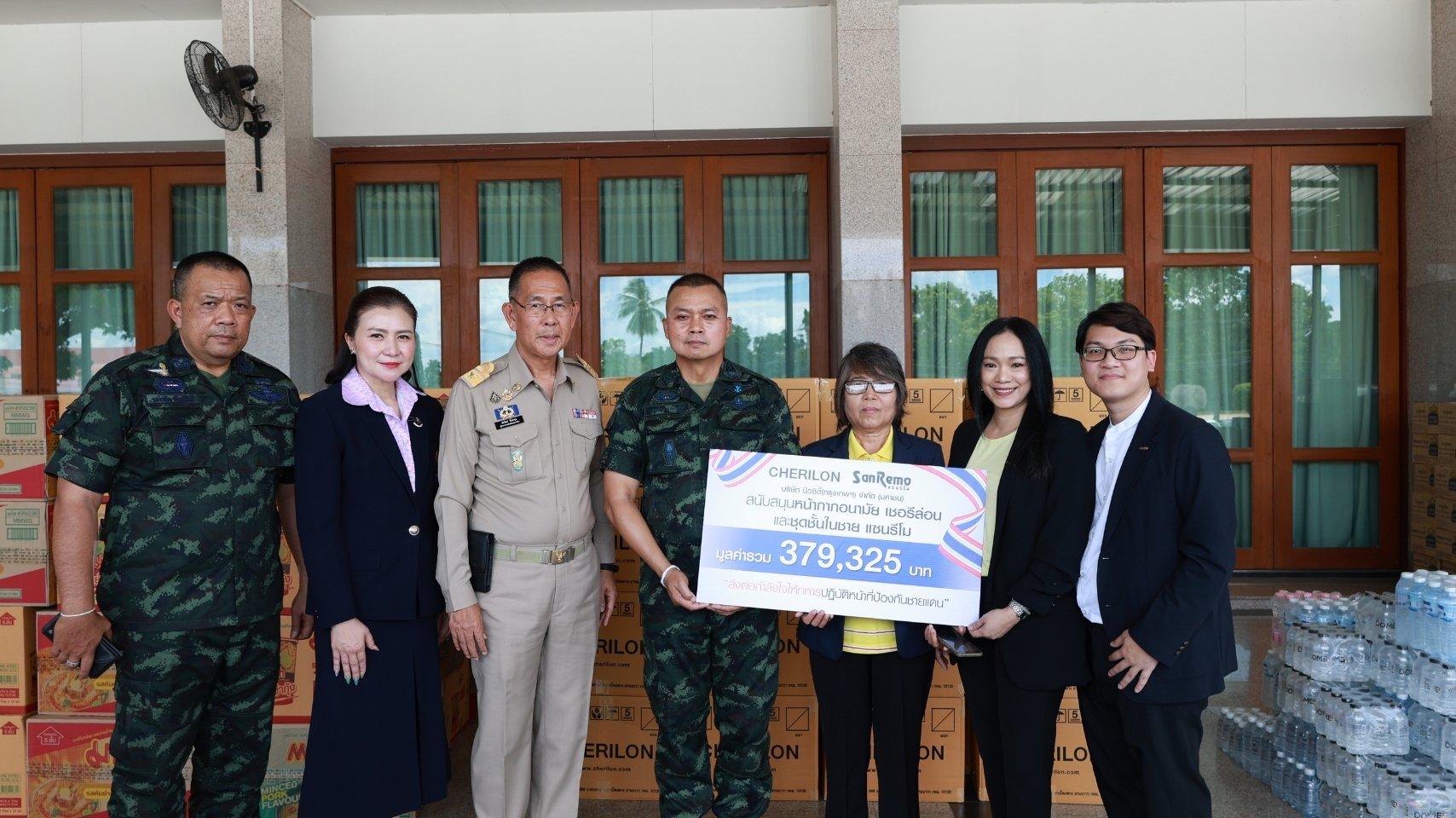
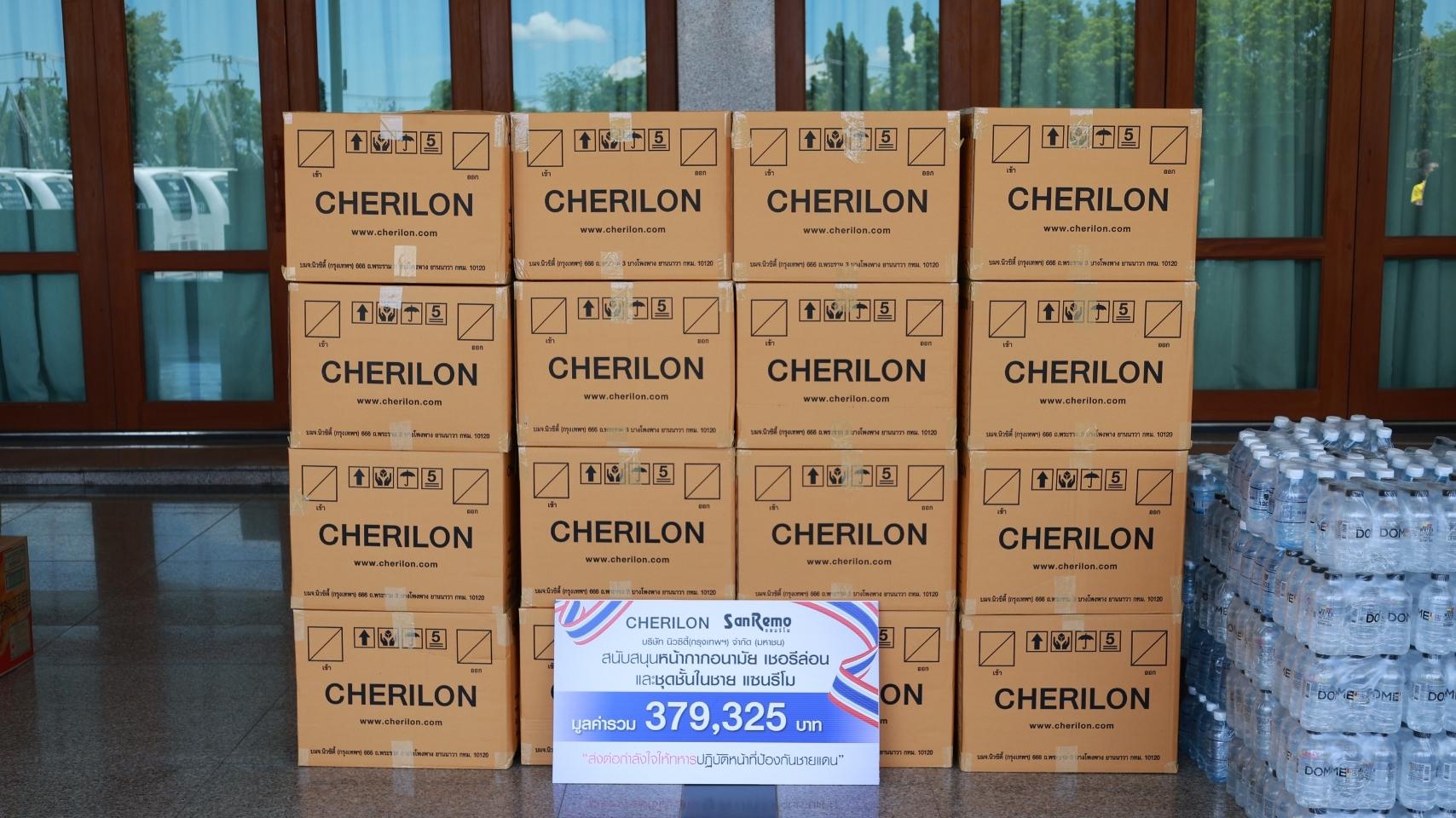
-
New City donates stockings and socks to support PIM nursing students.
On May 13, 2025, New City (Bangkok) Public Company Limited proceeded with its social project (CSR) by visiting the Faculty of Nursing, Panyapiwat Institute of Management, and donating stockings and socks for nursing students, totaling over 50,000 baht, to support their education and encourage students who will become quality medical personnel in the future.
On this occasion, the company also organized a special lecture on "Support Your Look, Support Your Legs: Fiber Innovation for Enhanced Wearing Comfort" to provide knowledge about the properties of fibers and the technology used in producing stockings and socks that increase comfort, support all movements, and enhance the professional appearance of nurses.
The event also featured a Q&A session and the distribution of "hair clips" as souvenirs, which were well-received by the students, creating smiles and a warm, friendly atmosphere.
This project aims to
- Supports essential educational equipment for nursing students.
- Helps reduce clothing expenses.
- Promotes neatness and standards for nursing student attire.
- Reaffirming the company's commitment to social responsibility (CSR)
New City Co., Ltd. places importance on promoting and supporting education, especially the nursing profession, which is crucial for public health care. It is hoped that this activity will inspire and facilitate students to embark on a stable professional path in the future.
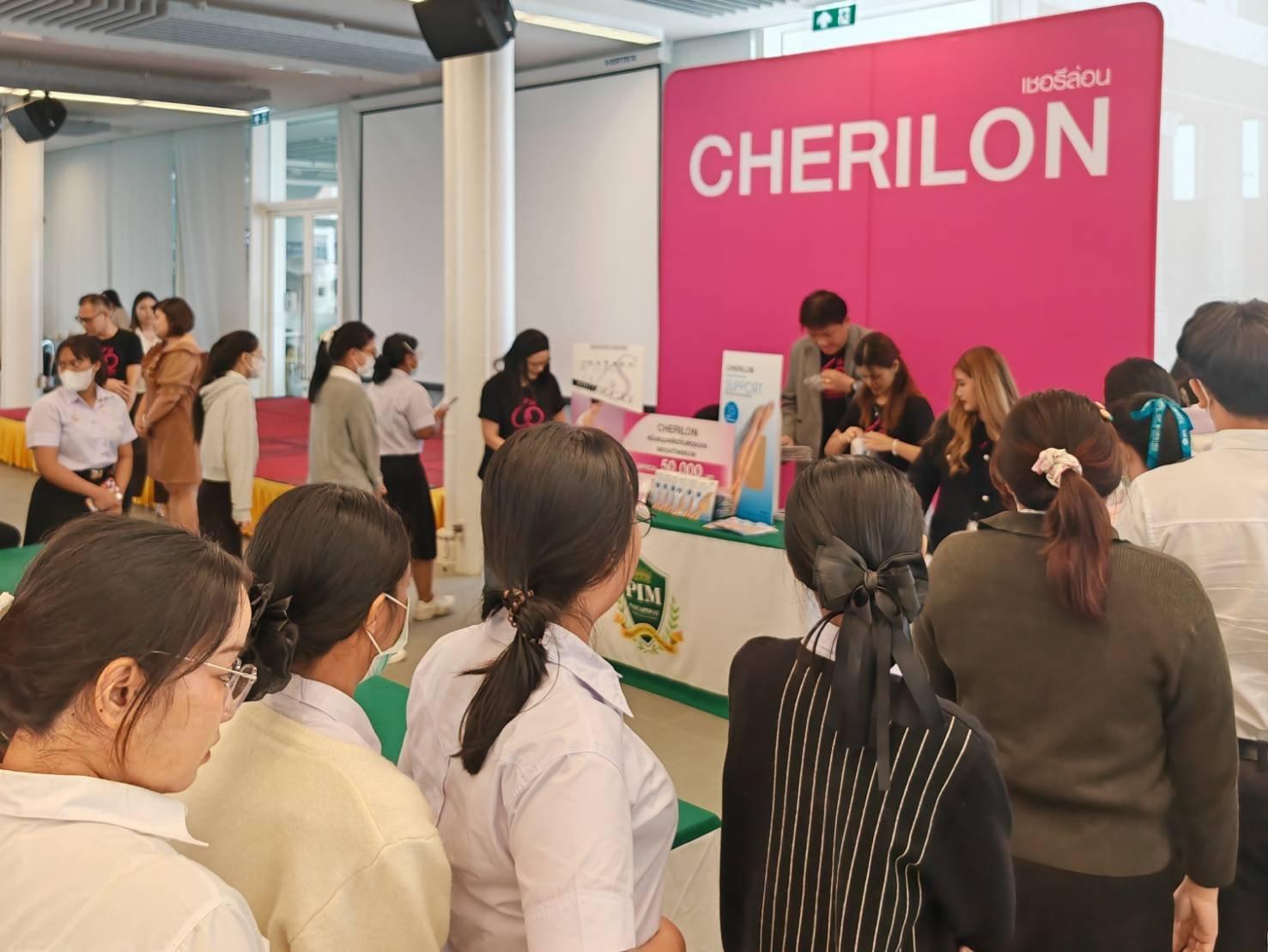
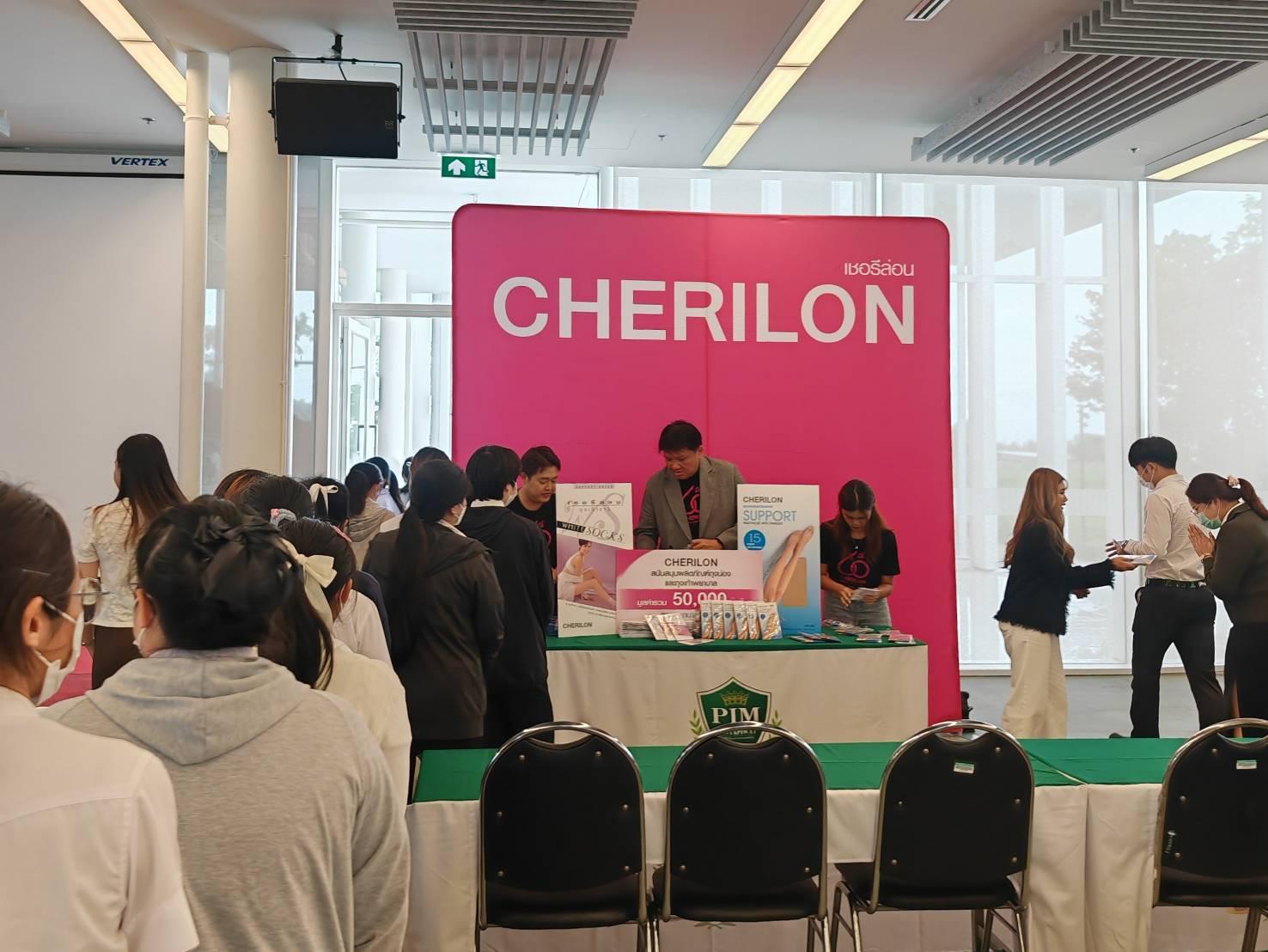
-
New City supports KMUTT scholarships to create fashion content.
New City (Bangkok) Public Company Limited, a manufacturer and distributor of quality stockings under the CHERILON brand, continues to support youth by organizing a scholarship program for the Faculty of Industrial Education and Technology, Department of Computer and Information Technology, King Mongkut's University of Technology Thonburi (KMUTT).
This project was organized to enhance students' potential in creating video content, alongside their interest in fashion and dressing, using CHERILON brand stockings as a medium. This was achieved through workshops providing product knowledge and a short video clip competition (not exceeding 90 seconds), with excellent cooperation from the faculty in co-organizing activities within the classroom.
Furthermore, New City Co., Ltd. also awarded scholarships totaling 10,000 baht to students who created outstanding video clips, to promote and further develop their abilities towards future professional careers.
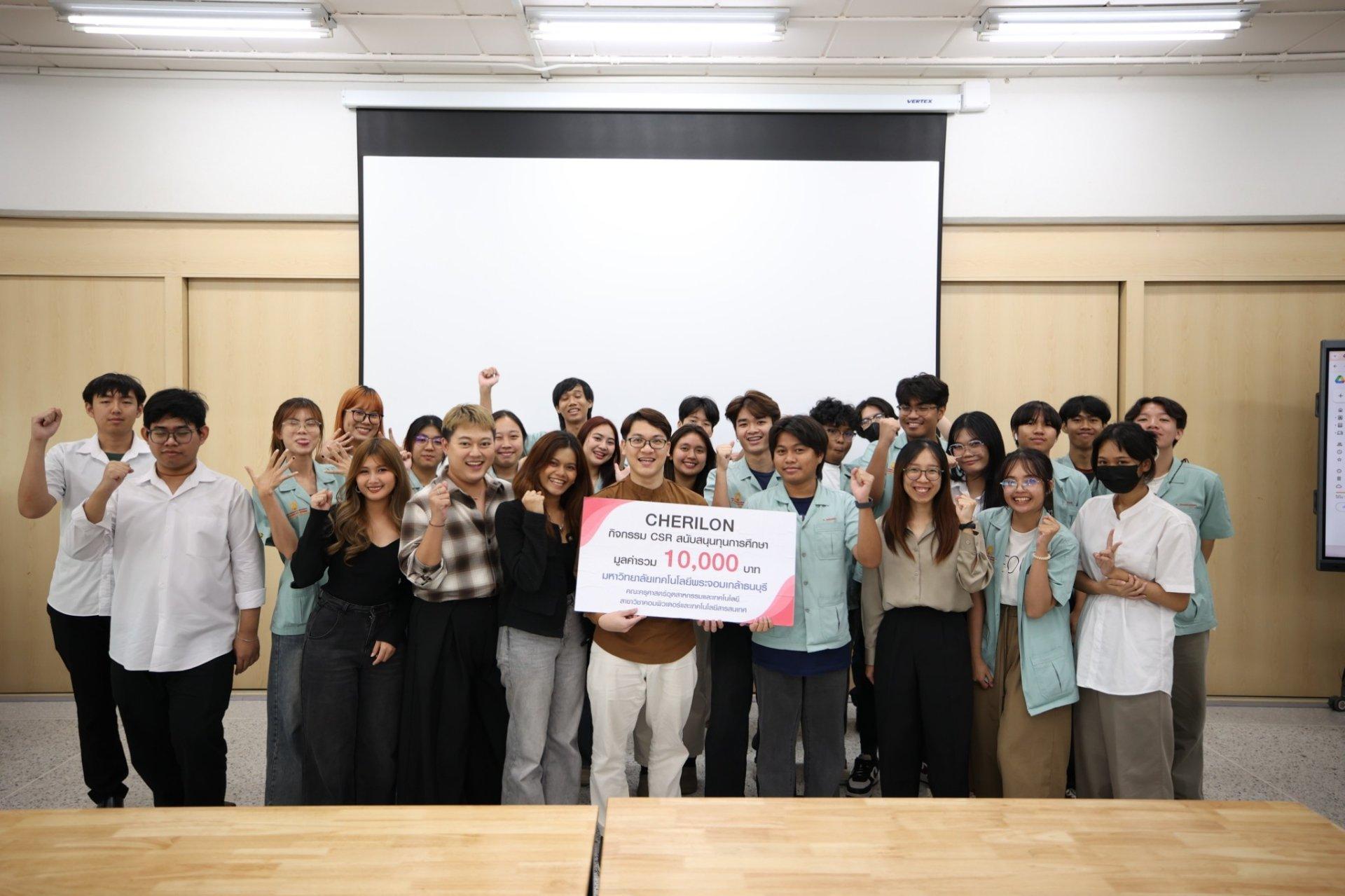
Employees — Plan & Guidelines
Has an Employee Management Plan
Yes
Plan Description
The company strictly adheres to an Employee and Workforce Management Plan in accordance with labor laws, while also prioritizing the management of employee compensation and various welfare benefits to ensure personnel satisfaction at work and motivation for sustainable organizational development. The principles for employee and workforce management are as follows:
1. Consideration of Employee Rights – The company prioritizes compliance with all labor laws, including the payment of wages and various benefits in accordance with legal requirements, to ensure fairness and maintain employee satisfaction.
2. Appropriate Compensation Allocation – The company has a transparent and fair compensation system that considers employees' abilities and performance, as well as providing appropriate bonuses and other benefits to support and motivate employees to perform at their best.
3. Comprehensive Welfare Benefits – The company provides welfare benefits that enhance employees' quality of life, including health, social security, recreation, family care, as well as continuous training and development programs to improve employees' skills and knowledge.
4. Promotion of Positive Employer-Employee Relations – The company promotes open and transparent communication with employees, as well as systematic management of complaints and disputes, to foster a positive work environment and strengthen the relationship between employees and the company.
5. Promotion of Employee Development and Growth – The company plans for employee development and growth in both skills and career paths to provide employees with opportunities for career advancement and to enhance their long-term work potential.
6. Inspection and Maintenance of Safety Equipment - The company regularly maintains and repairs equipment to ensure efficient operation and prevent hazards.
7. Emergency Preparedness and Assistance - The company conducts a fire evacuation drill once a year.
In 2025, the following training courses will be organized:
|
List |
Training Date |
Number of Participants |
|
Course: New Product - Padded Crop Bra, Batch 1 |
24/7/2025 |
40 |
|
Course: New Product - Full Briefs, Batch 1 |
31/7/2025 |
40 |
|
Course: New Product - Underwear Set Beyond Gender, Batch 1 |
22/7/2025 |
40 |
|
Course: New Product - Padded Crop Camisole, Batch 1 |
29/7/2025 |
40 |
|
SAP System Usage |
5/11/2025 |
7 |
|
Unlock document efficiency faster with Gemini AI! |
9/4/2025 |
22 |
|
Unlock Your Financial Potential: Top Benefits from Savings Cooperatives that Employees Must Know |
19/2/2025 |
34 |
|
Digital Transform Organization + Power BI |
23/1/2025 |
33 |
Employee Engagement and Retention Plan
1. Organize monthly activities to encourage employee participation and foster unity within the organization.
2. Provide snacks for employee breaks.
3. Provide uniforms for warehouse staff and document delivery/collection personnel.
4. Provide accident insurance for employees, starting with those working in high-risk areas, including all warehouse staff.
5. Provide savings programs and low-interest, urgent loan schemes as welfare benefits for employees.
6. Organize New Year activities and social gatherings for employees.
Safety and Occupational Health
The Board of Directors prioritizes safety and occupational health by establishing the following guidelines:
1. Conduct business in compliance with laws, regulations, and policies regarding safety, occupational health, and working environment, considering the safety of life and property and the health impacts on employees, partners, and stakeholders, as well as regularly monitoring and evaluating safety performance.
2. Promote workplace safety by establishing regulations, procedures, and safe work standards that are consistent with risks, as well as improving working conditions, environment, safe work methods, and providing safety tools and protective equipment to employees.
3. Maintain preparedness for emergency situations by continuously developing, practicing, and improving emergency plans to prevent and reduce loss of life and property for the company, employees, partners, and related parties.
4. Foster a safety culture throughout the organization, which will contribute to sustainable workplace safety.
Plan Areas
| Plan Area |
|---|
| Fair employee compensation |
| Employee training and development |
| Promoting employee relations and participation |
| Occupational health and safety in workplace |
Employees — Workforce
Workforce Data
| Metric | Current Year | Previous Year | Two Years Ago |
|---|---|---|---|
| Total number of employees (Persons) | 301 | 308 | 319 |
| Number of male employees (Persons) | 50 | 50 | 46 |
| Number of female employees (Persons) | 251 | 258 | 273 |
| Total employment of disabled persons (people) | 3 | 5 | 5 |
| Total disabled employees (people) | 2 | 3 | 3 |
| Total male disabled employees (people) | 1 | 3 | 3 |
| Total female disabled employees (people) | 1 | 0 | 0 |
| Total disabled workers who are non-employee (people) | 1 | 2 | 2 |
| Contributions to the fund for promoting and improving the quality of life for disabled persons | 1 | 1 | 1 |
| Total number of male employees in operational level (Persons) | 44 | 43 | 40 |
| Total number of male employees in management level (Persons) | 4 | 4 | 3 |
| Total number of male employees in executive level (Persons) | 2 | 3 | 3 |
| Total number of female employees in operational level (Persons) | 241 | 249 | 265 |
| Total number of female employees in management level (Persons) | 7 | 6 | 5 |
| Total number of female employees in executive level (Persons) | 3 | 3 | 3 |
Employees — Remuneration & Provident Fund
Remuneration & Provident Fund
| Metric | Current Year | Previous Year | Two Years Ago |
|---|---|---|---|
| Total disabled employees (people) | 84,152,769 | 83,873,875.11 | 97,972,000 |
| Total male employee remuneration (Baht) | 18,711,120 | 15,729,144 | 17,167,636 |
| Total female employee remuneration (Baht) | 65,441,649 | 68,144,731.11 | 80,804,364 |
| Number of employees eligible to participate in PVD (persons) | 301 | 308 | 319 |
| Total number of employees joining employee provident fund (Persons) | 146 | 118 | 114 |
| Percentage of total number of employees joining employee provident fund to total number of employees (%) | 48.5 | 38.31 | 35.74 |
| Number of PVD members / Total eligible employees (%) | 48.5 | 38.31 | 35.74 |
| Total amount of provident fund contributed by the Company (Baht) | 701,318 | 634,846 | 681,854 |
| Total amount of provident fund contributed by employee (baht) |
Employees — Training & Development
Training Data
| Metric | Current Year | Previous Year | Two Years Ago |
|---|---|---|---|
| Average employee training hours (Hours / Person / Year) | 6.5 | 6.5 | 6 |
| Employee development and training expenses (baht) | 13,972.05 | 15,010.3 | 13,408.4 |
Employees — Occupational Health & Safety
Occupational Health & Safety Data
| Metric | Current Year | Previous Year | Two Years Ago |
|---|---|---|---|
| Total number of lost time injury incidents by employees (Cases) | 0 | 0 | 0 |
Employees — Labour Relations
Labour Relations Data
| Metric | Current Year | Previous Year | Two Years Ago |
|---|---|---|---|
| Total voluntary resignations (Persons) | 50 | 65 | 96 |
| Male employees who voluntary resigned (Persons) | 6 | 17 | 18 |
| Female employees who voluntary resigned (Persons) | 44 | 48 | 78 |
| Percentage of employee turnover leaving the Company voluntarily (%) | 16.61 | 21.1 | 30.09 |
| Evaluation result of employee engagement | 1 | 0 | 0 |
Employees — Employee Representation
Employees Are Represented Collectively
No
Employees — Targets
Has Set Employee Targets
No
Employees — Performance & Outcomes
Has Performance Results
Yes
Performance Description
For the year 2025, the company has planned various projects aimed at strengthening employee engagement and welfare, in addition to the benefits mandated by labor law, which include:
1. Activities that foster unity and promote employee participation. within the organization are held monthly as follows:
1.1 Buddy Game: Pairing employees as buddies to participate in activities together, whether in competitive or creative forms, which will help strengthen relationships among colleagues who may not have worked closely together before.
1.2 Product Exchange Activity: Employees can bring unused items to exchange with colleagues within the organization to create enjoyment and promote the exchange of various experiences, which can foster a positive atmosphere in the workplace.
1.3 Guess the Baby Photo: Collecting childhood photos of employees within the organization and having colleagues guess who they are. This is an activity that not
not only creates enjoyment but also helps employees get to know each other from new perspectives and enhances mutual understanding.
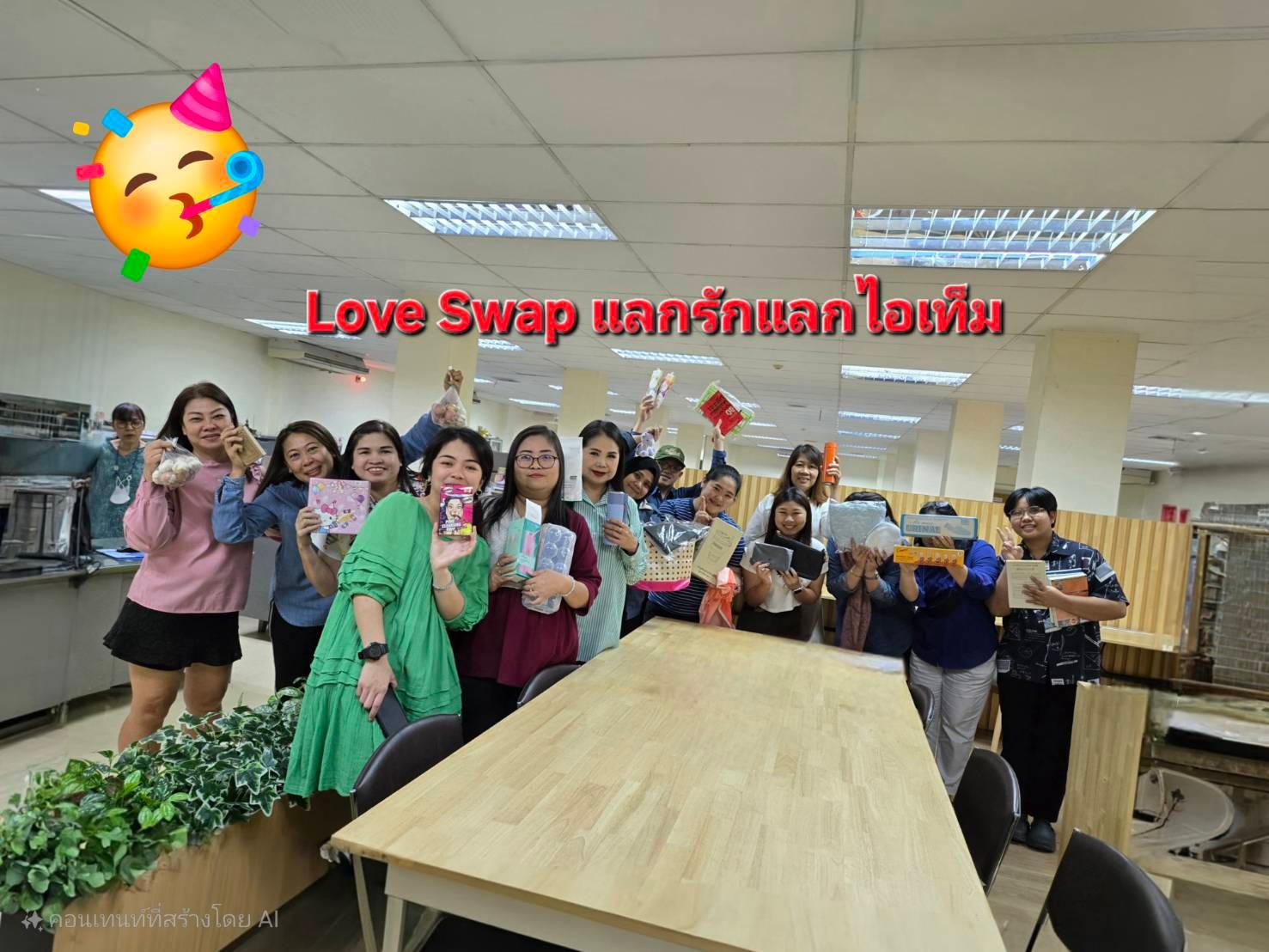
2. Provide snacks for employees during work breaks. to foster a positive working atmosphere and allow employees to rest during the day, which will help them relax from work, boost their energy, and demonstrate care for their well-being.
3. Provide accident insurance for employees. To ensure employees are protected from accidents that may occur during work, the company deems it appropriate to provide accident insurance for employees, especially those who work in high-risk situations, such as employees who deliver documents by motorcycle, sales staff who travel to other provinces to meet clients, and warehouse staff who may face risks from working in environments requiring the use of various tools and equipment. This is to ensure that all employees feel confident in their work and reduce concerns about daily workplace safety.
4. Low-interest urgent savings and loan program To enhance employee welfare, financial management is crucial for sustainably strengthening employees' stability and quality of life. To enable employees to effectively manage financial issues, the company has conceived the "Low-Interest Urgent Savings and Loan Program." The primary objective is to encourage employees to save systematically and to provide an option for emergency loans with low interest rates and fair conditions.
5. Organize New Year activities and parties for employees. to bid farewell to the old year and welcome the new year in an atmosphere of happiness and warmth, which is a special opportunity to strengthen good relationships among colleagues and express gratitude for everyone's dedication and effort in the past year.
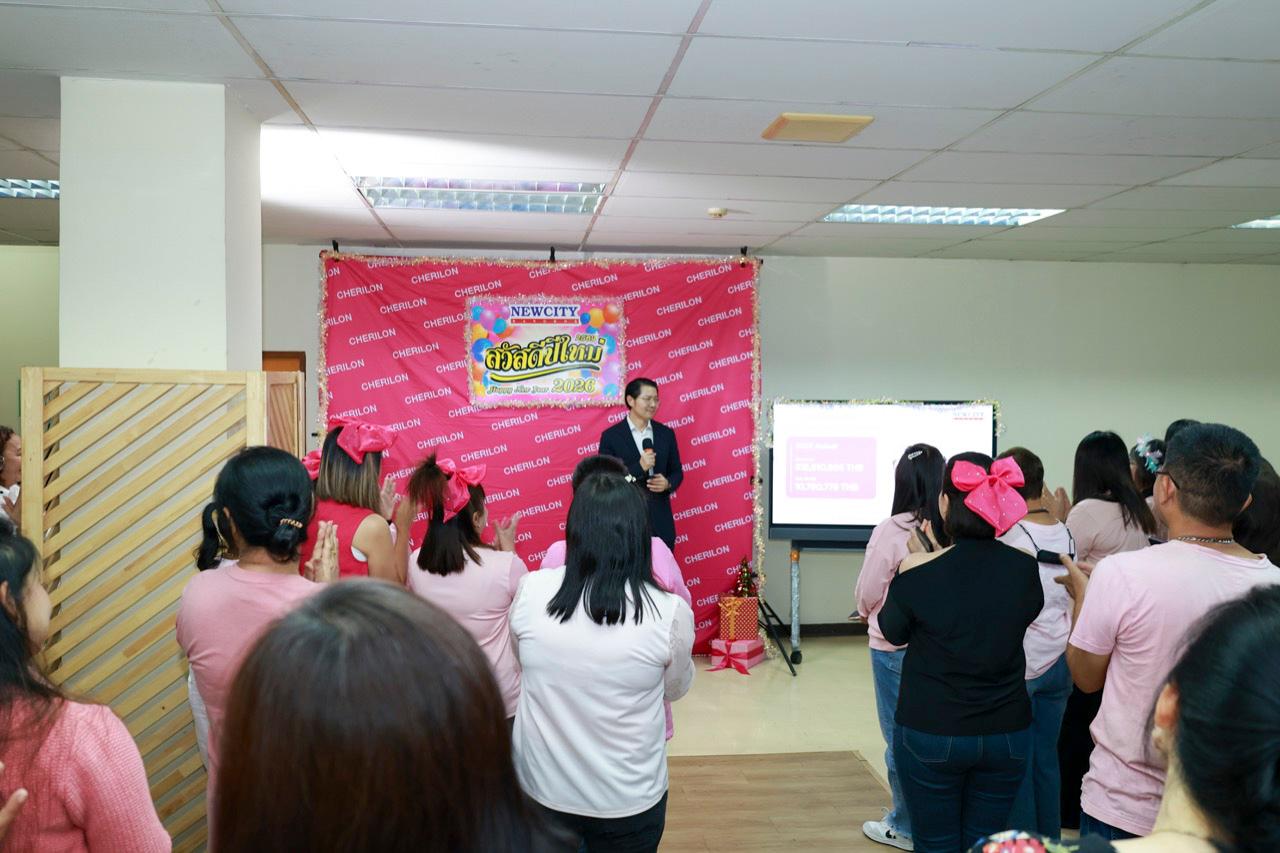

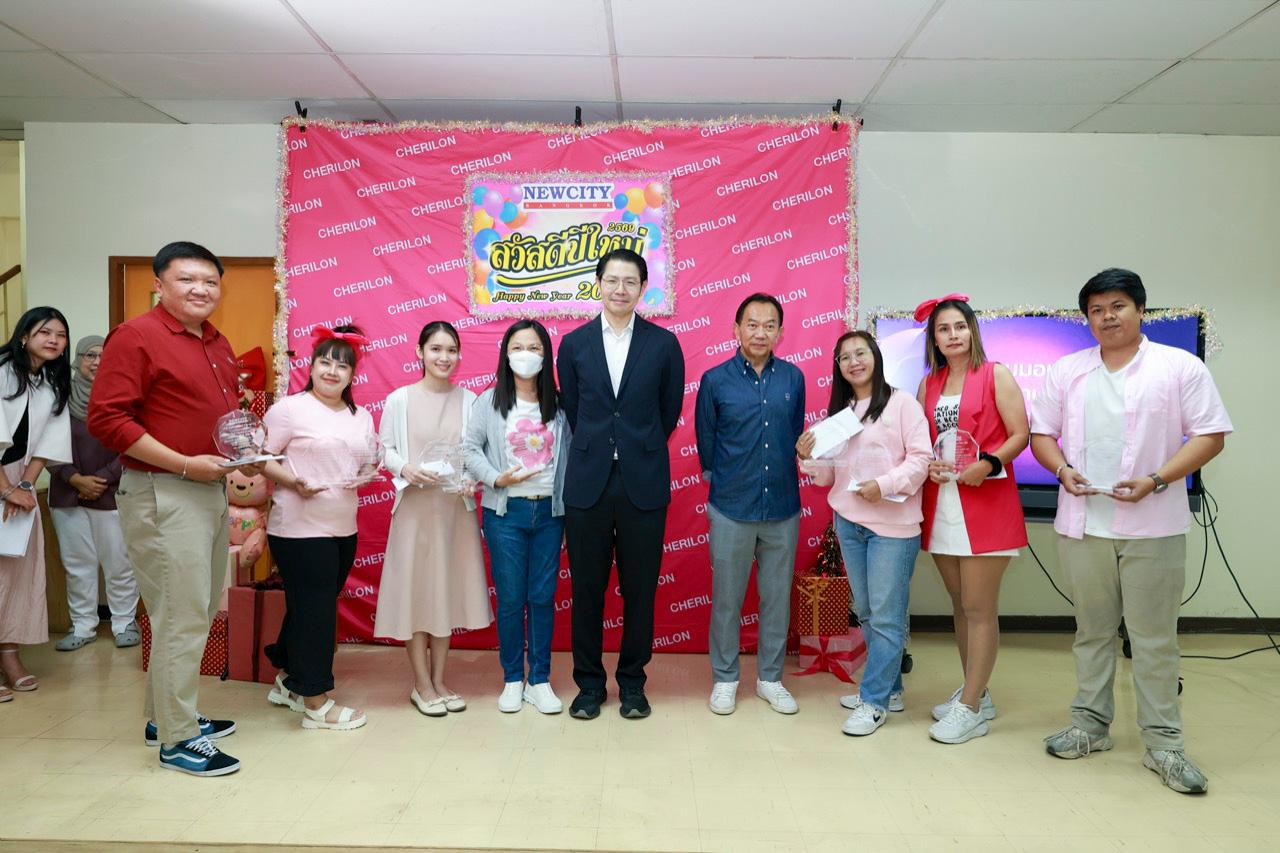


Customers — Plan & Guidelines
Has a Customer Management Plan
No
Plan Description
Customer management plan implemented by the company over the past year.
1. Communicating information about the impact of products and services to customers/consumers. as follows:
1.1 Advance notification: The company notifies wholesale stores about hosiery products lacking specific colors and sizes requested by customers at the end of the year.
1.2 Offering alternatives. For out-of-stock products, customers generally wait for the items.
1.3 Providing clear and transparent information: Clarifications are made verbally or in writing.
1.4 Utilizing multiple communication channels such as telephone, email, social media, and providing prompt responses.
2. Enhancing customer satisfaction and strengthening customer relationships.
2.1 Professional customer service. Sales staff receive training in customer service skills, including answering questions, handling complaints, and appropriate communication methods.
2.2 Product and service knowledge. Relevant department employees are trained to confidently resolve issues or offer solutions to customers.
2.3 Actively listening to customers to understand their needs or problems.
2.4 Creating a positive impression in after-sales service. Customer satisfaction is surveyed, additional advice is provided, and customer satisfaction questionnaires are conducted quarterly for all customers.
3. Protection of customer personal data.
3.1 Emphasizing compliance with laws and regulations. The company has complied with personal data protection laws (PDPA or GDPR), which have clear regulations for managing customer personal data.
3.2 Data Access Control. The company has strictly defined guidelines for managing individuals responsible for data access, with clear roles and responsibilities assigned to control and monitor data access according to security standards, thereby reducing the risk of data breaches.
In 2025, there were no incidents where the company received complaints regarding customer personal data.
Plan Areas
| Plan Area |
|---|
| Communication of product and service impacts to customers/consumers |
| Development of customer satisfaction and customer relationship |
| Protection of customer personal information |
Customers — Satisfaction Results
Introduction
The company prioritizes achieving the highest level of customer satisfaction by focusing on developing the capabilities of employees who work closely with customers, enabling them to provide efficient services that meet customer needs.
The company has continuously conducted training for sales staff at department store counters and company sales representatives to enhance their product knowledge and understanding, as well as their skills in presenting new products, providing advice, answering inquiries, handling product returns, and managing payments. This ensures that employees can provide accurate, complete, and standardized services to customers.
These sales representatives are a crucial mechanism for building customer relationships, playing a role in meeting with customers, providing consultation, and resolving issues closely. This enables the company to respond to customer needs quickly and precisely, resulting in customers receiving a positive experience and satisfaction with the company's products and services.
However, the company currently does not have an official Customer Management Policy or plan, nor formal Customer Satisfaction KPIs. The company is in the process of considering approaches to further develop a systematic customer management system in the future, such as defining key performance indicators, collecting customer data, and concretely evaluating customer satisfaction.
Table: Customer: Risk – Strategy – KPI – Target
|
Category |
Risk |
Strategy |
KPI |
Target |
|---|---|---|---|---|
|
Customers |
Customer dissatisfaction |
Sales representatives meet with customers monthly |
Number of complaints |
0 critical issues |
|
Customers |
Loss of existing customers |
Build long-term relationships |
Retention Rate |
≥ 95% |
|
Customers |
Inadequate service coverage |
Expand sales channels |
Sales channel proportion |
Continuous growth |
|
Customers |
Delayed customer response |
Online admin team |
Response Time |
≤ 24 hours |
Customer Satisfaction Results
| Metric | Current Year | Previous Year | Two Years Ago |
|---|---|---|---|
| Evaluation results of customer satisfaction | 0 | 0 | 0 |
Customers — Targets
Has Set Customer Targets
No
Customers — Performance & Outcomes
Has Performance Results
No
Performance Description
Customer Management Performance and Outcomes
The company prioritizes building long-term customer relationships by focusing on close service and effectively responding to customer needs. Although the company has not yet officially defined customer management plans and KPIs, it has managed customer relationships through continuous and systematic sales and service models in practice.
1. Customer Care Structure and Model
The company's product distribution and customer care models are divided into 3 main channels as follows:
1.1 Wholesale Channel – Approximately 70% of sales.
-
Most product sales are conducted through sales staff responsible for customers in each area.
-
Sales staff regularly meet customers monthly in each district and region.
-
Plays a crucial role in receiving orders, providing product recommendations, and closely resolving customer issues.
-
Most customers are business partners with long-standing relationships with the company. 61 years And possess a thorough understanding of the brand's products.
1.2 Department Store Channel (Modern Trade / Department Store) – Approximately 20% of sales.
-
The company has points of sale through counters in leading department stores, with dedicated sales staff.
-
Staff are responsible for closely recommending products, providing consultation, and answering customer inquiries.
-
To ensure customers receive complete product information and to help create a positive shopping experience.
1.3 Online Channel – Approximately 10% of sales.
-
The company sells products through popular online platforms.
-
An admin team manages the back-end system to answer questions, resolve issues, and provide prompt customer service.
-
Operations comply with the standards and requirements of each platform to ensure efficient service delivery to customers.
2. Customer Service Outcomes
-
The company has consistently maintained long-term customer relationships, with key customers being long-standing business partners.
-
Service provided by sales staff who work closely with customers helps to quickly and precisely respond to needs and resolve issues.
-
The online channel responds to complaints and inquiries promptly through an efficient management system.
-
The company has not found any significant complaints regarding customer service. In the past period
3. Analysis and Development Trends
-
Although the company has not yet officially defined Customer Satisfaction KPIs, its current operational model reflects effective customer relationship management.
-
The company tends to develop Customer management and analytical data collection system. To set targets and enhance future service levels.
-
The integration of both offline and online sales channels increases coverage and convenience in reaching customers.
Customer Management Table (Customer Management: Risk – Strategy – KPI – Target)
|
ESG Category |
Topic |
Risk |
Strategy |
Key Performance Indicator (KPI) |
Target |
|---|---|---|---|---|---|
|
S – Social |
Customer Satisfaction |
Customer dissatisfaction / Customer loss |
Complaint Rate |
||
|
S – Social |
Customer Relationship Retention |
Decrease in long-term customers |
Building relationships through local sales teams. |
Customer Retention Rate |
≥ 95% |
|
S – Social |
Service Quality |
Incomplete information provision |
Training for sales staff and administrators. |
% of staff trained |
100% |
|
S – Social |
Online Customer Response |
Delayed customer response |
Admin team manages online platforms. |
Response Time |
Within 24 hours. |
|
S – Social |
Sales Channel Coverage |
Inadequate customer reach |
Expand sales channels (Wholesale / Modern Trade / Online) |
Sales proportion per channel |
Continuous growth |
Community & Social — Plan & Guidelines
Has a Community & Social Plan
No
Plan Description
Community and Social Management Plan.
The company prioritizes conducting business alongside its responsibility to the community and society, focusing on fostering good relationships, unity, and sustainable coexistence within society, particularly in the areas of Religion and Culture. which is a crucial foundation of Thai society.
Therefore, the company has established guidelines for community and social operations, focusing on promoting activities that reflect religious values and the preservation of good traditions, to foster good consciousness among employees and contribute to the continuation of societal culture.
1. Promotion of Religious and Cultural Activities.
1.1 Annual Merit-Making Ceremony by Offering Food to Monks.
The company organized activities. Holding a merit-making ceremony by offering food to 9 monks annually during the New Year festival. With the following objectives:
-
To encourage employees to adhere to the teachings of Buddhism.
-
To enhance auspiciousness, mental tranquility, and moral virtues in life.
-
To foster good relationships and unity among employees within the organization.
-
To promote a culture of giving, sharing, and public-mindedness.
2. Employee and Organizational Participation.
-
The company continuously provides opportunities for employees at all levels to participate in religious and social activities.
-
To promote the development of moral and ethical consciousness within the organization.
-
To support the creation of good relationships both within the organization and with the surrounding community.
3. Monitoring and Future Development Guidelines.
Although the company currently focuses primarily on religious and cultural activities, it has a plan to develop a more comprehensive community and social management plan in the future, which may include:
-
Expanding activities to support the community in other areas, such as education or environment.
-
To establish social key performance indicators (Social KPIs) for concrete evaluation of operational results.
-
To foster collaboration with external agencies or local communities.
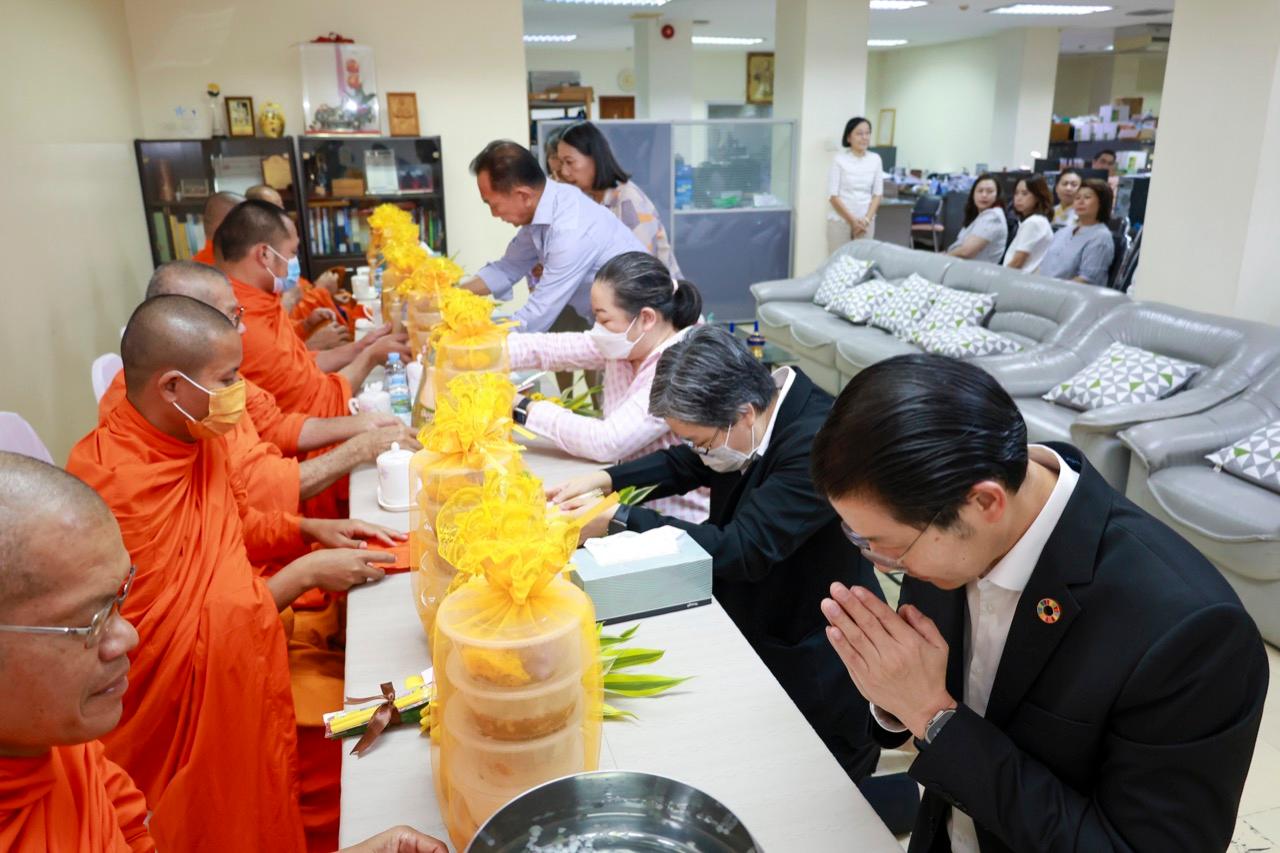
1.2 Krathong Making and Distribution Activity for Employees (Loy Krathong Activity).
The company places importance on promoting and preserving Thai culture, alongside fostering good internal relationships. The Accounting Department and Product Department jointly organized activities. Making Krathongs to distribute to employees in various departments within the company during the Loy Krathong festival, which is an important Thai tradition and reflects respect for water resources and nature.
The objective of these activities is to promote employee participation and instill cultural and environmental awareness, with the following key operational guidelines:
-
To promote internal collaboration within the organization.
Employees from various departments participated in making Krathongs, which helped foster unity and teamwork. -
To support environmental conservation.
The company chose natural materials for making Krathongs to reduce environmental impact and promote sustainable resource utilization. -
To create equality in participation in activities.
Krathongs were prepared for distribution to employees who could not make them themselves, ensuring that all employees could participate in the activity comprehensively. -
To preserve and conserve Thai culture.
These activities help promote employees' awareness of the value and importance of the Loy Krathong tradition and encourage collective efforts to preserve Thai culture for future generations.
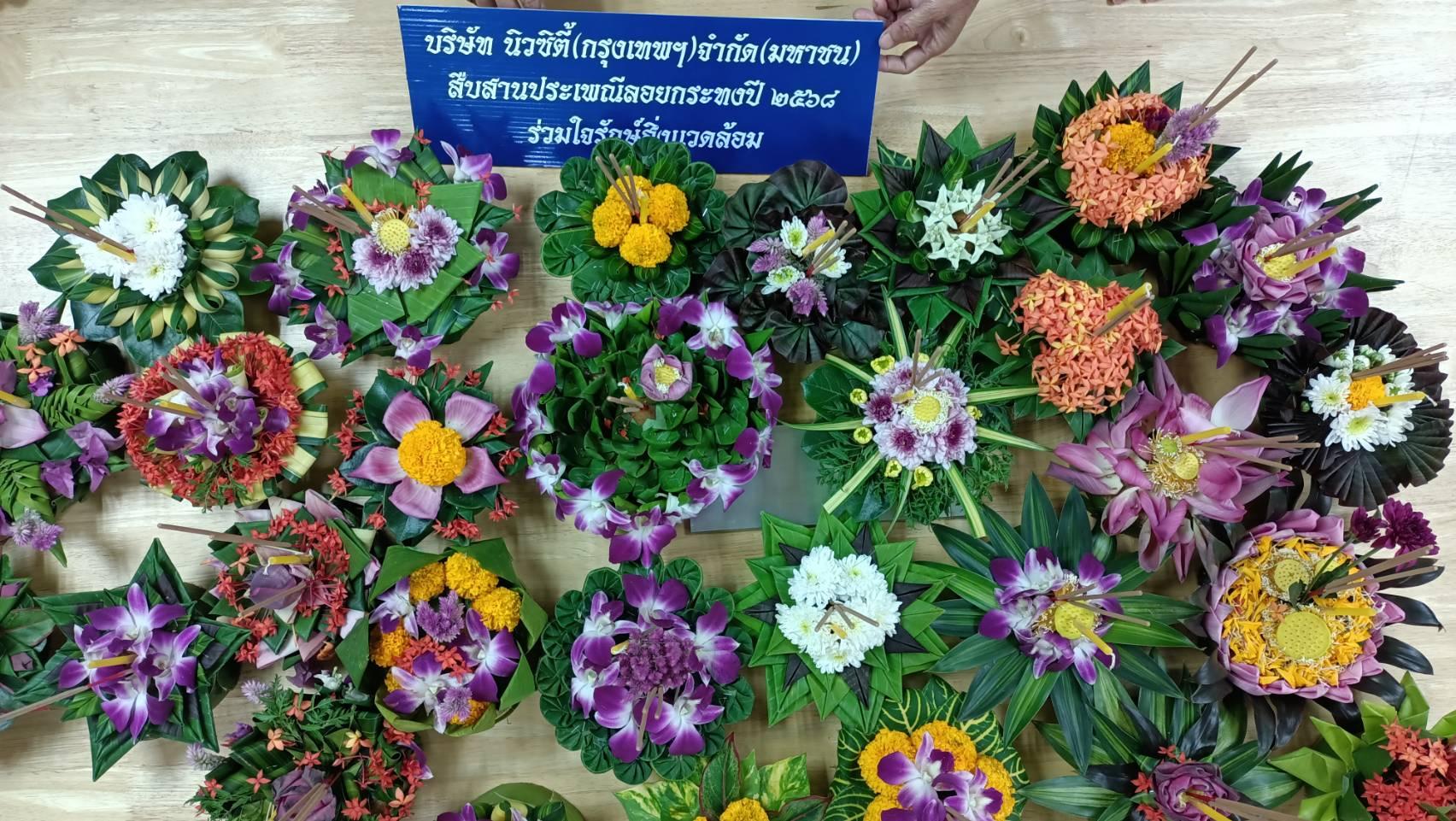
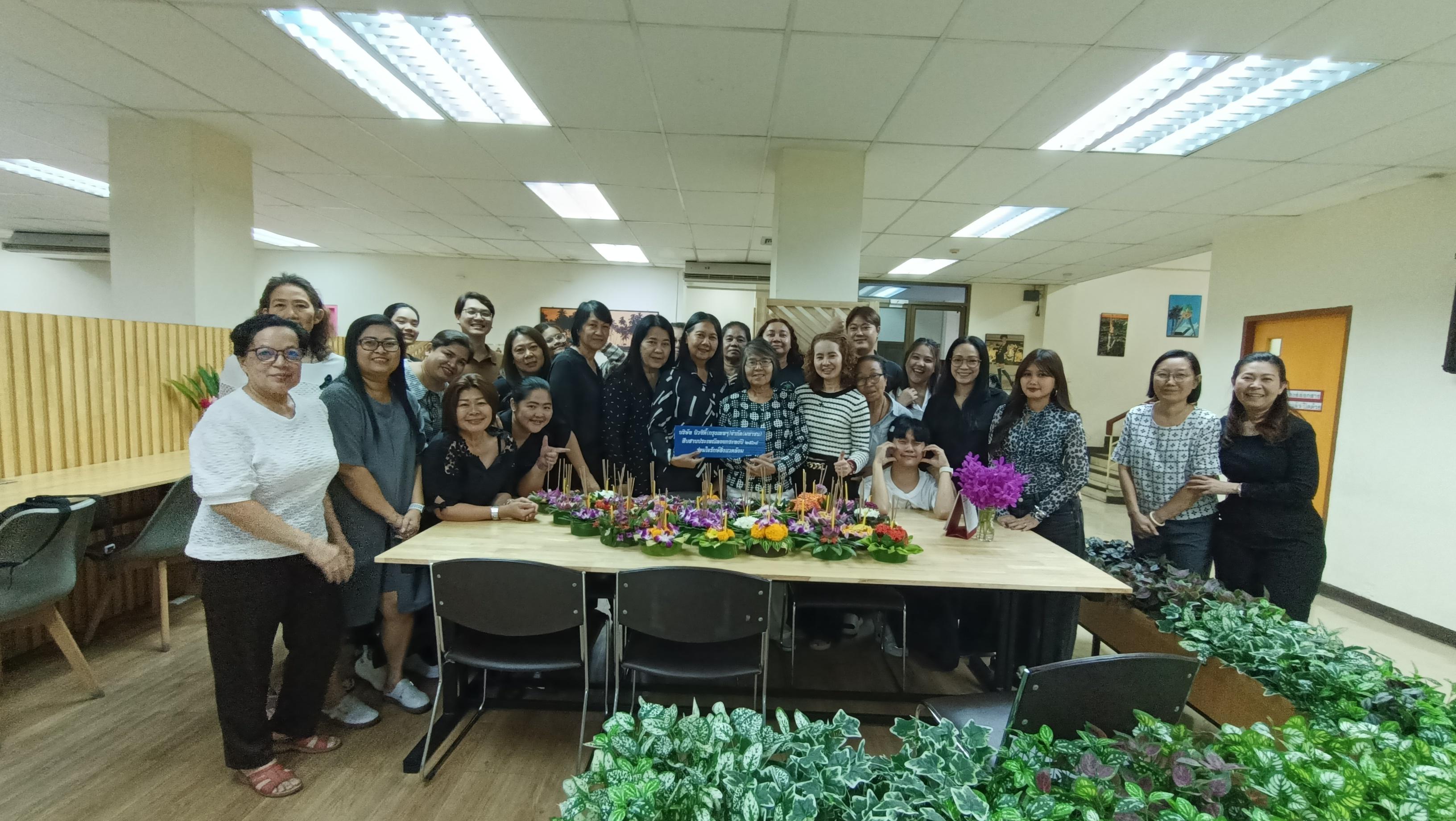
3. Underprivileged and Vulnerable Groups (Vulnerable Groups and Equal Opportunity Employment).
The company prioritizes conducting business with social responsibility, focusing on promoting equality and creating employment opportunities for underprivileged and vulnerable groups, especially elderly individuals who still possess the potential to work.
The company has employed 20 elderly individuals aged 61 and above under employment contracts, providing them with opportunities to continue working after retirement. This employment aims to promote continuous income and improve the quality of life for the elderly.
Furthermore, the company recognizes the value of the experience, knowledge, and skills of elderly individuals, which can be applied in operations, transferred as knowledge to new employees, and support the organization's operations to be more efficient.
Operational Results.
-
A number of elderly individuals have been employed. 20 people. continuously.
-
Elderly individuals can participate in work and create value for the organization.
-
To promote equal employment and reduce social inequality.
Future Development Guidelines.
The company has a continuous approach to developing its operations in diversity and inclusion, which may include considering:
-
To expand employment opportunities to other vulnerable groups.
-
To establish indicators for equal employment.
-
To promote a suitable working environment for all employee groups.
Plan Areas
| Plan Area |
|---|
| Religion and culture |
| Disadvantaged and vulnerable groups |
Community & Social — Targets
Has Set Community & Social Targets
No
Community & Social — Performance & Outcomes
Has Performance Results
No
Performance Description
Performance and Outcomes in Community and Social Management (Community and Social Performance)
In 2025, the company continuously carried out Corporate Social Responsibility (CSR) activities, focusing on supporting communities and government agencies in situations of need, to help improve the quality of life and enhance the well-being of society as a whole.
Project to support personnel in the Thai-Cambodian border area
New City (Bangkok) Public Company Limited, manufacturer and distributor of products under the "Cherilon" and "Sanremo" brands, has implemented a project to support personnel operating in high-risk areas along the Thai-Cambodian border, with details as follows:
Support items
Face masks, quantity 10,000 pieces
Men's underwear, quantity 600 units
Total value of support 379,325 Baht
Project objectives
Support hygiene and safety for personnel.
Enhance readiness for performing duties in challenging areas.
This demonstrates concern and encouragement from the private sector to government officials.
Operational details
The handover ceremony was held on August 10, 2025, at the Headquarters of the 2nd Army Area, Suranaree Camp, Nakhon Ratchasima Province, with company executive representatives participating in the delivery of items to the relevant agencies.
Operational outcomes
Personnel in the area received essential equipment for hygiene care and operations.
Helps increase readiness and comfort in performing duties in high-risk environments.
Enhance the company's image as a socially responsible organization.
Reflects the company's role in supporting Thai society in critical situations.
Continuous social operations
In addition to the aforementioned project, the company has continuously carried out various social activities, such as:
Donation of products to support the production of medical equipment for people with disabilities.
Support for activities that improve the quality of life for the public.
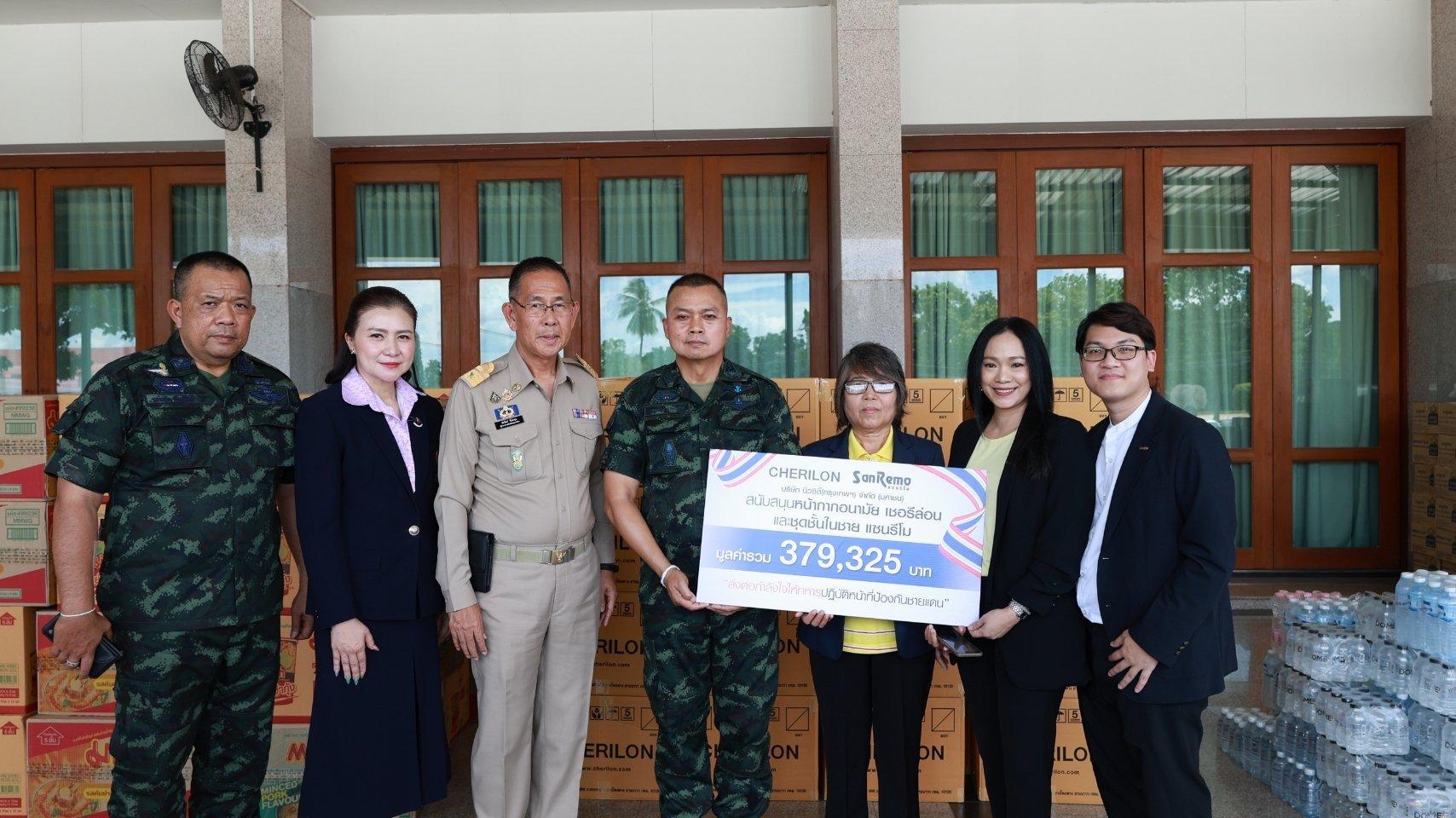
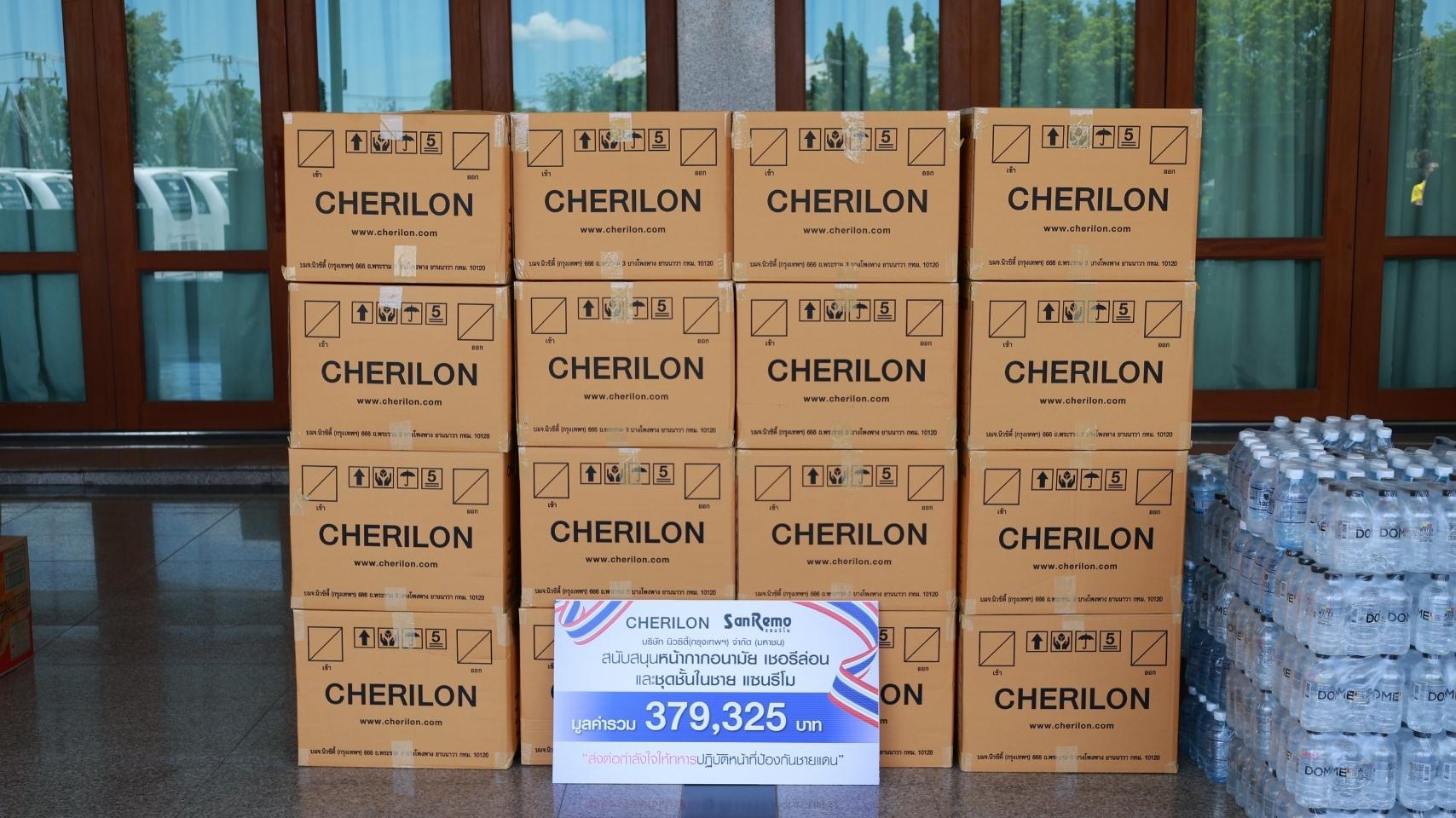
Project to support nursing students at Panyapiwat Institute of Management
New City (Bangkok) Public Company Limited implemented a Corporate Social Responsibility (CSR) project by providing educational support to the Faculty of Nursing, Panyapiwat Institute of Management, on May 13, 2025, to promote and develop the potential of students aspiring to become future medical personnel.
The company provided hosiery and socks for nursing students, totaling over 50,000 Baht To support essential educational equipment and help reduce students' clothing expenses.
In addition, the company organized a special lecture titled "Support Your Look, Support Your Legs: Fiber Innovation for Wearing Comfort" to provide knowledge about fiber properties and production technology. This enhances comfort in use, supports continuous movement during work, and promotes an appropriate professional image for nurses.
The activity also included a Q&A session and distribution of souvenirs to students, which was well-received and helped create a friendly and engaging learning environment.
Project objectives
Support essential equipment for nursing students' education.
Reduce clothing expenses
Promote orderliness and professional dress standards.
Enhance knowledge and understanding of products related to practical use.
Operational outcomes
Students received essential equipment that can be practically utilized.
Helps reduce expenses and enhance readiness for education.
Create knowledge and understanding of product innovation.
Enhance the company's image as an organization that supports education and human resource development.
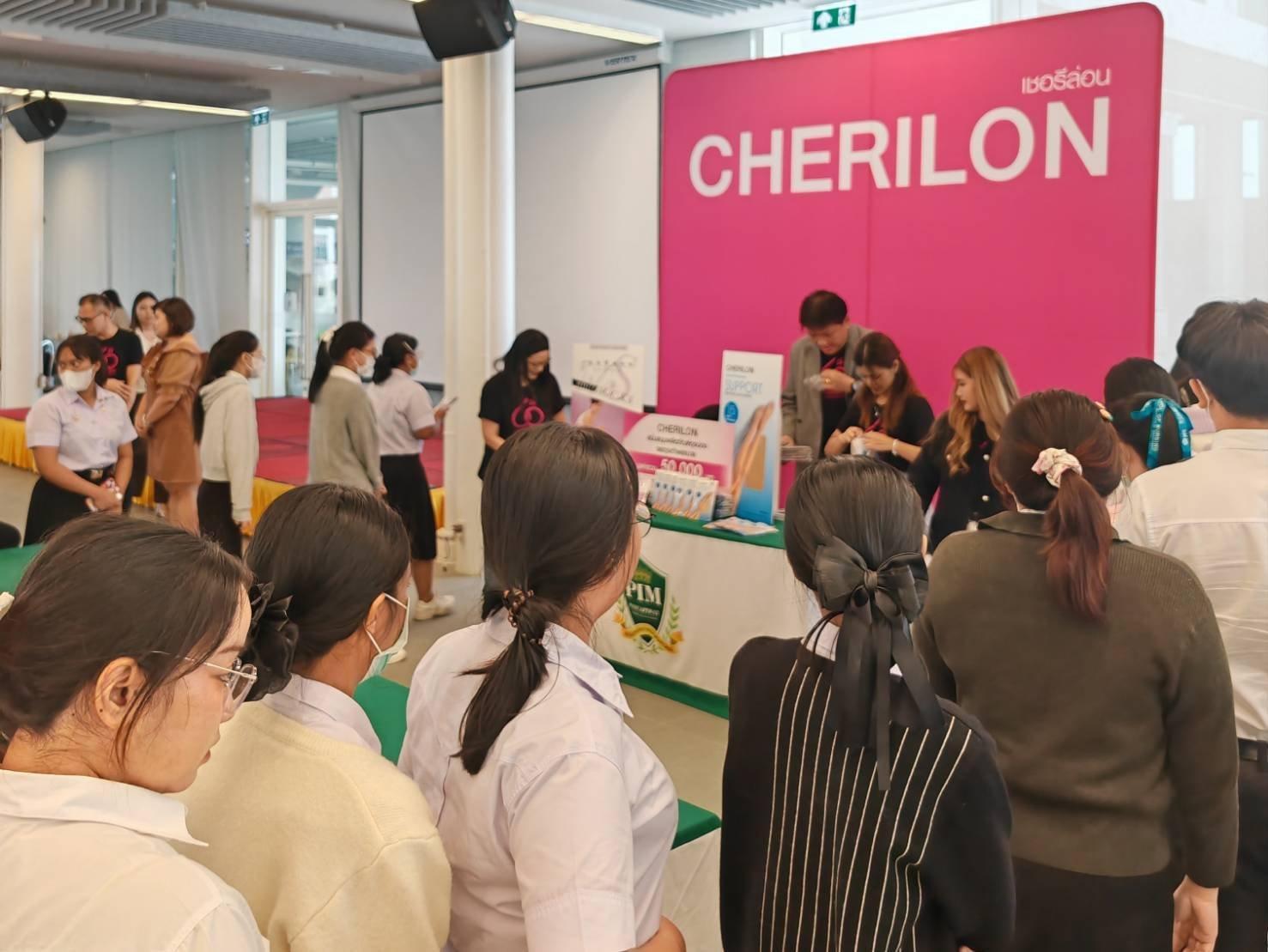
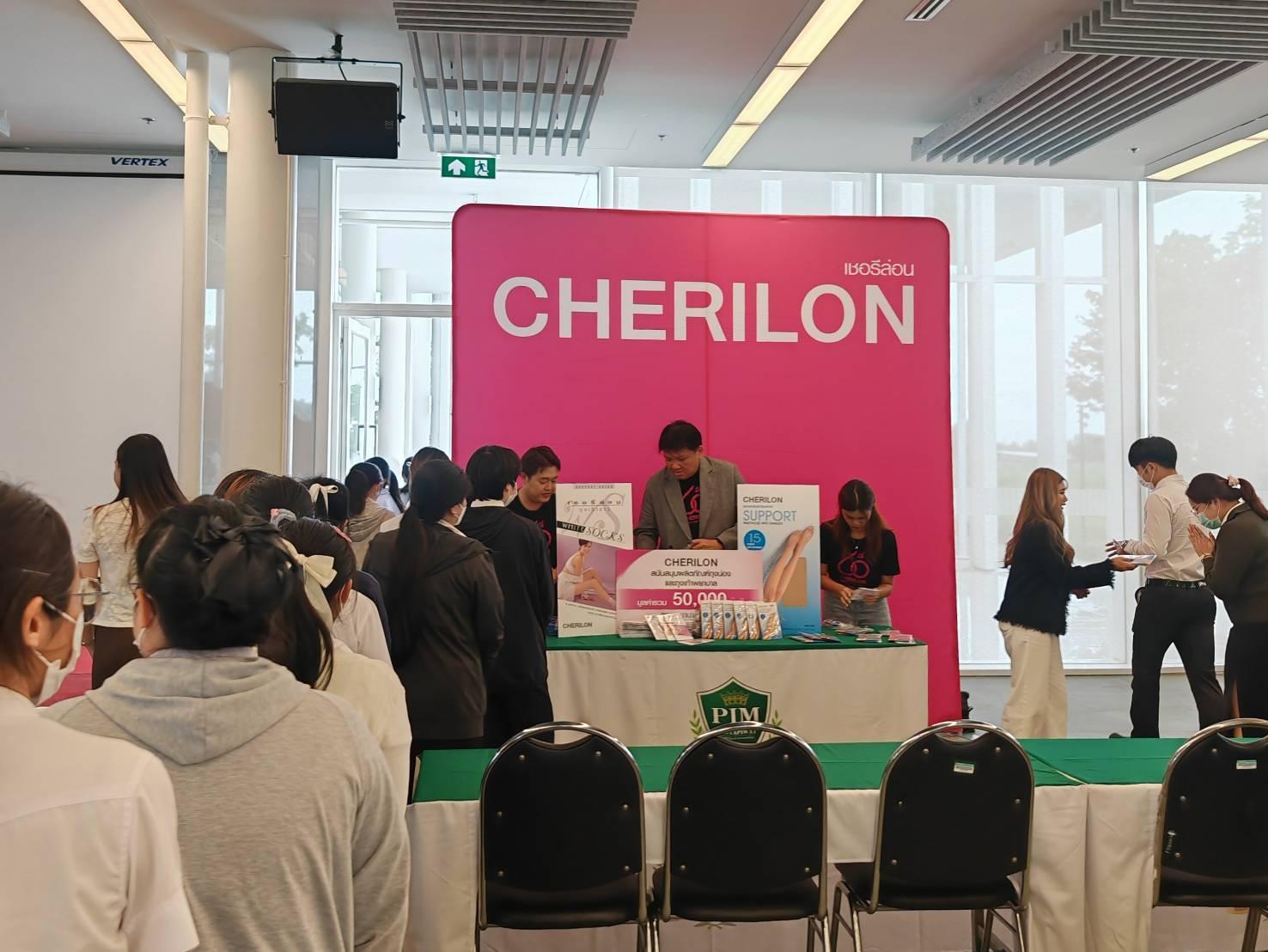
Project to support scholarships and skill development for students at King Mongkut's University of Technology Thonburi.
New City (Bangkok) Public Company Limited implemented a Corporate Social Responsibility (CSR) project focused on promoting and developing the potential of youth in higher education, by providing support to the Faculty of Industrial Education and Technology, Department of Computer and Information Technology, King Mongkut's University of Technology Thonburi.
The project aims to enhance students' skills in digital media and video content creation, alongside developing fashion creativity, using CHERILON brand hosiery products as a learning medium.
The company organized workshops to provide knowledge about products and fiber innovations, as well as a competition for creating video clips no longer than 90 seconds. This aimed to give students the opportunity to apply their knowledge and technological skills with commercial creativity, with excellent cooperation from the faculty in organizing activities within the curriculum.
In addition, the company awarded scholarships totaling 10,000 baht to outstanding students to motivate and support their potential development towards future careers.
Operational outcomes
Students gained opportunities to develop digital media skills and creativity.
Integration of knowledge in technology and fashion in a practically applicable format.
Promote practical learning and teamwork.
Motivate students to develop their work to professional standards.
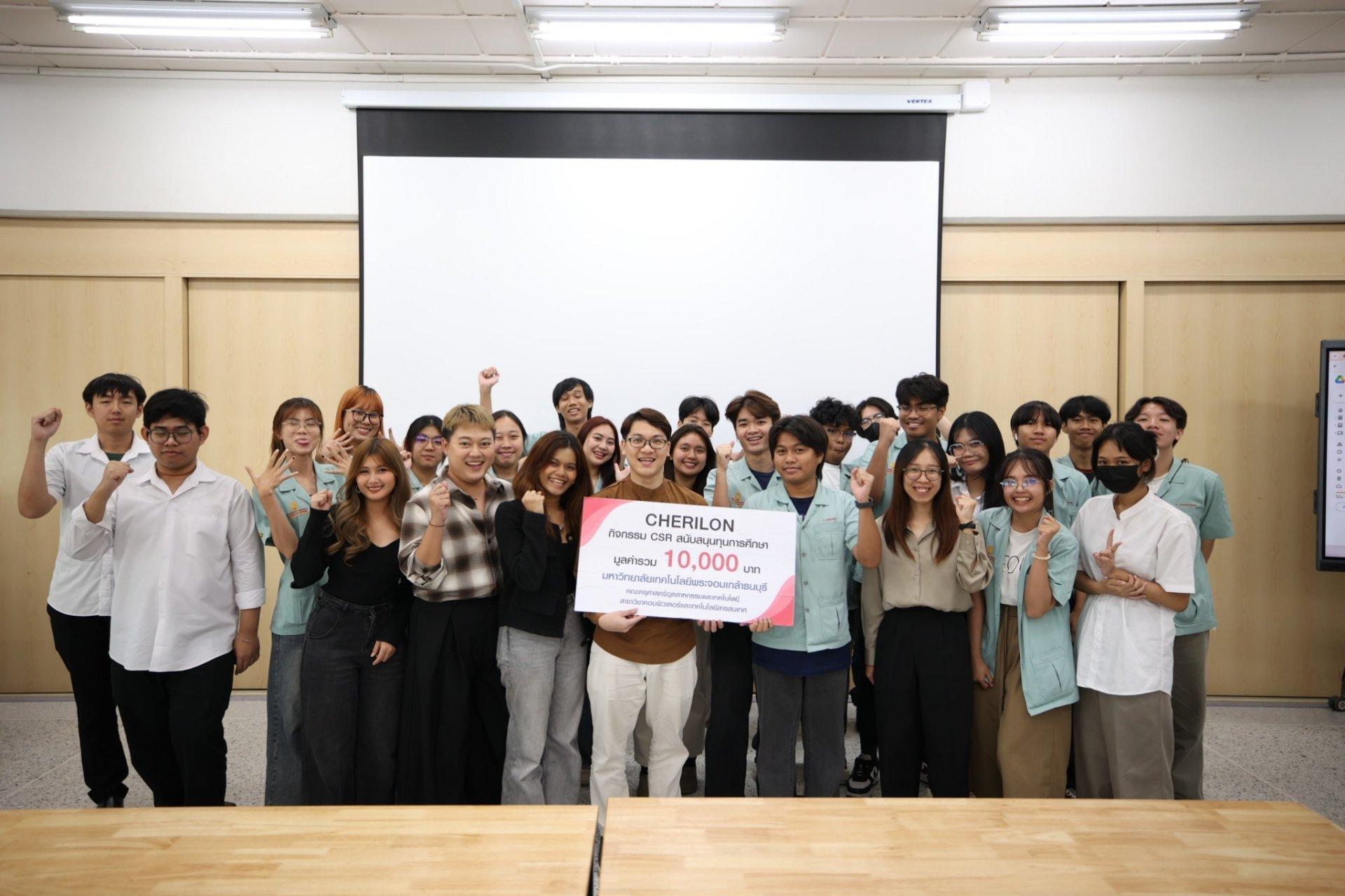
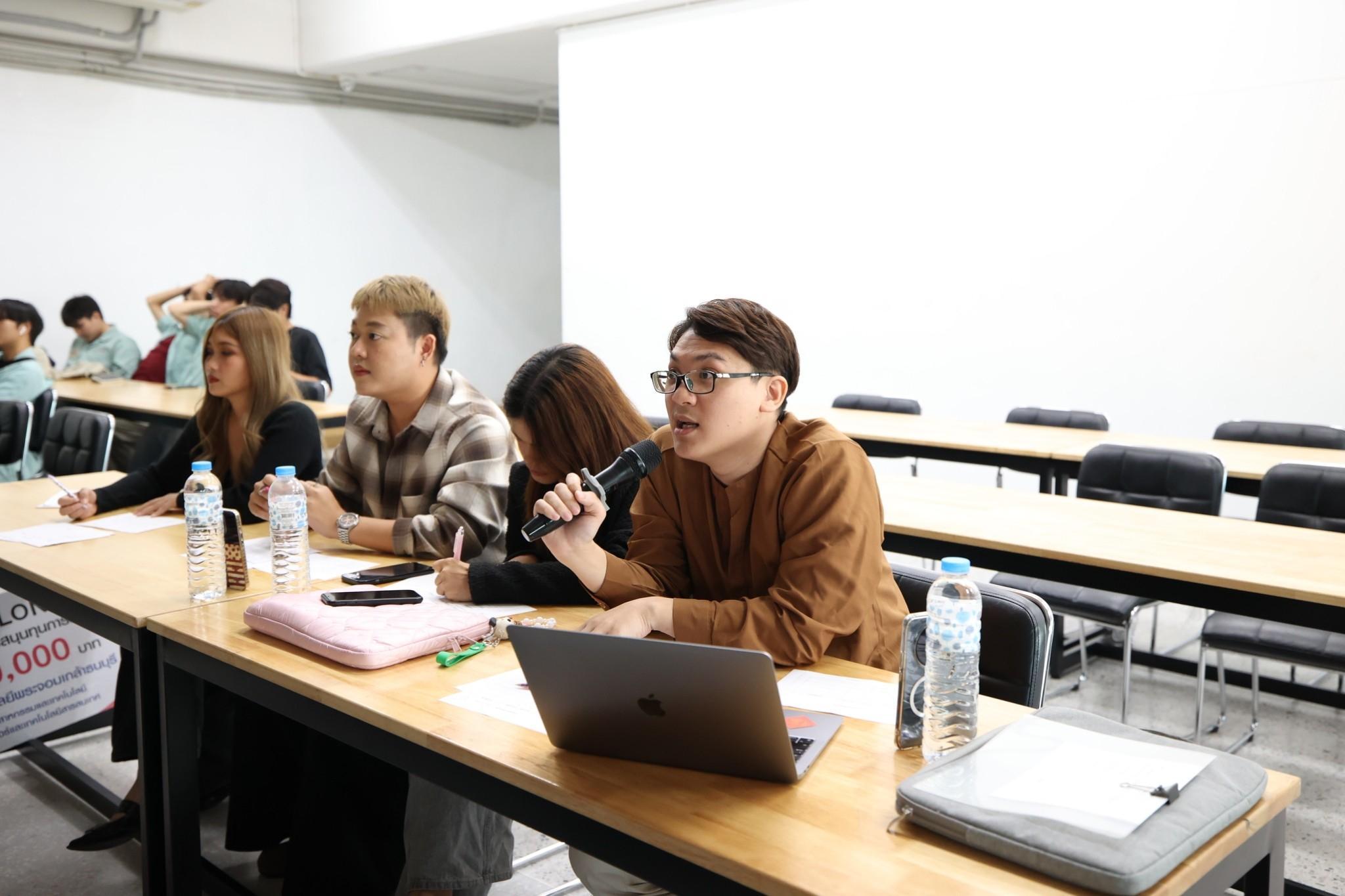
Community & Social Table: Risk – Strategy – KPI – Target – Result
Category | Risk | Strategy | KPI | Target | Performance (Result) |
|---|
Community and Society | Employees lack organizational commitment | Organize religious and cultural activities | Number of activities per year | ≥ 2 activities/year | Already implemented, e.g., New Year merit-making / Loy Krathong |
Community and Society | Lack of cultural preservation | Promote Thai traditions | Number of employees participating | ≥ 80% | Continuous employee participation |
Community and Society | Lack of environmental awareness | Use natural materials in activities | % Eco-friendly activities | ≥ 80% | Use natural materials for making Krathongs |
Community and Society | Insufficient participation | Distribute equipment to employees | Activity reach rate | 100% | All employees can participate. |
Community and Society | Lack of corporate CSR image | Continuous CSR activities | Number of complaints | 0 cases | No complaints from the community |
Community and Society | Ineffective social support | Support government agencies/society | Number of CSR projects | ≥ 2 projects/year | Border support (10,000 masks + 600 items) |
Community and Society | Lack of assistance in crisis situations | Support at-risk areas | Value of assistance | Continuously increasing | Aid value 379,325 Baht |
Community and Society | Lack of educational support | Support educational institutions | Number of educational projects | ≥ 2 projects/year | Support PIM and KMUTT |
Community and Society | Students lack opportunities | Provide scholarships and equipment | Value of support | Continuously increasing | Support ≥ 60,000 Baht |
Community and Society | Lack of youth skill development | Organize workshop / training | Number of participants | Continuously increasing | Organize workshop + contest |
Community and Society | Social inequality | Employ elderly | Number of elderly employed | ≥ 20 people | Employ 20 elderly individuals |
Community and Society | Loss of knowledge | Utilize the experience of the elderly | Level of participation | ≥ 80% | Elderly participate in work |
Law Violation Incidents
Law Violation Incidents
| Metric | Current Year | Previous Year | Two Years Ago |
|---|---|---|---|
| The total number of cases or incidents of significant violations of laws or regulations regarding social and human rights (Cases) | 0 | 0 | 0 |
| The total number of cases or incidents that cause significant labor disputes (Cases) | 0 | 0 | 0 |
| The total number of cases or complaints related to consumer rights violations (Cases) | |||
| The total number of cases or complaints related to partner rights violations (Cases) | |||
| The total number of cases or incidents that cause disputes with the community/society (Cases) | |||
| The total number of cases or incidents related to cyber security or customer data breaches (Cases) | |||
| The total number of cases or incidents related to safety and occupational health at work (Cases) |